I finished watching the Netflix spinoff series Castlevania: Nocturne, season 2 last week, and I wanted to share this great quote:
Alucard: Your mother and I never met. But when you’ve lived as long as I have, you start to understand. We’re all part of the same story somehow. And these connections run very deep.
Castlevania: Nocturne, season 2, episode 6, “Ancestors”
This inter-connectivity of all beings, all being part of the same story, is a very Buddhist notion.
In Buddhism, especially the Mahanaya tradition (i.e. pretty much all of east Asia, and beyond), there is a famous analogy of the Jeweled Net of Indra (sometimes Brahma). The idea is that within the celestial palace of Indra (or Brahma), there is treasure room, and within that room is a great net woven with jewels at each node.
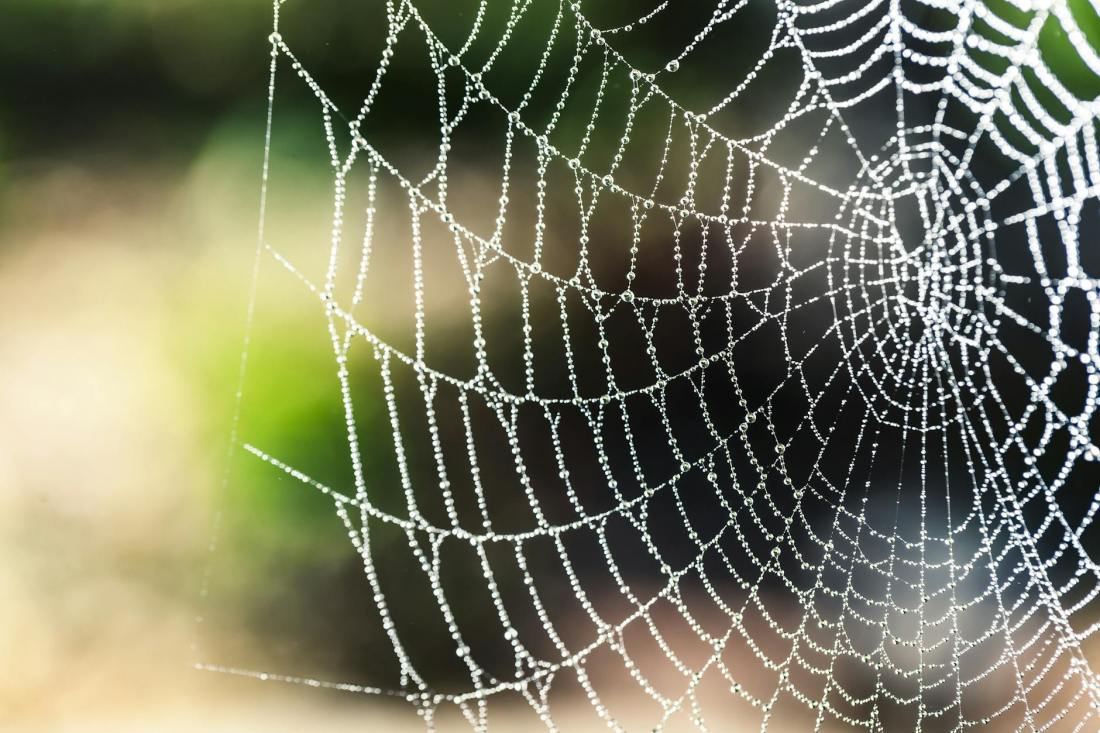
Now, imagine this great net of jewels, and how each jewel reflects the light of every other jewel. That’s how interdependence works. Shatter, remove, or replace one jewel and the light from the others diminishes as well. So it is with all sentient beings. The effect may not be noticeable, but it does happen.
The entire series of Perfection of Wisdom sutras, including the Heart Sutra, covers this in great detail. The Buddha Vairocana also embodies this truth (especially as described in the massive Flower Garland Sutra); alternatively Amida Buddha does too in some interpretations.
P.S. Castlevania: Nocturne is great. It covers a lot of characters from later Castlevania games that I didn’t play (Richter, Juste, Maria, etc), which confused me at first, but season 2 builds really nicely on season 1. Great series and worthy spinoff to the original.
Every Halloween, including this recent one, I like to stop whatever else I am doing (including Fire Emblem), and play through the old, classic Castlevania the game series: namely Castlevania 1, 2 and 3 for the NES and Super Castlevania for the Super Nintendo. There’s something really fun about journeying to Dracula’s castle, fighting hordes of evil, and enjoying the medieval-gothic ambience. For various reasons, I never really got around to playing the newer Castlevania games because I was in college, and had other priorities, so I missed classics like Symphony of Night until it came out much later for mobile devices.
In any case, the first few are really near and dear to my heart. So, this post is a tribute to those early games.
Castlevania
Of all the games listed below, I think this is my favorite box art.
The original Castlevania game, like many early NES games, was short, simple, and brutal. The game did not teach you very much, but instead threw you right into the game, and the difficulty level rapidly progresses beyond level 1 and 2. By the time you get to the Grim Reaper, the levels are quite difficult. The final level is a genuine gauntlet.
I never beat this game as a kid, and I only beat as an adult through a combination of save states and dedication. It’s a classic of its era, and fun to playthrough. Even Terminal Montage did a nice tribute to it:
Castlevania II: Simon’s Quest
For some reason, early NES sequels often followed a pattern of providing overland adventures to expand the world of the first game. The Legend of Zelda had Zelda II: Link’s Quest, Castlevania had Castlevania II: Simon’s Quest and so on. Castlevania II was the least popular of the NES games, but it is in a weird way my personal favorite.
You had to be there, though.
I was a bit too young to play the original Castlevania when it first came out, but I knew about it, and so when Nintendo Power magazine put out the issue (with the controversial cover) with exclusive coverage of Castlevania II, I was hooked. The full color map was so fun to look at:
Source: Nintendo Power Magazine
I still play this game regularly. I enjoy the slower place than other Castlevania games, and that it requires less feats of acrobatics (less falling off of stairs, like Castlevania III). I like to both 100% the game, and beat it within the 8 hours. However sometimes, I just enjoy taking my time and exploring every corner of Transylvania.
Of course, one other thing should be mentioned: the soundtrack. 8-bit games weren’t known for powerful music technology, but every once in a while, someone would compose something inspired. The Bloody Tears song, found on the overload during daytime, would go on to be a classic of Castlevania franchise, and rightly so.
One other interesting bit of trivia. The Dungeons and Dragons module, Ravenloft (I6), came out in 1983:
The box art for Castlevania II came out in 1987. Notice any similarities?
Castlevania III: Dracula’s Curse
Castlevania III: Dracula’s Curse is arguably the hardest of the early Castlevania games. It used the novel idea of featuring a different, earlier Belmont, than Simon, so it has a grittier, more medieval feel. Coupled with the spirit helpers, and multiple routes to choose from, this games was exciting and fun to replay.
This is also the first game where Adrian Tepeš, also known as “Alucard”, is introduced, though mechanically he is a fairly weak helper.
In fact, fans of the Netflix Castlevania series (such as myself), will see many references to Castlevania III, including the same cast of characters. I was a bit surprised that Grant Danasty wasn’t included in the series, other than a brief mention:
“that one guy with the horse-drawn sailboat on wheels that called himself the Pirate of the Roads…”
Trevor Belmon, Castlevania Netflix Series, S3E01
As for the game, I truly do enjoy it, though the punishing difficulty and frequency of “stupid fall deaths” does get a bit frustrating at times. I often like to take the difficult routes just because it’s fun to go all the way up through the basement of Dracula’s castle, more so than the ghost ship. The soundtrack was excellent and many classics from this game appear in later franchises too. Culturally speaking, Castlevania III is the most influential of the early games, and with good reason.
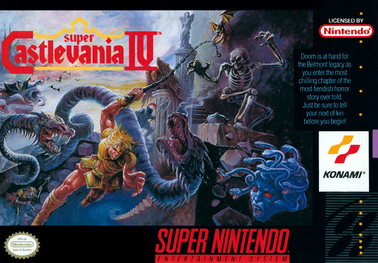
Super Castlevania IV
At last we come to the final game I played: Super Castlevania IV. This was the first game to be made for 16-bit Super Nintendo, versus older 8-bit Nintendo Entertain System. The improvement in graphics, sound and music reflect the improved hardware.
This game also finally allowed your character to whip in multiple directions, not just forward. I wish this feature had existed in earlier games, especially Castlevania II, since whipping the little slimes that were too short to hit was quite frustrating, as well as enemies on a lower platform.
The controls of this game are just so seamlessly smooth and the game levels are a good challenge without being excessive. The graphics of course were meant to show off new features of the 16-bit Super Nintendo, including rotating backgrounds, and other weirdness in Dracula’s castle. In fact, much of Dracula’s castle is just weird, but in a fun, gothic way. Fighting ballroom ghosts in one level, or gold skeletons in the treasure vault are all novel ideas, and lend to the old decadence of the villain.
Finally the music. The jazzier style music actually somehow enhances the mood of the game, rather than detracting from it. Composers definitely had some fun in this one, and I like to go back and listen to it occasionally on Youtube. Enhanced versions of classic Castlevania songs all sound great in this game.
One oddity is that this game is treated as non-canon in the Castlevania universe, since it is seen as a remake of the original Castlevania game.
Conclusion
I do regret not playing the later Castlevania games when they came out, especially Symphony of Night, so I missed out on a lot of the later lore until the Netflix series. However by this point, as an old school gamer, I had four classics under my belt, and was happy with what I had.



 Gleanings in Buddha-Fields
You must be logged in to post a comment.