Next week, according to the solar calendar, is the Buddha’s birthday. Many communities observe this holiday using the lunar calendar, and different communities use different lunar calendars, so the dates will vary quite a bit. I use the Japanese-Buddhist calendar which in turn uses the Western calendar since the 19th century, thus April 8th.1
But I digress.
How does one celebrate the Buddha’s birthday?
Based on my limited experience in Japan and such, Buddhist holidays tend to be pretty laid back affairs. Buddhist temples usually do not hit you over the head with religious teachings, but often do hold local festivals maybe with a sermon or two. There’s no pressure for holiday shopping or even attending a temple. The reality is that Buddhism is not an evangelical religion; people are welcome to come as they are, and approach at their own pace.
Instead, the Buddha’s birthday is a time of joy and reflection.
The appearance of a buddha is, according to tradition, exceedingly rare and even if one is not alive during the time of a buddha, the buddha’s teachings and influence on the world last for many generations. If one lived in an age where the Dharma, the teachings of the Buddha, did not exist or were obscured, then one could not benefit from them.
Thus, even for us living 2,500 years2 after the Buddha Shakyamuni (e.g. Siddhartha Gautama), we can still learn from the Buddha, apply the teachings as best we can, and thereby break the cycle of rebirth. The Buddha-Dharma is good medicine that one can take as one needs, and apply to their life as they see fit.
So, on April 8th, or whatever day you celebrate, take a moment to reflect on the historical Buddha, enjoy the warm weather, and don’t hesitate to do something good and noble that day.
Namo Shakyamuni Buddha
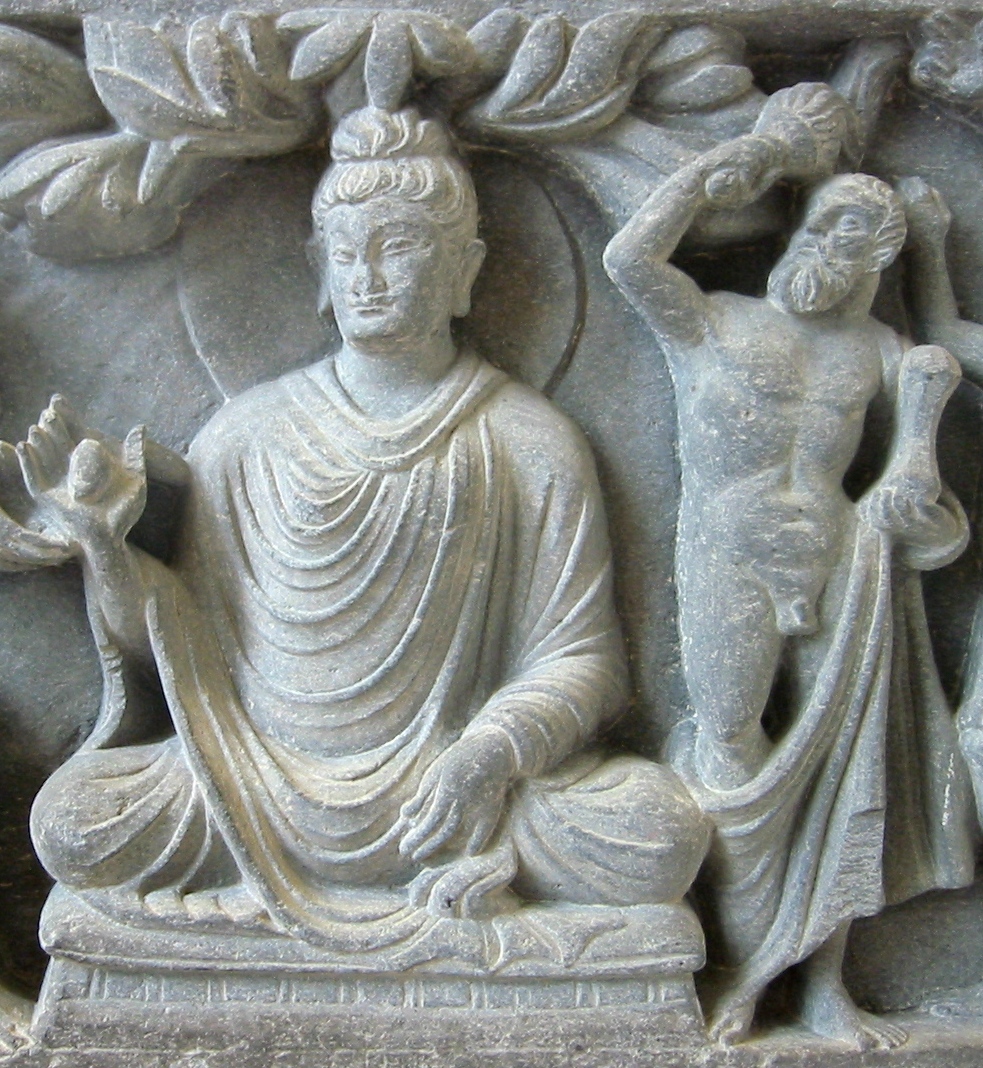
P.S. Featured image is Shakyamuni Buddha flanked by a guardian named Vajrapani. Notice the strongly Greek artistic style, including Vajrapani who looks similar to Hercules. This was made in Gandhara almost 2,000 years ago. Countless cultures and people have paid homage to Shakyamuni Buddha just as we do now. 🥳
1 Rant: Given that Christmas is observed on December 25th, despite Jesus’s birth very obviously not taking place in December (the Romans did not collect taxes in winter), the specific date for celebrating an event really isn’t that important. One date is as good as another, as long as the tradition is meaningful for people. I do prefer observing holidays using the solar calendar since it’s just so much easier to observe and plan out, though. Lunar calendars are fascinating in their own way, but they’re opaque and confusing to anyone who doesn’t fully understand them.
2 random history fact: by the time the Romans had subjugated places like Egypt and Mesopotamia, these places already had 2,000 years of culture and tradition. The Akkadian language was still in use for religious ceremonies and documents, despite the Akkadian empire of Sargon being gone for more than a thousand years. And all of this is but a drop in the bucket compared to geologic time of the Earth.
The Lotus Sutra, one of the most important sutras of Mahayana Buddhism, is the size of an epic novel, and thus much too large to recite cover to cover. Even reciting a single chapter can be daunting because each chapter contains a large narrative section, and one or more verse sections that recap the narrative.
For this reason, certain verse sections have become popular for chanting because they get to the heart of the Lotus Sutra and convey its essential teachings, in a manageable size.
Popular examples (among others) include the Kannon Sutra, the verse section of chapter 16, and the opening section of chapter 2. Both are actively recited in Nichiren and Tendai sect home services. Today we will focus on the big verse section at the end of chapter 16, called the jigagé (自我偈) in Japanese.
Chapter 16 of the Lotus Sutra is the big reveal of the sutra: Shakyamuni Buddha is not just a historical figure that lived in 5th century India, and member of the warrior-caste Shakya clan, but is also, on another level, a timeless Buddha that has pretty much existed since a remote, incalculable past:
Since I attained Buddhahood the number of kalpas [aeons] that have passed is an immeasurable hundreds, thousands, ten thousands, millions, trillions, asamkhyas [in other words, a mind-boggling amount of time]. Constantly I have preached the Law [a.k.a. the Dharma], teaching, converting countless millions of living beings, causing them to enter the Buddha way, all this for immeasurable kalpas.
Translation by Burton Watson
I believe this part of an important theme not just in the Lotus Sutra but Mahayana Buddhism in general: the Dharma is a timeless, eternal law of reality and the various Buddhas simply embody it. The Dharma is what matters, not one particular Buddha or another. You can see hints of this in older Buddhist sutras such as the Vakkali Sutta (SN 22.87) in the Pali Canon, but I believe that Mahayana Buddhism took it to its logical conclusion.
Later in the same verse section is the famous lines:
My pure land is not destroyed, yet the multitude see it as consumed in fire, with anxiety, fear and other sufferings filling it everywhere….But those who practice meritorious ways, who are gentle, peaceful, honest and upright, all of them will see me here in person, preaching the Law [a.k.a. The Dharma]
Translation by Burton Watson
To me, this reinforces that even in the worst, most desolate times, the Dharma is always there, and anyone who seeks it sincerely will find it even when others cannot see it. I’ve talked about this passage often in the Nirvana Day posts I’ve made in the past, among other places.
Anyhow, let’s move on now to the liturgy itself.
Liturgical Language
Because this is a chant used in Japanese Nichiren and Tendai traditions, among others, I am posting it as-is in Japanese, more specifically Sino-Japanese: the original Classical Chinese that it was recorded in, but with historical Japanese pronunciation. You are welcome to recite in English, or any other language, there is no restriction.
For this liturgical text, I relied on a fewsources, plus I double-checked the spellings using physical sutra books I have at home. I am fairly certain it’s accurate.
Also, I formatted the text similar to how it is formatted in real service books.
Translation
I decided not to post the translation side-by-side with the text, the way I do with the Heart Sutra and such. This is due to formatting reasons on the blog, plus also length of the text makes this more difficult. I may revise this later.
For now, I highly recommend checking out a modern translation here by the excellent Dr Burton Watson. The Buddhist Text Translation Society also has an excellent translation here. The chant below is the first narrative section that goes all the way to the first verse section.
Disclaimer and Legal Info
I hereby release this into the public domain. Please use it as you see fit, but if you attribute it to this site, greatly appreciated. Also, please bear in mind this is an amateur work, and should not be taken too seriously.
Dedication
I dedicate this effort to all sentient beings everywhere. May all beings be well, and may they all attain perfect peace.
Namu Shakamuni Buddha
The Lotus Sutra sixteenth chapter, verse section
Preamble
Classical Chinese
Japanese Romanization
妙法蓮華経 如来寿量品 第十六
Myo ho ren ge kyo nyo rai ju ryo hon dai ju roku
Verse Section
Classical Chinese
Japanese Romanization
自我得仏来 所経諸劫数 無量百千万 億載阿僧祇
Ji ga toku butsu rai sho kyo sho kos-shu mu ryo hyaku sen man oku sai a so gi
常説法教化 無数億衆生 令入於仏道 爾来無量劫
jo sep-po kyo ke mu shu oku shu jo ryo nyu o butsu do ni rai mu ryo ko
為度衆生故 方便現涅槃 而実不滅度 常住此説法
i do shu jo ko ho ben gen ne han ni jitsu fu metsu do jo ju shi sep-po
我常住於此 以諸神通力 令顛倒衆生 雖近而不見
ga jo ju o shi i sho jin zu riki ryo ten do shu jo sui gon ni fu ken
衆見我滅度 広供養舎利 咸皆懐恋慕 而生渇仰心
shu ken ga metsu do ko ku yo sha ri gen kai e ren bo ni sho katsu go shin
衆生既信伏 質直意柔軟 一心欲見仏 不自惜身命
shu jo ki shin buku shichi jiki i nyu nan is-shin yoku ken butsu fu ji shaku shin myo
時我及衆僧 倶出霊鷲山 我時語衆生 常在此不滅
ji ga gyu shu so ku shutsu ryo ju sen ga ji go shu jo jo zai shi fu metsu
以方便力故 現有滅不滅 余国有衆生 恭敬信楽者
i ho ben riki ko gen u metsu fu metsu yo koku u shu jo ku gyo shin gyo sha
我復於彼中 為説無上法 汝等不聞此 但謂我滅度
ga bu o hi chu i setsu mu jo ho nyo to fu mon shi tan ni ga metsu do
我見諸衆生 没在於苦海 故不為現身 令其生渇仰
ga ken sho shu jo motsu zai o ku kai ko fu i gen shin ryo go sho katsu go
因其心恋慕 乃出為説法 神通力如是 於阿僧祇劫
in go shin ren bo nai shitsu i sep-po jin zu riki nyo ze o a so gi ko
常在霊鷲山 及余諸住処 衆生見劫尽 大火所焼時
jo zai ryo ju sen gyu yo sho ju sho shu jo ken ko jin dai ka sho sho ji
我此土安穏 天人常充満 園林諸堂閣 種種宝荘厳
ga shi do an non ten nin jo ju man on rin sho do kaku shu ju ho sho gon
宝樹多花果 衆生所遊楽 諸天撃天鼓 常作衆伎楽
ho ju ta ke ka shu jo sho yu raku sho ten kyaku ten ku jo sa shu gi gaku
雨曼陀羅華 散仏及大衆 我浄土不毀 而衆見焼尽
u man da ra ke san butsu gyu dai shu ga jo do fu ki ni shu ken sho jin
憂怖諸苦悩 如是悉充満 是諸罪衆生 以悪業因縁
u fu sho ku no nyo ze shitsu ju man ze sho zai shu jo i aku go in nen
過阿僧祇劫 不聞三宝名 諸有修功徳 柔和質直者
ka a so gi ko fu mon san bo myo sho u shu ku doku nyu wa shichi jiki sha
則皆見我身 在此而説法 或時為此衆 説仏寿無量
sok-kai ken ga shin zai shi ni sep-po waku ji i shi shu setsu butsu ju mu ryo
久乃見仏者 為説仏難値 我智力如是 慧光照無量
ku nai ken bus-sha i setsu butsu nan chi ga chi riki nyo ze e ko sho mu ryo
寿命無数劫 久修業所得 汝等有智者 勿於此生疑
ju myo mu shu ko ku shu go sho toku nyo to u chi sha mot-to shi sho gi
当断令永尽 仏語実不虚 如医善方便 為治狂子故
to dan ryo yo jin butsu go jip-pu ko nyo i zen ho ben i ji o shi ko
実在而言死 無能説虚妄 我亦為世父 救諸苦患者
jitsu zai ni gon shi mu no sek-ko mo ga yaku i se bu ku sho ku gen sha
為凡夫顛倒 実在而言滅 以常見我故 而生憍恣心
i bon bu ten do jitsu zai ni gon metsu i jo ken ga ko ni sho kyo shi shin
放逸著五欲 墮於悪道中 我常知衆生 行道不行道
ho itsu jaku go yoku da o aku do chu ga jo chi shu jo gyo do fu gyo do
随応所可度 為説種種法 毎自作是念 以何令衆生
zui o sho ka do i ses-shu ju ho mai ji sa ze nen i ga ryo shu jo
得入無上道 速成就仏身
toku nyu mu jo do soku jo ju bus-shin
P.S. I’ve been posting a lot of Japanese-Buddhist liturgy from various sources, and this is the last one I will post for a while. The ones I have posted so far on the blog cover the most common sutra chants, so anyone curious to get started in a tradition (or rediscover a tradition) should hopefully find what they need. Good luck!
Lately I’ve been talking a lotabouthomeBuddhistpractice, including home Buddhist services and such. These are things that devout lay-Buddhists often do (myself included), but then I realized I never talked about making one’s own sutra book.
There are a couple reasons why one might make their own.
First, Buddhist resources outside of Buddhist countries are hard to find. For someone like me who lives on a large city with a large Asian community this is not so hard. But if you lived in, say, rural Iowa, it might be a lot harder. So, sometimes you have to just DIY.
Second, it’s a nice way to personalize your Buddhist practice in a way that suits you.
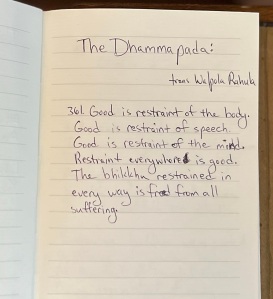
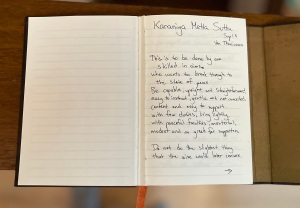
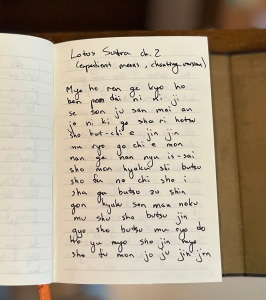
I started making my own maybe about 9-10 years ago. I picked up a nice little Paperblanks notebook at the airport at the time, and I decided to collect Buddhist sutras and quotes that I liked. I started out small, just copying things now and then from sites like accesstoinsight.org, or copied from books.
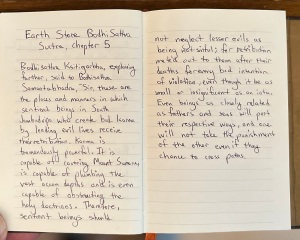
I also recorded Mahayana Buddhist sutras as well, such as this quote from chapter 5 of the Earth Store Bodhisattva Sutra:
I copied each of these by hand. I even tried to copy much longer texts, such as the 4th chapter of the Golden Light Sutra, which is a very beautiful prose about repentance and goodwill, but the text was much longer than I thought, and I eventually gave up halfway.
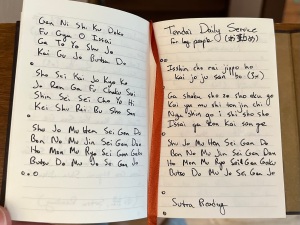
But eventually, around 2017-2018, when I left my old Jodo Shinshu-Buddhist community and started exploring other sects, I focused more on home practice and I started to add Japanese-style liturgies as well:
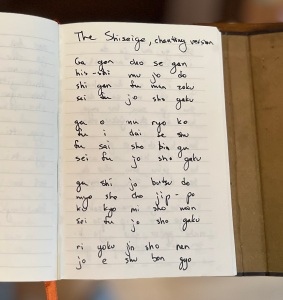
I also wrote specific sutra chants too, such as the Shiseige:
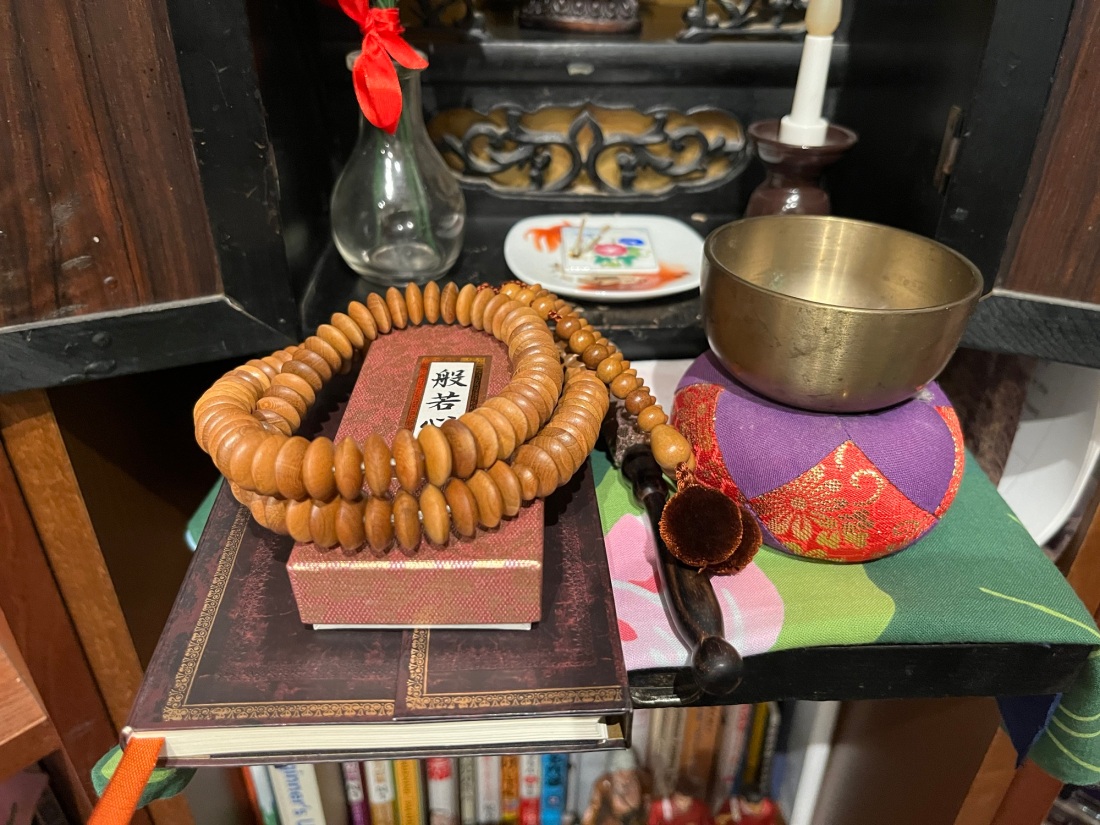
As you can see from the featured photo above,1 I keep this sutra book on my home altar (bottom left in photo), and use it almost daily. A personal sutra book works best when it’s meaningful, simple and useful for you, so the important thing is to not do what other people do, but make it useful for yourself. Find sutras or Buddhist quotes you like, collect them into a notebook, and copy them by hand (word of advice, use a gel pen, not a ballpoint pen, it’s easier to read), and make it your own. There’s no wrong way to do it.
Further, the sutra book I made has gradually progressed over time, just as my own path and practice have and I still have more room to write things in the future.
1 You can also see my Buddhist rosary, a Tendai-style rosary I ordered online, along with a boxed copy of the Heart Sutra, which I got in 2023 while visiting Nara‘s Kofukuji Temple, one of my personal favorite.
Chapter 25 of the Lotus Sutra is a popular devotional text in East Asian Buddhism. It is often referred to as the “Avalokiteśvara Sutra”, or kannongyō (観音経) in Japanese, or more formally the kanzeon bosatsu fumonbongé (観世音普門品偈, “Chapter on the Universal Gate of Kanzeon Bodhisattva”).
Despite the name, it is not a stand-alone text, but simply a famous chapter in the larger Lotus Sutra. This particular chapter is the main introduction to one of the most popular Bodhisattvas in Buddhism: Avalokitesvara (Kannon in Japanese, Guanyin in Chinese, etc.). The chapter describes the attributes of Kannon that are familiar to Buddhists, such as their vows to help all beings who call on them, their ability to take on various forms to teach people, and their unwavering compassion to lead all beings to Enlightenment.
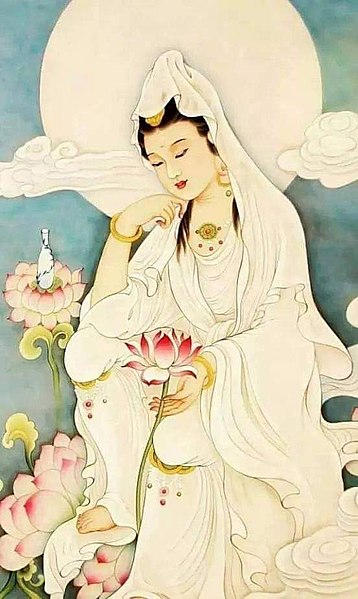
A more Chinese-style image of Kannon (a.k.a. Guan-yin) in her more motherly form, photo courtesy of Wikipedia.
The chapter as a whole is long and would be difficult to chant, so the verse section, not the narrative section, is frequently used for liturgical purposes. The Lotus Sutra often describes things in narrative form, then summarizes again in verse form. However, even the verse section alone is longer than the Heart Sutra, or the Shiseige, so just chanting the verse section is a bit challenging. In my experience it takes about 5-7 minutes.
For this reason, medieval Buddhists in Japan also devised an even shorter version called the Ten-Verse Kannon Sutra.
The sutra is frequently recited in both Zen and Tendai liturgies, among others, but it is not well known to Westerner lay-Buddhists. I had difficulty finding an online copy I could use as a reference here, even in Japanese, due to its length.
However, ages ago, I picked up a sutra book at the famous Sensōji temple in Tokyo, and once I figured out what the Kannon Sutra was, I copied it character by character to an old version of the blog, but then lost it later when I changed blogs. Recently, I was able to recover the text (not easily) from the original HTML I wrote, and posted it back on here with minor edits.
I have also provided a PDF version here if you want to print it out and use at home.
Also, special thanks to this website for providing much needed reference information on pronunciation and Chinese characters. My original, recovered text had a few errors, embarrassingly.
Examples
I found a few examples on Youtube that you can follow along if you are learning to chant the Kannon Sutra as shown below.
From Eiheiji temple (one of two home temples of Soto Zen). Note that they chant this at a pretty fast pace.
This example from Zenshoji Temple, a Shingon-sect temple, in Niigata Prefecture, has line by line annotation. The chanting pace is slower and easier to follow.
These examples are very similar, other than slight differences in pacing and pronunciation of certain Chinese characters. For people who are learning to recite the sutra, just pick what works until you get the hang of it.
Translation
I decided not to post the translation side-by-side with the text, the way I do with the Heart Sutra and such. This is due to formatting reasons on the blog, plus also length of the text makes this more difficult. I may revise this later.
For now, I highly recommend checking out a modern translation here by the excellent Dr Burton Watson. In that translation, the verse section starts after the phrase “At that time Bodhisattva Inexhaustible Intent posed this question in verse form“. The Buddhist Text Translation Society also has an excellent translation of the verse section here.
Disclaimer and Legal Info
I hereby release this into the public domain. Please use it as you see fit, but if you attribute it to this site, greatly appreciated. Also, please bear in mind this is an amateur work, and should not be taken too seriously.
Dedication
I dedicate this effort to all sentient beings everywhere. May all beings be well, and may they all attain perfect peace.
Namu Kanzeon Bosatsu
The Kannon Sutra, verse section
(2025 edition, with minor typo fixes)
Preamble
Original Chinese
Japanese Romanization
妙法蓮華經 観世音菩薩 普門品偈
Myo ho ren ge kyo kan ze on bo satsu fu mon bon ge
Verse Section
Original Chinese
Japanese Romanization
世尊妙相具 我今重問彼 佛子何因縁 名為観世音
Se son myo so gu ga kon ju mon pi bus-shi ga in nen myo i kan ze on
具足妙相尊 偈答無盡意 汝聴観音行 善応諸方所
gu soku myo so son ge to mu jin ni nyo cho kan on gyo zen no sho ho jo
弘誓深如海 歴劫不思議 侍多千億佛 発大清浄願
gu zei jin nyo kai ryak-ko fu shi gi ji ta sen noku butsu hotsu dai sho jo gan
我為汝略説 聞名及見身 心念不空過 能滅諸有苦
ga i nyo ryaku setsu mon myo gyu ken shin shin nen fu ku ka no metsu sho u ku
假使興害意 推落大火坑 念彼観音力 火坑変成池
ke shi ko gai i sui raku dai ka kyo nen pi kan on riki ka kyo hen jo ji
或漂流巨海 龍魚諸鬼難 念彼観音力 波浪不能没
waku hyo ru go kai ryu go sho ki nan nen pi kan on riki ha ro fu no motsu
或在須弥峰 為人所推堕 念彼観音力 如日虚空住
waku zai shu mi bu i nin sho sui da nen pi kan on riki nyo nichi ko ku ju
或被悪人逐 堕落金剛山 念彼観音力 不能損一毛
waku bi aku nin jiku da raku kon go sen nen pi kan on riki fu no son ichi mo
或値怨賊繞 各執刀加害 念彼観音力 咸即起慈心
waku ji on zoku nyo kaku shu to ka gai nen pi kan on riki gen soku ki ji shin
或遭王難苦 臨刑欲寿終 念彼観音力 刀尋段段壊
waku so o nan ku rin gyo yoku ju shu nen pi kan on riki to jin dan dan ne
或囚禁枷鎖 手足被杻械 念彼観音力 釈然得解脱
waku ju kin ka sa shu soku bi chu gai nen pi kan on riki shaku nen toku ge datsu
呪詛諸毒薬 所欲害身者 念彼観音力 還著於本人
shu so sho doku yaku sho yoku gai shin ja nen pi kan on riki gen jaku o hon nin
或遇悪羅刹 毒龍諸鬼等 念彼観音力 時悉不敢害
waku gu aku ra setsu doku ryu sho ki to nen pi kan on riki ji shitsu bu kan gai
若悪獣圍繞 利牙爪可怖 念彼観音力 疾走無邊方
nyaku aku shu i nyo ri ge so ka fu nen pi kan on riki jis-so mu hen bo
蚖蛇及蝮蠍 気毒煙火燃 念彼観音力 尋聲自回去
gan ja gyu fuku katsu ke doku en ka nen nen pi kan on riki jin sho ji e ko
雲雷鼓掣電 降雹澍大雨 念彼観音力 応時得消散
un rai ku sei den go baku ju dai u nen pi kan on riki o ji toku sho san
衆生被困厄 無量苦逼身 観音妙智力 能救世間苦
shu jo bi kon yaku mu ryo ku hitsu shin kan on myo chi riki no ku se ken ku
具足神通力 廣修智方便 十方諸国土 無刹不現身
gu soku jin zu riki ko shu chi ho ben jip-po sho koku do mu setsu fu gen shin
種種諸悪趣 地獄鬼畜生 生老病死苦 以漸悉令滅
shu ju sho aku shu ji goku ki chiku sho sho ro byo shi ku i zen shitsu ryo metsu
真観清浄観 廣大智慧観 悲観及慈観 常願常瞻仰
shin kan sho jo kan ko dai chi e kan hi kan gyu ji kan jo gan jo sen go
無垢清浄光 慧日破諸闇 能伏災風火 普明照世間
mu ku sho jo ko e nichi ha sho an no buku sai fu ka fu myo sho se ken
悲體戒雷震 慈意妙大雲 澍甘露法雨 滅除煩悩燄
hi tai kai rai shin ji i myo dai un ju kan ro ho u metsu jo bon no en
諍訟経官処 怖畏軍陣中 念彼観音力 衆怨悉退散
jo ju kyo kan jo fu i gun jin chu nen pi kan on riki shu on shitsu tai san
妙音観世音 梵音海潮音 勝彼世間音 是故須常念
myo on kan ze on bon on kai jo on sho hi se ken on ze ko shu jo nen
念念勿生疑 観世音浄聖 於苦悩死厄 能為作依怙
nen nen motsu sho gi kan ze on jo sho o ku no shi yaku no i sa e go
具一切功徳 慈眼視衆生 福聚海無量 是故応頂礼
gu is-sai ku doku ji gen ji shu jo fuku ju kai mu ryo ze ko o cho rai
Conclusion
Original Chinese
Romanization
爾時持地菩 薩即從座起 前白佛言世 尊若有衆生
ni ji ji ji bo sa soku ju za ki zen byaku butsu gon se son nyaku u shu jo
聞是観世音 菩薩品自在 之業普門示 現神通力者
mon ze kan ze on bo sa bon ji zai shi go fu mon ji gen jin zu riki sha
當知是人功 徳不少佛説 是普門品時 衆中八萬四
to chi ze nin ku doku fu sho bus-setsu ze fu mon bon ji shu ju hachi man shi
千衆生皆發 無等等阿耨 多羅三藐三 菩提心
sen shu jo kai hotsu mu to do a noku ta ra san myaku san bo dai shin
In the coming weeks, I hope to post a couple more such chants from the Lotus Sutra, as they are popular both in Tendai and Nichiren communities in particular, and I am learning to chant these too.
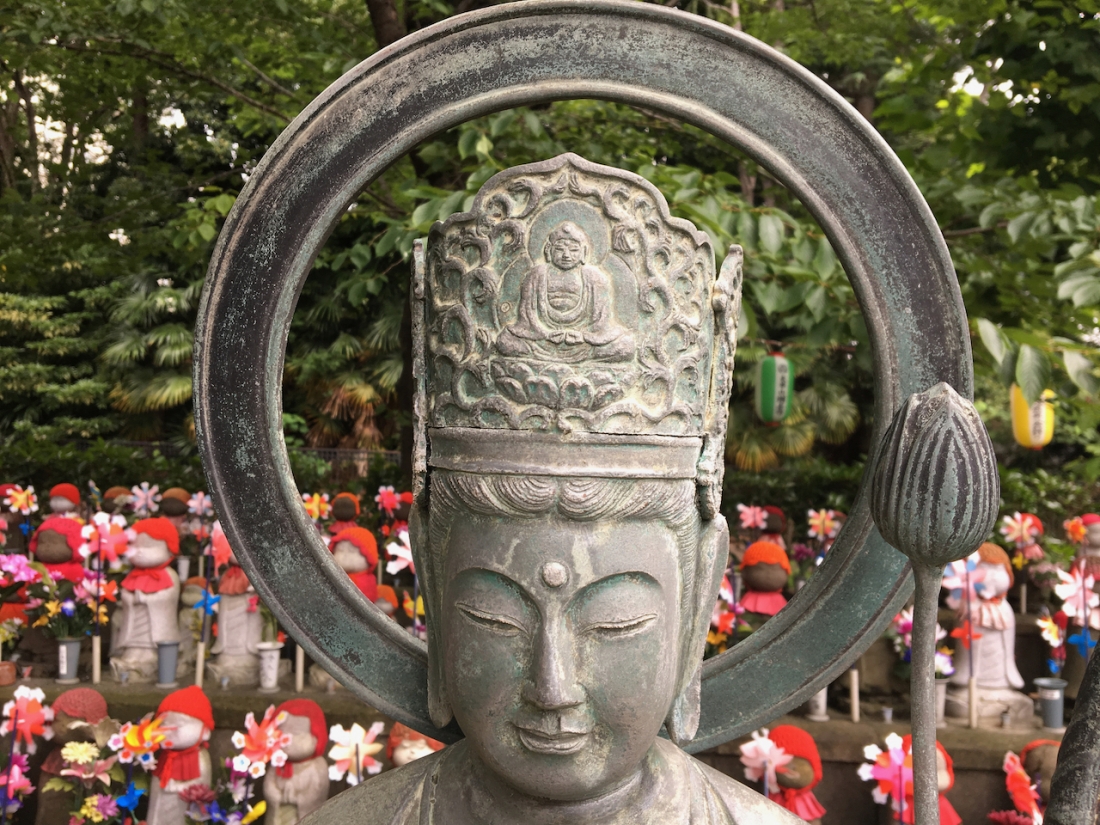
P.S. Featured photo was taken by me at Zojoji temple in Tokyo, Japan, with an image of Kannon Bodhisattva wearing a crown that features an image of Amitabha Buddha.
The Japanese-Buddhist phrase samu (作務) is often associated with Zen, and refers to a kind of Buddhist work ethic, especially for monks. While monks in ancient India were expected to beg for alms and focus exclusively on practice, when Buddhism reached China the criticism from native Confucian scholars about “lazy monks” forced a change toward self-sufficiency.
Thus monasteries in China developed a work-ethic that emphasized monastic work, and work as a Buddhist practice, however this was not universally practiced. Buddhist communities that adopted this ethic tended to survive the Buddhist purge of 845, and passed on such monastic rules to future communities in Korea, Japan and Vietnam.
I was surprised to learn that this tradition of samu wasn’t limited to Zen, though. I found an article (Google Translate version) about samu in Tendai Buddhism:
“Thus, even in the world of monks endeavoring on the Buddhist path, as a daily training, it has been said since antiquity that ‘first samu, second practice, and third knowledge.'”
As the article says, it’s tempting to see Buddhism in terms of meditation and such, but these are only part of the story. The work we do each day, whether that be parenting, office work, etc., is just as important, if not more important, than meditation. This is because our day to day activities, done in a Buddhist light, help train us bit by bit.
Once one sees daily work in this way, and makes it a foundation for their Buddhist path, then adding home practice (gongyō) within this is a healthy thing to do.
I mention this, because it’s tempting to see work, parenting and such as getting in the way of Buddhist practice, because we tend to hold an unrealistic view of how Buddhism is practiced. But this is a problem that past generations solved long ago by realigning daily obligations into a more Buddhist context.
The work we do benefits others, even if we are just doing it to pay bills, or out of obligation. Right livelihood is also one facet of the Noble Eightfold Path.
Instead of treating Buddhism as a way to escape our problems, we are encouraged to embrace our life as it is and make it a Buddhist one.
Namu Shakamuni Butsu Namu Amida Butsu
1 Even in the Buddha’s time, the monks were carefully instructed not to beg for alms after early morning, to reduce the burden on the lay community. Further whatever they received was meant to last them the whole day.
Something I was thinking about lately while pondering this famous tale between 12th century Japanese monk, Honen, and a woman of the night. Honen’s advice to the woman was non-judgmental but a genuine concern for her well-being, and at the same time, it also acknowledged her circumstances.
Something I’ve always liked about the Pure Land Buddhist path is its openness. The light of Amida Buddha calls to all beings, regardless of their background and circumstances, or their accomplishments as Buddhists (or non-Buddhists) and unconditionally leads them to the Pure Land. How one interprets Amida, the Pure Land and such doesn’t really matter. What’s important is that Amida accepts all beings as they are, and leads them forward.
And so, when I was thinking about this, I realized that if Amida Buddha accepts you for who you are, then it makes sense to do the same.
Thinking about the woman of the night that Honen encountered, it made me realize that Pure Land Buddhism is a great expression of Buddhist metta, or goodwill.
This is not exclusive to Pure Land Buddhism, though. In Theravada Buddhism, there is the practice of metta meditation (separate from mindfulness meditation), and Zen similarly teaches contentment with oneself and the world around you. So, each tradition in Buddhism takes metta as a core teaching and find different ways to express and foster it.
The accessibility, simplicity and portability of Pure Land Buddhism makes it ideally suited for everyday folks. As a foundation, one can then explore other aspects of Buddhism, or be content with the nembutsu.
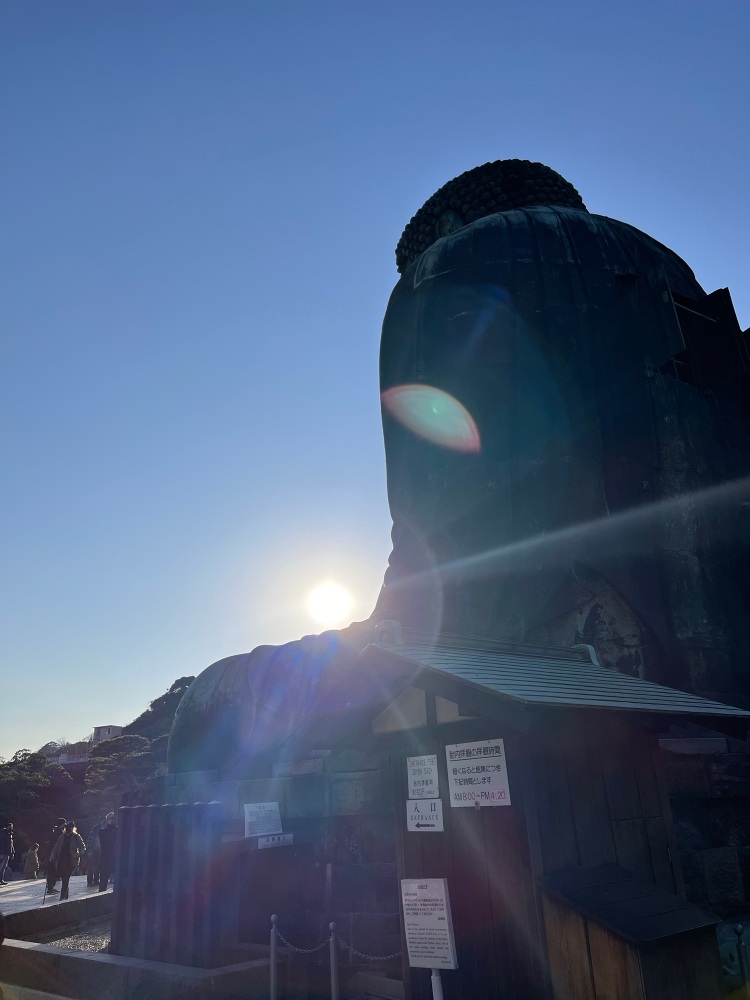
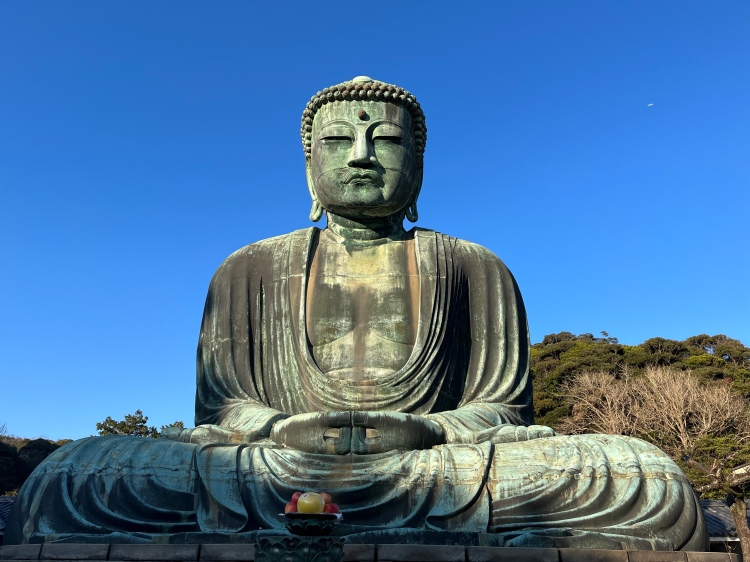
The Great Buddha of Kamakura statue (depicting Amida Buddha), taken in December 2022. I think my daughter might have snapped this photo, not me. I forget.
What’s important is that even if you are a crappy Buddhist, it’s OK. Obviously, like exercise and eating, Buddhist practice provides many positive benefits, so anything you can do, however often, is always worth the time and effort. However, if circumstances work against you, you do not need to punish yourself for your failings either. Like the woman of the night, sometimes life just gets in the way, but there’s no need to punish yourself for it. Amida Buddha’s light and goodwill extends to you just as it extends to others. Practice what you can, when you can, and Amida will guide you along the Buddhist path (via the Pure Land) somehow or some way.
Namu Amida Butsu
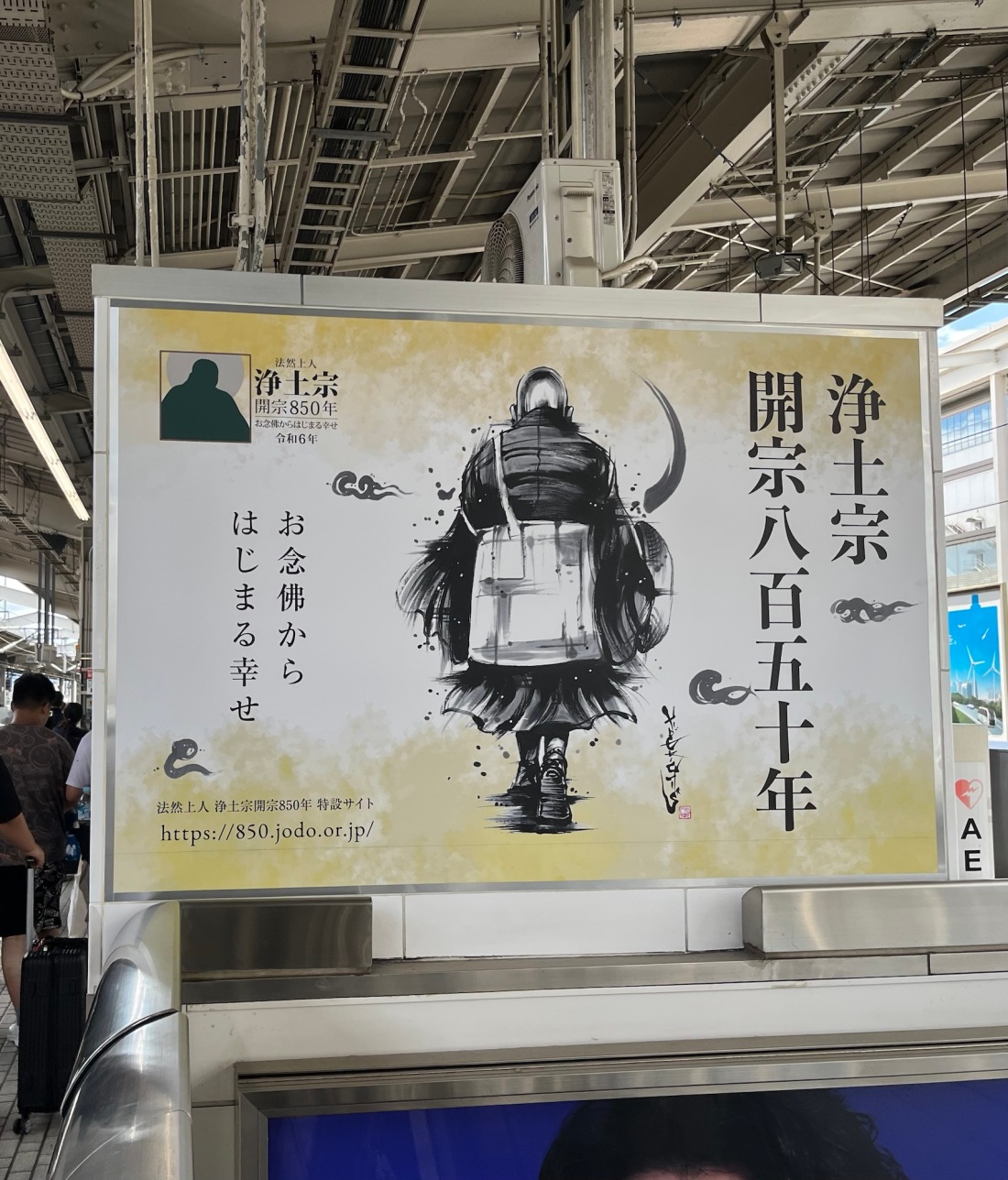
P.S. Featured photo is something I took at the Kyoto train station in summer 2023, part of a promotion to celebrate Honen’s 850th birthday. I always liked this poster, but couldn’t find a post I could work it into. 😅
Recently, I was watching an excellent video by Extra History on the history of Buddhism, and I was happy to see that they used the term “the Buddha”, not just “Buddha”. This might not seem like a big deal, but it helps to know the difference.
The word Buddha comes from Sanskrit, and means “an Awakened One”, someone who has accomplished Enlightenment and is fully unbound (e.g. Nirvana).
In any case, “Buddha” is a title, not a name. A person who accomplishes Enlightenment is a Buddha.
Further, in Buddhism, it is thought there is not just one Buddha, but many Buddhas.
Buddhism thinks in terms of verylongtime, as in countless eons that span a near infinite flow of time. Within that time, when ignorance prevails, a Buddha arises. It works like a cycle.
Think of the teachings (a.k.a. the Dharma) of Buddhism, as something like the laws of physics. The laws of physics pervade the Universe, whether anyone notices or not. Along comes someone like Newton who observes them, articulates them, and teachers others. In the same way, a Buddha is one who discovers the Dharma, articulates it and teachers others. After that Buddha passes away, eventually the Dharma is forgotten again, and in time a new Buddha arises to repeat the cycle.
Thus, the historical Buddha, the one who founded Buddhism as an organized religion around 5th century BCE, is thought to one of a long line of Buddhas that span those countless eons. He is one Buddha of many. And since he was born from the ancient Shakya clan in northern India, he is called Shakyamuni Buddha, or “the Buddha from the Shakya clan”. His birth name was Siddhartha Gautama (sometimes Gotama), but his title in Buddhism is Shakyamuni Buddha.


 Gleanings in Buddha-Fields
.jpeg?uselang=en)
You must be logged in to post a comment.