The Goma Fire Ritual

My family and I visit a certain Shingon-sect Buddhist temple in the area for New Years tradition, and also for Setsubun rituals (namely mamemaki bean-throwing, plus good luck). Neither my wife nor I follow the Shingon sect, but Japanese-buddhist temples for the Japanese community (not Westerners) are rare, so we are glad to visit despite the lengthy drive.

Shingon Buddhism, one of two “esoteric” (mikkyō, 密教) Buddhist traditions in Japan,1 relies on a complex array of ceremonies, rituals, symbolism, and mantra chants that help awaken one’s Buddha-nature not through words, but through a kind of non-verbal impact. This requires a trained teacher to guide one through it, hence it’s called “esoteric” Buddhism (a.k.a. Vajrayana Buddhism). Years ago, I attended a “moon meditation” sitting once where each one of us sat and meditated before a hanging scroll showing a full moon. It was an interesting experience.

Anyhow, one ceremony that’s very common in Shingon is called the Goma-taki (護摩炊き) ritual, or “fire ceremony”. This is often called Goma in English. This is a video provided by Koyasan Temple in Japan which shows a complete ceremony: a priest creates a pyre within a sacred space, often before a statue of Fudo-myo-o (不動明王). Throughout the ceremony, the priest recites certain chants and uses certain hand-gestures. The fire is thought to purify one’s mental defilements, burn away past karma too, and also certain sticks are added to the fire with people’s aspirations and wishes written on them.

At our temple here locally, the priest conducts the Goma ritual as well, and people receive blessings from the ceremony one by one, and we also receive small o-fuda talisman that we place next to our Buddhist altar at home for protection. These are larger than omamori charms, made of wood or cardboard, and usually enshrined, not carried on your person.

The origins of the Goma-taki ritual are taken from Indian religious practices of the past, but gradually underwent “Buddhification” (absorbing practices, and making them Buddhist) and this is why, I believe, that esoteric Buddhism arose in later generations of Buddhism in India.2 The deities portrayed in esoteric Buddhism also have origins in India, but transformed as they were brought through China to Japan.

Goma-taki rituals are frequently held for the public in larger Japanese temples, so you can easily drop and just observe, but be aware they can take up to an hour or more. But it is a pretty interesting experience and well worth observing.

Namu Daishi Henjo Kongo
(Praise to the Great Teacher Vairocana Vajra, a.k.a. Kukai / Kobo Daishi)3

1 the other is Tendai Buddhism, which calls it taimitsu (台密), not mikkyo. What are the differences? Not sure. Both lineages come from the same Chinese-Buddhist tradition of the time, but beyond that, no idea.

2 Seen from one perspective, the earliest texts and traditions in Buddhism did not feature any esoteric practices and rituals, so if you’re looking for “pristine” Buddhism then esoteric practices don’t fit this. From another point of view, Buddhism continued to innovate across generations, first Mahayana Buddhism, then esoteric practices, so in that light esoteric Buddhism solves problems of practice and teaching that earlier Buddhism struggled with. I don’t know which viewpoint is the right one, personally. I am a big proponent of easy, accessible Buddhist teachings and practices (hence the nembutsu, precepts, etc), and esoteric Buddhism doesn’t make this easy. And yet, it is surprisingly popular in Japan (2nd only to Pure Land Buddhism), so maybe there’s something there that I’ve failed to notice all this time? 🤷🏼‍♂️

3 This is often recited in Shingon tradition the way namu amida butsu is recited in Pure Land traditions in Japan.

Plum Blossom Season 2026

It’s hard to believe but in some places Plum Blossom season is already here! My wife sent me this post from Dazaifu Tenmangu Shrine in western Japan showing the first blooms of the year:

This is a famous Shinto shrine (homepage here) that venerates the God of Learning, Tenjin (天神), better known in history as Sugawara no Michizane.1 I have visited Kitano Tenmangu Shrine in Kyoto, and Yushima Tenmangu Shrine in Tokyo, but Dazaifu is in western Japan where Michizane died in exile and not easily accessible for me, though my sister-in-law somehow got me a charm from there last year. I’ve always liked Tenjin/Michizane, so if I had to pick a Shinto deity, he gets my vote.

Plum blossoms, which imported from China (unlike native cherry blossoms), were trendy among the elite of Japanese society as far back as the Manyoshu anthology (7th century):

Original ManyoganaModern JapaneseRomanizationRough Translation1
和何則能尓  我が園にWaga sono niPerhaps
宇米能波奈知流梅の花散るUme no hana chiruthe plum blossoms will
比佐可多能ひさかたのHisakata noscatter in my garden
阿米欲里由吉能天より雪のAma yori yuki nolike falling snow
那何久流加母流れ来るかもNagarekuru kamofrom the gleaming heavens
1 Amateur translation, apologies for any mistakes

Later, because of Michizane’s devotion to his old plum tree while in exile, plum blossoms became associated with his deified form of Tenjin, and thus Tenmangu shrines typically have some on the sacred grounds.

My own tree2 blooms in early-to-mid February and I look forward to it every year.

I hope you all get a chance to see some plum blossoms in your area too!

1 Elevating historical figures to the status of kami is not that unusual in Shinto religion.

2 Mine are more typical Thundercloud Plum trees (Prunus cerasifera), common here in the US, while Japanese umé (梅) are a somewhat different variety (Prunus mume). But I am happy with what I have.

Sacred Trees in Japan and Korea

Sometimes when you travel in Japan, especially outside of Tokyo, you may come across like this:

A large sacred tree at Kasuga shrine in Nara, Japan. Taken by me in July 2023.

This is a large tree that has been growing for centuries within the precincts of Kasuga Grand Shrine in Nara, Japan. The tree, as you can see, has a large rope tied around it with small paper streamers. If you ever saw the Studio Gibhli movie Totoro, you can see a big camphor tree with a similar rope around it.

Sometimes you also find rocks and other natural things with ropes around them too.

A “shimenawa” around an “iwakura” (sacred rock) at Meigetsuin, Buddhist temple in Kamakura, Japan, courtesy of Wikipedia.

This is a Shinto-religious custom using a special sacred, hempen rope called Shimenawa (注連縄). The little paper streamers called called Shidé (紙垂).

Shimenawa are sometimes used to section off a sacred space, but they’re also used to enshrine places thought to house a local kami, such as a tree or rock thought to be sacred. Sometimes you also see them hanging over home Shinto shrines (kamidana, 神棚). The idea is the same: the paper streamers help deliniate a sacred space (the inner sanctum of your home shrine in this case).

Interestingly, I discovered that a separate, but parallel tradition exists in Korea too. This blog shows that in Korean traditional culture, people would enshrine local guardian spirits by tying a rope (금줄, Geumjul) around them, and decorating with colored cloths (오색천, Osaekcheon) or white strips of paper. Such sacred trees (당산나무, Dangsan-namu) and sacred rocks (누석단, Nuseokdan), are collectively called Seonangdang. They are very similar in appearance to the ones in Japan, so it’s not hard to guess that there’s some common religious tradition between both cultures, though the Wikipedia article linked above also suggests a potential link to Mongol culture too.

Shinto as a religion exists only in Japan1 but it’s not hard to imagine that Shinto tradition drew from something much older that was shared across the Korean peninsula and Japan. Further, since it’s known that in early Japanese history that many Korean families migrated to Japan (the Imperial court sought their skills and technology), it’s quite possible the tradition was imported from Korea to Japan. Further, as this early Yamato court actively allied with the Korean kingdom of Baekche, it’s possible the cultural exchange went in that direction too.

Anyhow, it’s a fascinating example of how the two (or more) cultures have shared religious traditions for millenia, but few would notice.

1 Barring colonial efforts in the early 20th century to introduce it to other Asian countries, but these did not have a lasting impact culturally.

Asakusa Temple Sutra Book

This is the last in a series of Japanese-Buddhist sutra books that I wanted to share. I talked about this Soto Zen sutra book, a Rinzai Zen book and a Jodo Shu sutra book. Today, I wanted to share the sutra book I purchased at Asakusa Temple in Tokyo, Japan.

Asakusa Temple (more properly Sensoji Temple, 浅草寺)1 is super famous, and chances are if you have visited Tokyo, you probably went to Asakusa Temple. Asakusa is technically its own Buddhist-sect now, but for much of its history it was a Tendai Buddhist temple that enshrined a legendary statue of Kannon Bodhisattva that supposedly washed up on shore and enshrined in the year 645. This is called the Yanagi no Miei (柳御影, roughly translated “the [sacred] willow image”). The featured photo above shows where it is enshrined at Asakusa Temple.

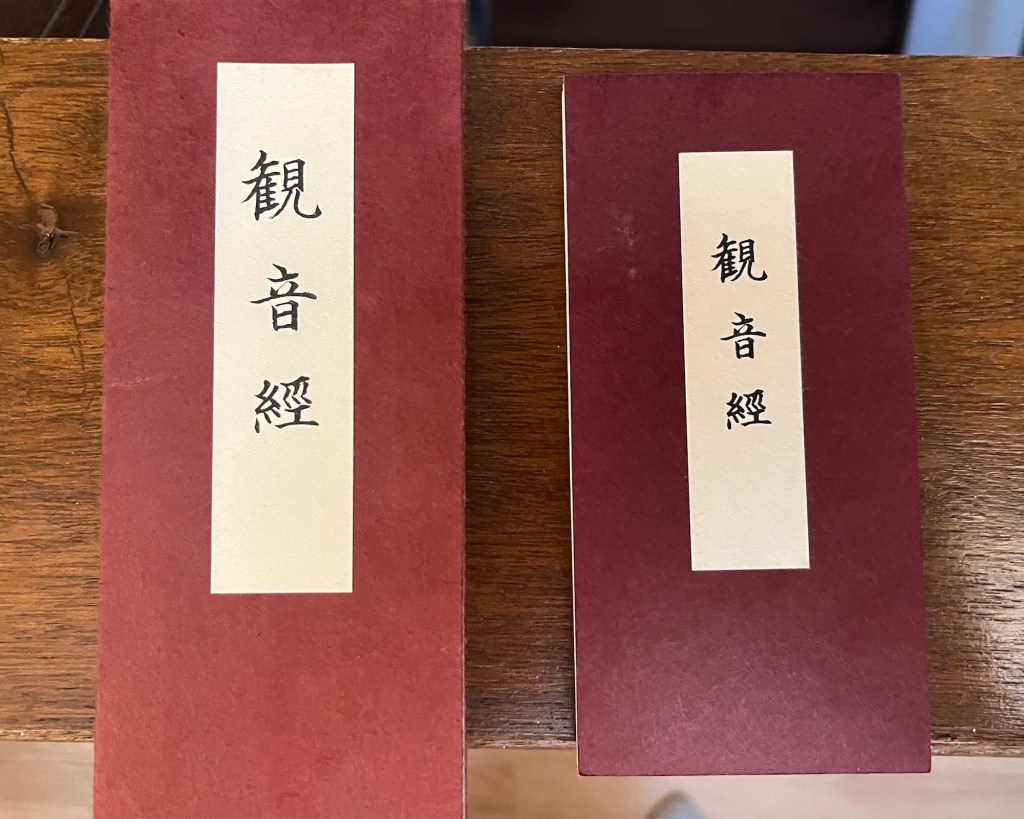
Not surprisingly, the sutra book’s liturgy focuses on Kannon-related chants. This sutra book is sold in two sizes, but the contents are the same:

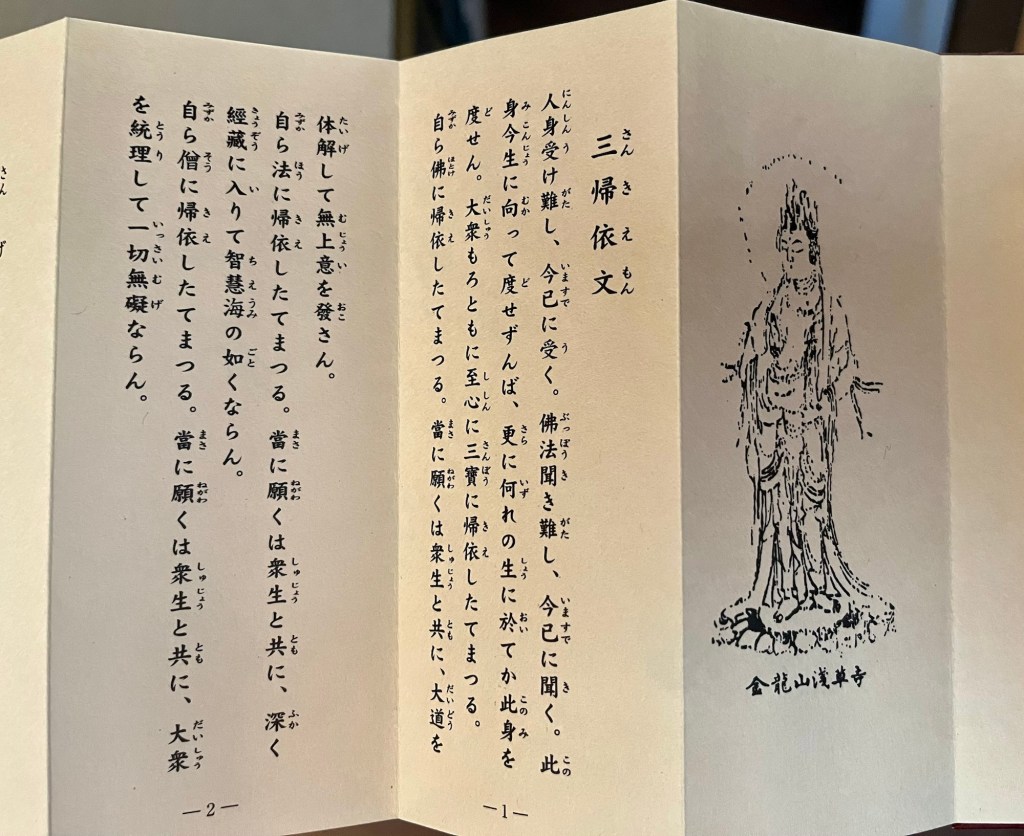
The illustration inside the cover depicts the legendary statue :

The liturgy to the left of the illustration is a form of Taking Refuge in the Three Treasures (san-ki-é-mon, 三帰依文) done in a more native-Japanese style, than the Sino-Japanese version I posted here. Both versions are perfectly valid and are chanted.

More examples below are chants that we’ve seen in older posts in right to left order:

  • the Sangémon (repentance) on the right,
  • Kaikyoge (verses for opening the sutra) second page from right, and
  • the Kannon Sutra itself on the left half.

Unlike other examples I’ve seen, this sutra book posts the entire Kannon sutra, not just the verse section. It’s about 3 times as longer than usual.

Next, we see a classic: the Heart Sutra. This makes sense since the Heart Sutra was spoken by Kannon Bodhisattva, not Shakyamuni Buddha. So. it fits the theme.

And last but not least, after the Heart Sutra is the Ten Verse Kannon Sutra (second from right), and Dedication of Merit verse.

Finally on the far left page is a simple recitation chant of devotion to Kannon Bodhisattva: namu kanzeon bosatsu (南無観世音菩薩). I’ve often used that to sign off blog posts, and unlike more esoteric mantras, this is a very common statement of devotion, much like the nembutsu for Amida Buddha. Feel free to chant it in your Buddhist practice!

Anyhow, this sutra book is something visitors to Asakusa Temple would probably overlook without the necessary background (or religious inclination), but it’s a fascinating look at Tendai Buddhist liturgy, but in a way that’s adapted to a particular temple, and to a particular deity.

Namu Kanzeon Bosatsu

P.S. That covers all the sutra books I wanted to cover here in the blog. I own a few more, but they’re not interesting or unique enough to justify another blog post. If I pick up another sutra book, I’ll post again. But if you did enjoy this mini-series, thank you for reading!

1 The words “asakusa” and “senso” are literally just two different ways to read the same Chinese characters.

Letting Go Of College-Age Children

Hello readers,

This past week, I have been in Dublin, Ireland. The purpose of this trip was (among other things) to help my daughter settle in to your her new life in Trinity College Dublin.

She graduated high school this year, and it’s been a slow-moving, emotional roller coaster as we come face to face to with the fact that our firstborn is leaving the nest. Of course, logically this was always going to happen, but actually facing it is harder than expected. As a father, she has been an important part of our life for the last 18 years, and the thought of letting her go especially in a place where I cannot protect her became increasingly stressful.

Dublin itself, is a great city: very walkable, safe in a way you don’t find in US cities,1 friendly people, and lots of awesome European food you can’t really find here in the West Coast.

A view of Dublin from my daughter’s accomadation

And yet, when my daughter and I arrived in Dublin, we had only five days to get setup with things like:

  • Apartment (student housing)
  • Bank account (since it’s a different country)
  • Mobile phone (same reason)
  • Figure out food sources
  • Figure out public transportation
  • Get some basic home goods since we couldn’t possibly bring it all from the States.
  • Meet some local friends we know to help my daughter establish a local support network, etc.

Out of those five days, I had to some work in Dublin as well (I couldn’t take five full days off), so it was more like three days.

The good news is that we quickly got many of these things sorted out. We found a good mobile service, found some groceries and good restaurants nearby, and her student accommodation is very close to the Luas tram, and the Luas runs often and is easy to get tickets for. If you visit Dublin, definitely learn to use the Luas.

However, during this time my stress and depression was very intense. As soon as my daughter was out of sight, I was full of fear of something bad happening to her (being a lone, young woman), and also really depressed to let her go. I remember a couple nights alone in the hotel where I hardly slept, partly due to jetlag, and partly due to sheer emotional stress.

But I thought about it, and I realized that beyond practical concerns, I was deeply clinging to my daughter. I like to think I was a pretty involved parent, and that I did my best to be both a good father and a friend, and suddenly 18 years of this was ripped away the moment that we set foot in Ireland, and my mind couldn’t handle the abrupt change. In short, I think part of my panic was grounded in ego as a parent. Once I realized my selfish ego was driving this panic, I paused.

Me having breakfast at a local Cafe Nerro in Temple Bar, while reading about the Heart Sutra.

Thinking about this further, the only way she would prosper was to let her get on her feet, help when she needs help, but otherwise, give her space to grown and learn. In short, I had to trust her.

This was hard at first, but I kept reminding myself “trust her, trust her” and by and by I learned to let go. Instead of constantly trying to protect her, I encouraged her, provided any advice I could, and let her explore the city herself. She got lost a couple times on the Luas (got off at the wrong stop), but soon she started finding shops she liked, and could get to and from Dublin city centre without issue.

So, by the end, things were looking up: my daughter was getting on her feet, and we had met a few friends who all happily wanted to help her, and we enjoyed some pub visits, and good European food.

The point of all this, I guess, is that if you are a parent, and you are dreading your children leaving the nest, ask yourself how much of this is concern for your kids, and how much of this is concern for yourself. My job, as a parent, is to provide a safe, loving environment as they grow, but I don’t own my kids. That’s just ego.

Namu Shakamuni Butsu

Update: After I wrote this post, my daughter texted us to let us know she had made some friends already. 🥰

P.S. Unrelated, but September 9th is the Day of the Chrysanthemum holiday in Japan. If you can, maybe decorate the house with a few chrysanthemums, or enjoy the weather with a friend. Happy Day of the Chrysanthemum to you all.

P.P.S. Happy Star Trek Day (September 8th)! Live long and prosper. 🖖🏼

1 It’s hard to explain: when I am in the US, there’s always a subtle feeling of tension. Not just recently, but even 15 years ago when I first came back to the US. When I am Ireland, everything feels more relaxed. The way people talk to one another, even when they tease each other, etc. Dublin city centre at night has plenty of drunks stumbling about, racial tension toward immigrants, and fist fights, but somehow everything feels less …. contentious. Since many Americans don’t travel, we don’t realize how wound up we are.

Bad Tourists at Buddhist Temples

I found this video on Youtube recently by a native Laotian tour guide:

I’ve seen bad behavior in Japan too, not toward Buddhist monks, but toward local Geisha. I remember at Asakusa Temple, a trio of geisha were walking, and a horde of male photographers (Japanese and foreign) ran after them. It was… weird.

I also remember one time at Zojo-ji Temple seeing a foreign couple (European maybe), who were doing yoga poses in front of the mausoleum of the Tokugawa shoguns. I don’t think they understood what they were standing in front of, but it looked really stupid, and Buddhist temples have nothing to do with Yoga anyway.

I doubt readers here are the kind of people to get in monks’ faces for a camera shot, or harass geisha, or make stupid photos at temples, but hopefully readers can help raise awareness about such awful behavior. Tourists might act normal at home because they are bound by social conventions, but some people forget that they are guests in other people’s countries and flaunt common courtesy. Tour companies will gloss over this in the name of profit. In the end, it’s the locals who suffer.

If you are traveling, think of yourself as a guest in someone else’s house. In other words, don’t be a dick.

Buddhas of the Three Time Periods

Something cool I learned about while watching a Japanese documentary of Eiheiji temple, one of the two core temples in the Soto Zen tradition. Evidentially there is a small Buddhist altar there that features three Buddha statues. You can see photos of it here, the building (called the butsuden 仏殿) is here. This is posted on a separate blog too. You can see a photo of the three buddhas at the very bottom of this page here.

But who are these three Buddhas? In Japanese this is called the Sanzebutsu (三世仏), or “Buddhas of the Three Time Periods”.

In order these are:

  • Amida Buddha – the Buddha of the Past (he accomplished his vows eons ago), and thus the Pure Land was established.
  • Shakyamuni Buddha – the Buddha of the Present (the current eon of history), the historical founder of Buddhism. Also known as Siddhartha Gautama, Shakyamuni, etc.
  • Maitreya Buddha – Buddha of the Future (he has not accomplished his vows yet, but will eons later). For now he dwells in the heaven realm of Tushita.

This “trinity” of Buddhas is not limited to Eiheiji Temple. You can find similar works of art in other temples as well.

Anyhow, it’s an intriguing idea that the Dharma has always existed across space and time, but simply represented by different Buddhas as appropriate.

Namu Amida Butsu
Namu Shakamuni Butsu
Namu Miroku Bosatsu

Zen for Everyone

Myoshinji Temple (English homepage) in Kyoto is one of the central temples of the Rinzai Zen tradition, especially after the reforms by Hakuin in the 18th century. Although I’ve never been there, it is a very scenic and seems like a worthwhile place to visit.

The website in Japanese lists a number of activities that one can partake in for experience Zen:

  • Learning zazen meditation
  • Sutra copying
  • Listening to a sermon
  • Singing Rinzai-Zen hymns1
  • Monastic training

What struck me is that Myoshinji Temple provides a variety of activities to suit different people. Not everyone is ready for Zen training or meditation, yet they can still get something wholesome out of the experience. I like this kind of inclusive Zen Buddhism.

In my limited experiences with western Zen temples, the focus is solely on meditation and practicing as monks do. This approach only works for certain lifestyles and certain temperaments. It’s not wrong, but through my experiences in Pure Land Buddhism, especially through immigrant communities, I feel that a more inclusive, more approachable Buddhism is really beneficial.

Just sitting around enjoying donuts and coffee with congregants after service, and talk about stuff, is really nice. This only works when new people don’t feel intimidated, and people aren’t trying to one-up each other.

So to me, Buddhism works best when it accommodates people as they are now, with a variety of practices and options, rather than being written off as “cultural accretions“. Just let people be people, come as they are, and soak in the Dharma at their own pace.

Someone who only listens to sermons today, prays to Kannon, or copy a sutra, may be inspired to pick up deeper practices later at the right time. You never know.

P.S. Happy Tanabata to readers!

1 Similar to Jodo Shinshu sect Buddhism, Rinzai Zen, at least at Myoshinji temple, has a lot of hymns. I don’t know much about these, and there is no information in English.

Happy Golden Week 2025

Happy Golden Week to readers!

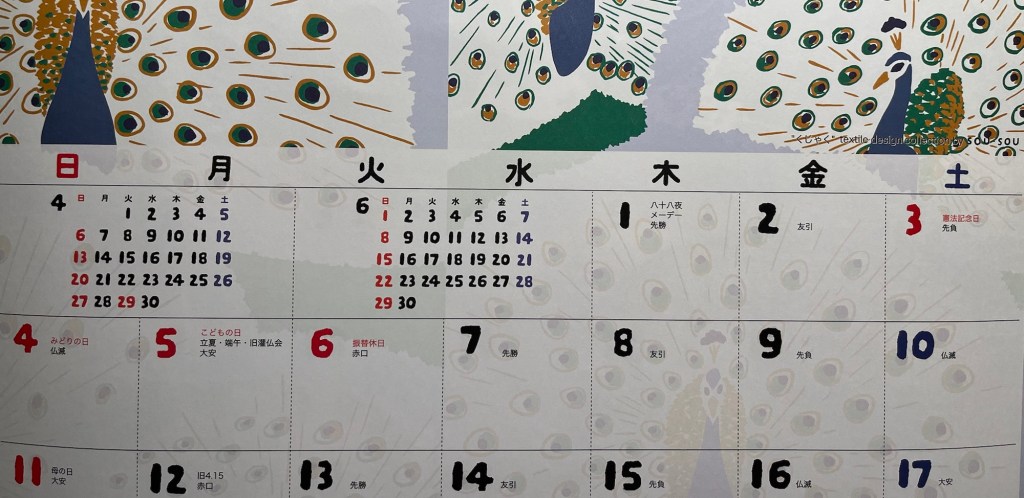
The first week of May in Japan has an interesting phenomenon in the modern calendar called Golden Week (gōruden uīku, ゴールデンウィーク): a series of national holidays that line up very closely. Thus, people often take vacations at this time (a rarity in Japanese business culture), and enjoy the fine weather before the monsoon comes. I wrote about Golden Week in more detail here.

You can see on our home calendar how the holidays (in red) line up:

My sister-in-law in Japan often takes this time off, as do many other Japanese business and white-collar workers. It may be the longest vacation they take in the year, apart from Japanese New Year.

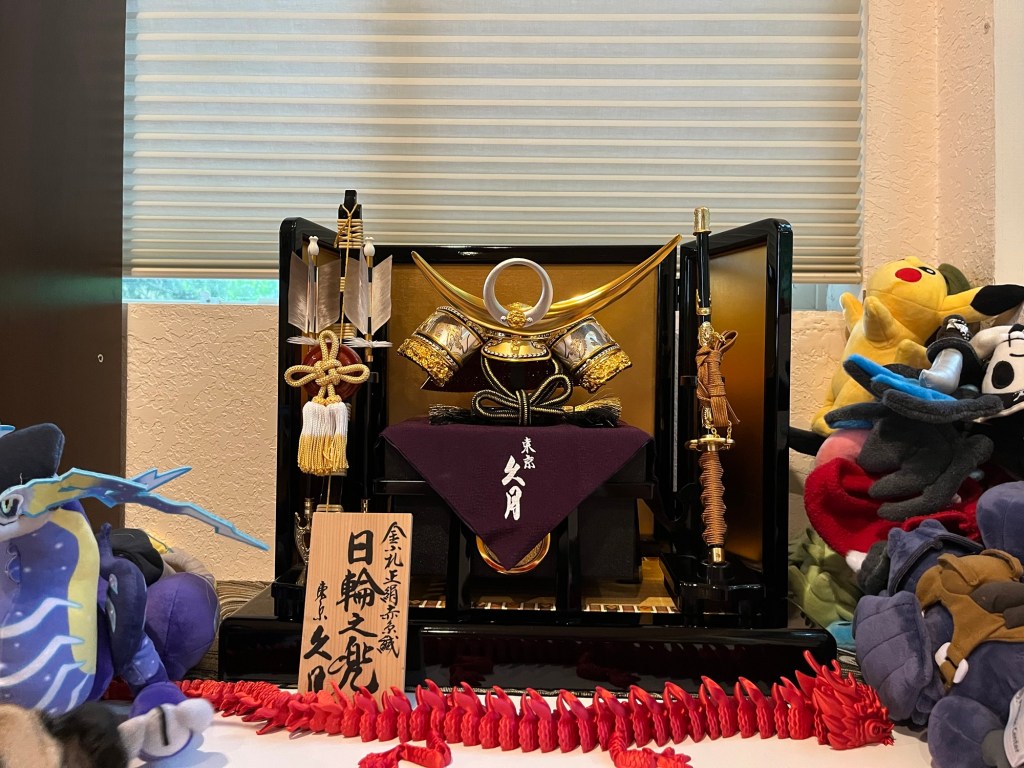
As part of Golden Week, Childrens Day, or Kodomo no Hi (子供の日) also takes place every May 5th. I’ve written about that as well. We have taken out our usual yoroi armor display:

The Pokemon toys and dragons are just my son’s toys (he should clean up more 😋).

I am not sure if we can get kashiwa-mochi this year, as Japanese goods are getting harder and harder to obtain lately, and our schedule is chaotic this week anyway, so I am not sure exactly how we will celebrate. I do know that we will go see the Minecraft movie for a third time in theaters, though. My son and I really enjoy it, and it’s nice to see all the kids yelling certain parts of the dialogue in unison.

I wish I could post more, but as alluded to earlier, I will be away for about a week, and haven’t been able to write more due to work and other competing priorities. However, I hope you all have a terrific Golden Week, and can enjoy the weather in some way. I have other great content coming up, both historical and Buddhist, so please stay tuned, and take care!

P.S. Golden Week also serves as a reminder that what many modern workers need isn’t just equitable pay, but also time off. Happy May Day! ✊🏼

Who is Vairocana Buddha: the Buddha of the Sun ?

Now, I, Vairocana Buddha am sitting atop a lotus pedestal;

On a thousand flowers surrounding me are a thousand Sakyamuni Buddhas.

Each flower supports a hundred million worlds; in each world a Sakyamuni Buddha appears.

All are seated beneath a Bodhi-tree, all simultaneously attain Buddhahood.

All these innumerable Buddhas have Vairocana as their original body.

The Mahayana version of the “Brahma Net Sutra”, translation by Young Men’s Buddhist Association

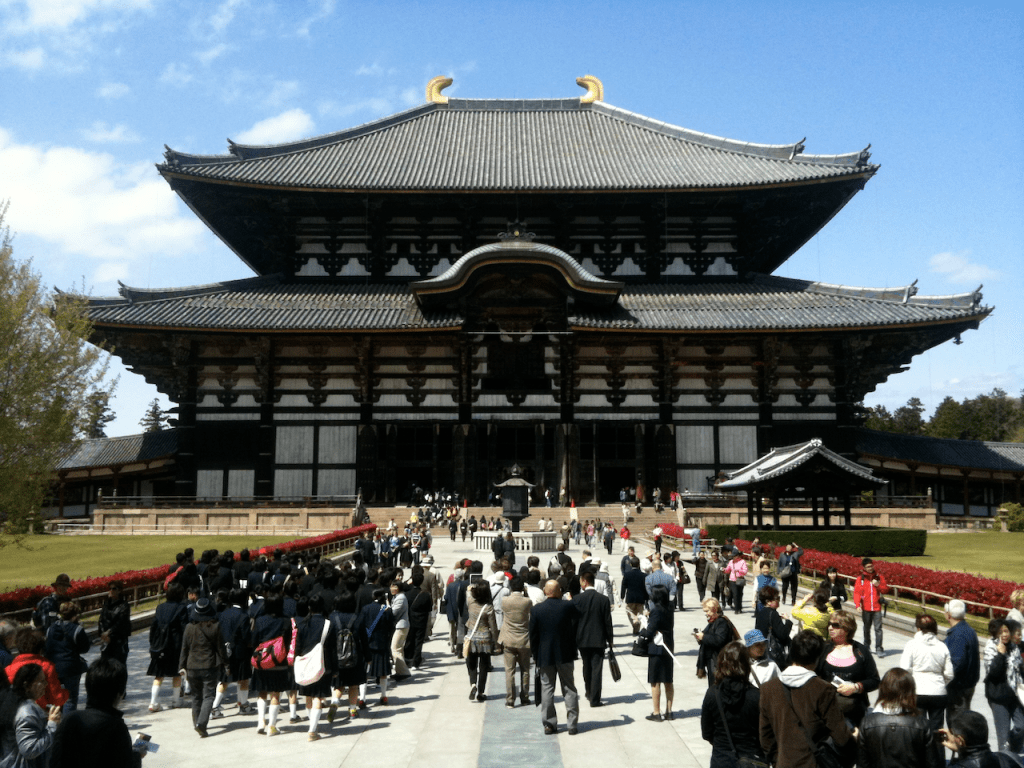
If you ever visit the famous Todaiji temple in Nara, Japan, you will see a truly colossal structure like so:

Taken by me on April 2010.

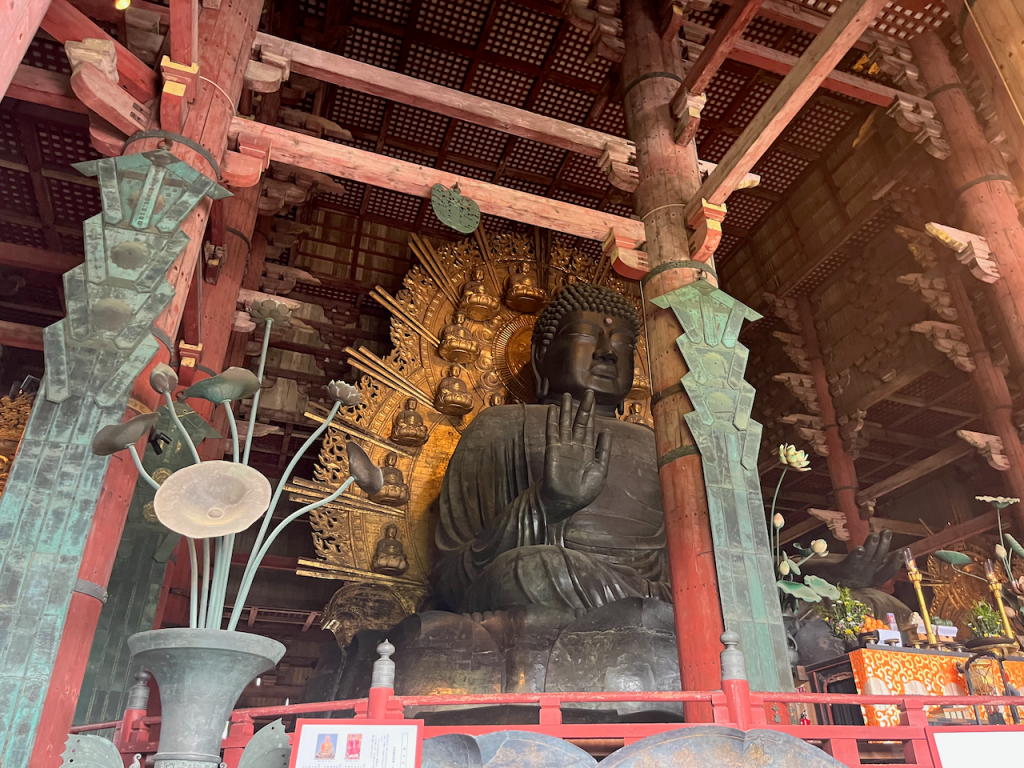
Inside as you approach is a colossal Buddha statue:

A massive temple interior showing an immense, seated bronze Buddha statue with a similarly massive halo behind it. There are small buddhas in the halo. The buddha holds its palm straight out at the viewer.
A side profile of the Great Buddha (daibutsu) of Todaiji Temple in Nara, Japan. This Buddha is Vairocana Buddha, the “Buddha of the Sun”. Taken in 2023.

This picture does not convey the size very well. It’s truly massive. But what is this Buddha?

This Buddha is a somewhat obscure figure named Vairocana (pronounced Wai-ro-chana) in Sanskrit, which means something like “of the Sun”. So, Vairocana is the Buddha of the Sun.

Vairocana features in a few Buddhist texts in the Mahayana canon: the Brahma Net Sutra quoted above and the voluminous Flower Garland Sutra, for example. It is also very prominent in esoteric traditions in Japan (Shingon and Tendai sects) as Maha-Vairocana (“Great Buddha of the Sun”).

The Brahma Net Sutra introduced Vairocana and explains that all Buddhas that appear in such-and-such time and place are embodiments of Vairocana. Thus Vairocana isn’t just another buddha, but is their source. Vairocana, in other words, embodies the Dharma.

That is why in the Great Buddha statue above at Todaiji Temple, you see rays of light emanating outward with “mini Buddhas” among them. Each of these Buddhas is thought to have the same basic origin story as the historical Shakyamuni Buddha. Hence in the text they are all just called “Shakymunis”. All these Buddhas have the same basic qualities ( Chapter Two of the Lotus Sutra teaches the same thing, by he way), one is the same as all the others.

This is primarily a Mahayana-Buddhist concept, but has precedence in pre-Mahayana sources. Consider the Vakkali Sutta from the Pali Canon:

“Enough, Vakkali! What is there to see in this vile body? He who sees Dhamma, Vakkali, sees me; he who sees me sees Dhamma. Truly seeing Dhamma, one sees me; seeing me one sees Dhamma.”

Translation by Maurice O’Connell Walshe

So the historical Buddha, founder of the Buddhist religion, Shakyamuni, is telling his disciples that his personage is less important than the Dharma. Mahayana Buddhism simply applies this same teaching towards all the Buddhas.

Also, some Buddhist texts assign different Buddhas to this role: the “cosmic” Shakyamuni Buddha of the Lotus Sutra or Amida Buddha in interpretations.

But it doesn’t really matter what you call this embodiment of the Dharma.

What matters, I think, is that the source of Buddhist wisdom is the Dharma, not a specific teacher, and that the Dharma pervades everywhere, regardless of the particular community, or lack thereof….