The Rise and Fall of the Fujiwara

In our recent visit to Kyoto, the ancient capitol of Japan, we also took a day to visit the city of Nara, which is an even earlier capitol. Downtown Nara has several highlights but two of them are the Buddhist temple of Kofukuji, and the Shinto shrine of Kasuga-Taisha (“Kasuga Grand Shrine”). Kofuku-ji Temple is one of the central temples of the once powerful Hosso sect, and Kasuga Grand Shrine is a famous shrine within Shinto religion,1 and hosts a primeval forest that has been untouched since antiquity. I might post more photos of each later.

The famous Sarasawa Pond with Kofukuji Temple on the left. Taken in July 2023.

What makes these two sites important is that they were both tied to the powerful Fujiwara Clan.

During the Nara Period of Japanese history, the Fujiwara were just one of several noble houses that supported the Imperial family. Back then they were called the Nakatomi (中臣) Clan. During a power-struggle between the Imperial family and the Soga clan, one Nakatomi no Kamatari (614 – 669) came to their rescue and helped defeat the Soga. Thereafter, the Imperial family relied on Kamatari to help reform and strengthen the government. The Nakatomi earned the clan name Fujiwara later under Emperor Tenji. So far so good.

However, starting with Kamatari’s son, Fujiwara no Fuhito (who also helped compile the Nihon Shoki), the clan gradually began to monopolize key positions, increasingly through inter-marriage with the Imperial family. By the 12th century, every member of the Imperial family married members of the Fujiwara clan, over and over, generation after generation. This allowed the head of the Fujiwara to assume the role of “regent” (sesshō, 摂政) to his offspring who were children on the Imperial throne, when switch to “chief advisor” (kanpaku, 関白) when they were old enough to rule on their own. That same advisor could also force the Emperor to abdicate to their son (whose mother was also from the Fujiwara clan) when necessary, allowing the same official to be regent to their grandson.

Further, by holding key government positions, the Fujiwara could also manipulate property laws on their private holdings in the provinces, increasing personal revenue. The Fujiwara were not the only noble houses to do this, even the Imperial family did it, but through their connections and influence, they profited immensely from the untaxed revenue of their lands.

With this increasing power and wealth, the Fujiwara sponsored a number of building projects. One of these was Kofukuji Temple, which was sponsored by the Fujiwara as far back as 669, but with its increasing connections to the Fujiwara, the building complex greatly increased in size and wealth.

Further, the family Shinto shrine of Kasuga Taisha prospered:

But the price of all this interconnectedness between the Fujiwara and religious establishments came at a cost. The religious institutions became extensions of Fujiwara power, with clan members given key positions locking other people out,2 and fielding armies of warrior monks against other rival temples.

By the time the system collapsed, the Fujiwara’s power began to diminish. Kofukuji Temple was largely burned down,3 and the original clan had become so large that it gradually broke up into five different clans, each one marrying with the Imperial family as needed:

JapaneseRomanizationFounded
近衛Konoe12th century
鷹司Takatsukasa1252
九条Kujō1191
一条Ichijō13th century
二条Nijō1242

Some of these new clans, especially the Kujō, even assumed positions of power with the new Kamakura shogunal family after the untimely death of Sanetomo, the 3rd shogun. Further, by the 19th century, with Westernization of Japan (e.g. the Meiji Period) the Five Regent Houses all became merged into the Western-style “peerage“, but by 1945, now hundreds of years since their founding, the five regent clans were finally abolished for good with the post-World War II reforms of the Imperial system.

In any case, after the 12th century, the centers of power had since moved. Kofukuji Temple, having been burned down in various conflicts, never quite rebuilt its power. Newer forms of Buddhism had taken root, and new centers of religious devotion had arisen. Kasuga Taisha grand shrine, being located in Nara, was now remote as the capitol had moved further and further east. When I visited Kofukuji Temple in 2010, and again this year (2023), some things had changed. The central Golden Hall (中金堂, Chū-kondō), had finished reconstruction for the first time in centuries. But even now, many of the original buildings have not been reconstructed.

Throughout Japanese history, the Fujiwara clan maintained prestige for centuries, but actual power continued to slip from their grasp bit by bit after the 12th century, and these historical relics in Nara are shadow of their former selves, and of Fujiwara power.

1 People are often surprised to learn that Japan has essentially two religions: Buddhism which came from India (via China), and Shinto which is the native religion. The two have been pretty intertwined culturally for centuries. It’s a long story.

2 Some of those who were excluded went on to found other Buddhist sects later partly out of disillusionment with the establishment.

3 Quite a few temples burned down in times of war, not just Kofukuji. Todaiji also burned down many times, as well as Enryakuji on Mt Hiei, among others.

Torii Gates in Japan

While making some maps on Inkarnate for a new Japanese-themed Ravenloft-domain I published on DMS Guild, I was reminded how these kind of Japanese gates often show up in unusual places in Western media, including fantasy media:

Torii gate for Tsurugaoka Hachimangu shrine in Kamakura, Japan. Taken in 2022.

But these gates aren’t just for decoration, they’re an important part of Japanese Shinto religion, called a torii (鳥居). They’re a feature only found at Shinto shrines, not Buddhist temples. Similar structures exist in other Asian cultures, but the torii in particular serves a religious function.

Shinto is a religion devoted to the kami, the native divinities of Japan, and in Shinto tradition ritual purity is important. The kami will not descend to ritually unclean places, nor hear the prayers of unclean people, so sacred places must be purified. A sacred space in this context can be as small as a tiny home shrine, a kamidana, or as large as the sanctum of a large shrine such as Meiji Shrine in Tokyo.

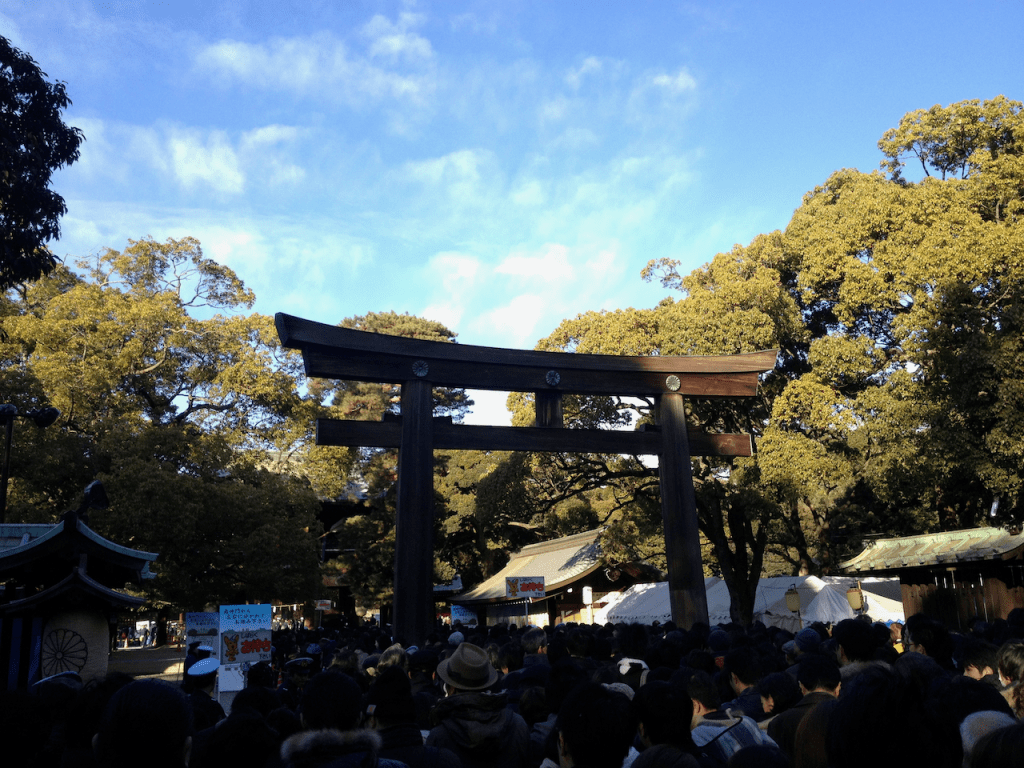
Torii gate for Meiji Shrine in Tokyo, taken in 2012 during Japanese New Year. The lines were amazingly long.

What matters is that there’s a sense of “boundary” between the mundane, outer world and the sacred, inner realm.

The torii thus acts as a gate between these two worlds. By passing through the gate you enter the sacred grounds of the shrine, or leave it. It’s also why taking away things from a shrine like pebbles or flowers is frowned upon.

Torii can be very small, or using the example of Meiji shrine, extremely large. There are many styles too. Some are bright red, others a more natural color. Sometimes a shrine will have a series of torii gates.

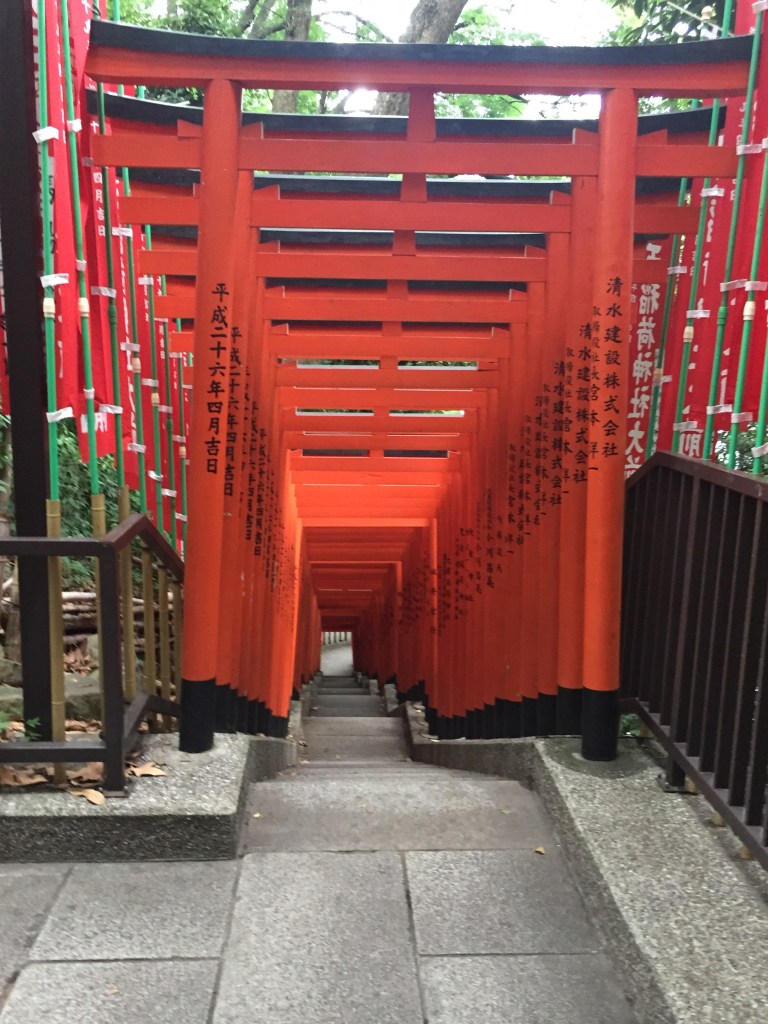
Torii gates at Hie Shrine in Tokyo, taken in 2017.

In the photo above, these gates were sponsored through donations by local businesses. As with many other aspects of Shinto, there’s a lot of local community involvement as well as give and take.

Anyhow, that’s a brief look at torii gates.

New Pilgrimage Books

Hello readers,

A while back, I talked about something in Japanese culture called a goshuinchō (ご朱印帳), or pilgrimage book. This is a tradition that started in the late-medieval Edo period, when life in Japan finally stabilized and people could afford to travel the countryside on Buddhist pilgrimages, or just sight-seeing. People would get a “seal” (shuin 朱印) at the site to prove they were there, brag to friends, build up merit for the afterlife, etc. The tradition of collecting stamps still carries on today in various forms.

When I last wrote about it, I had a single book for all my visits to both Buddhist temples and Shinto shrines. I learned later that these are traditionally kept in separate books. Since mine had filled up anyway, I had planned to buy two new books on my next visit, but then the Pandemic happened and I couldn’t visit Japan for 3 years.

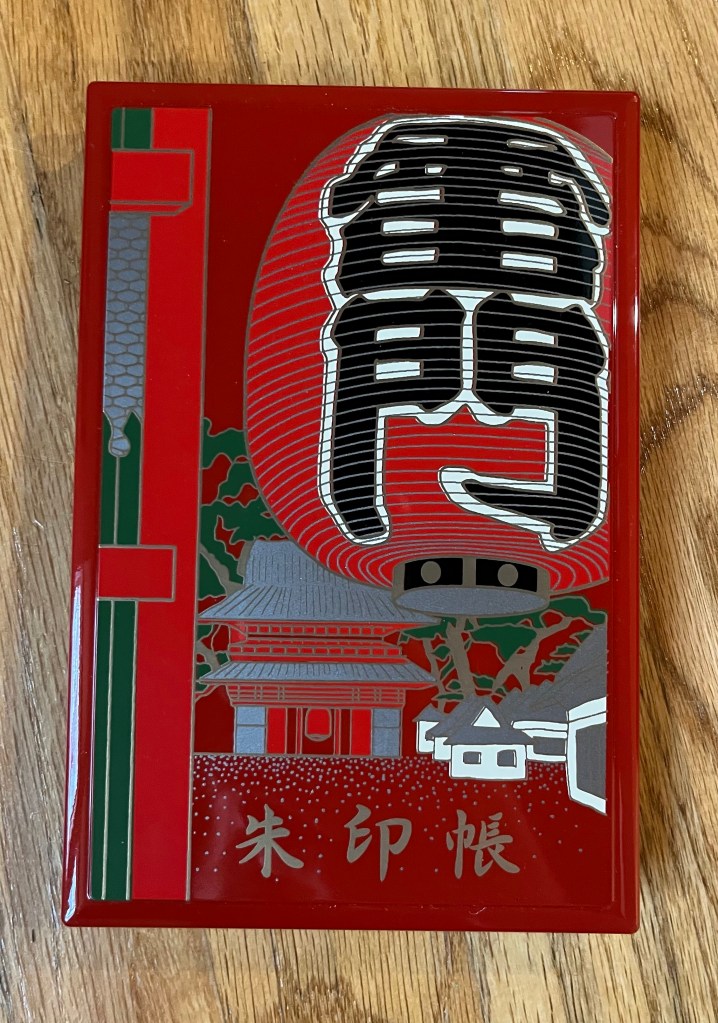
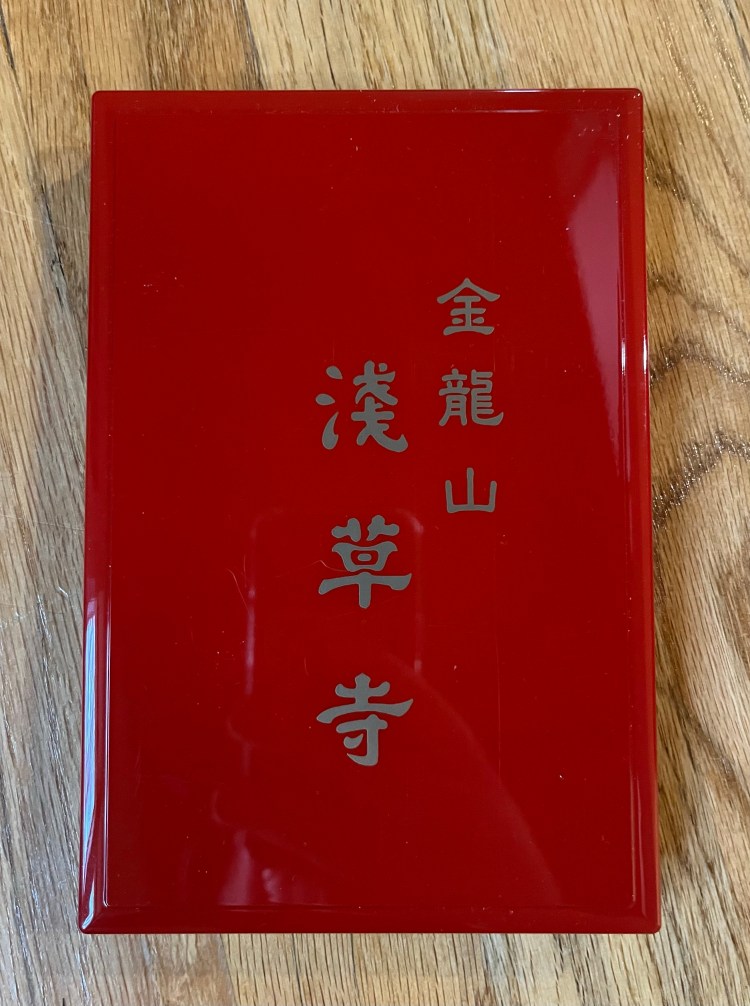
Finally, on our latest trip, I was able to get some fresh, new books. This first one comes from the famous Buddhist temple of Asakusa (a major tourist spot in Tokyo), also known as Sensōji:

Sensoji sold two pilgrimage books: the basic option, and the deluxe book. I went with the deluxe option which was about ¥1000. It came with a fresh, new seal from Sensoji as well (the one on the right):

Later, when I visited the Great Buddha in Kamakura, I also got a second seal (on the left).

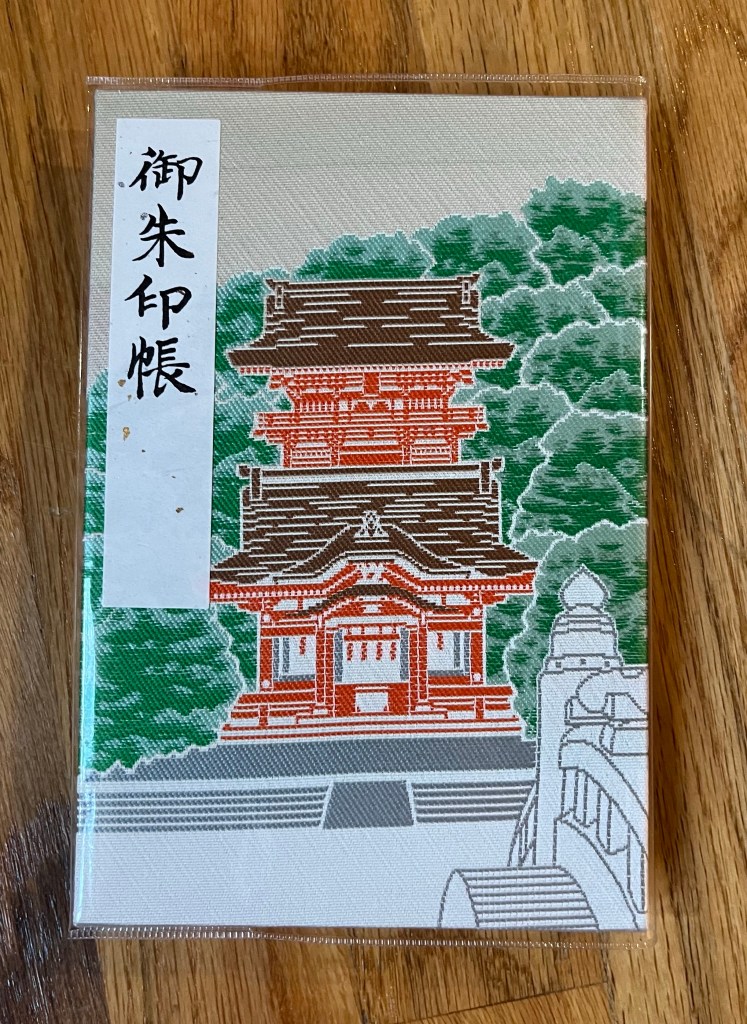
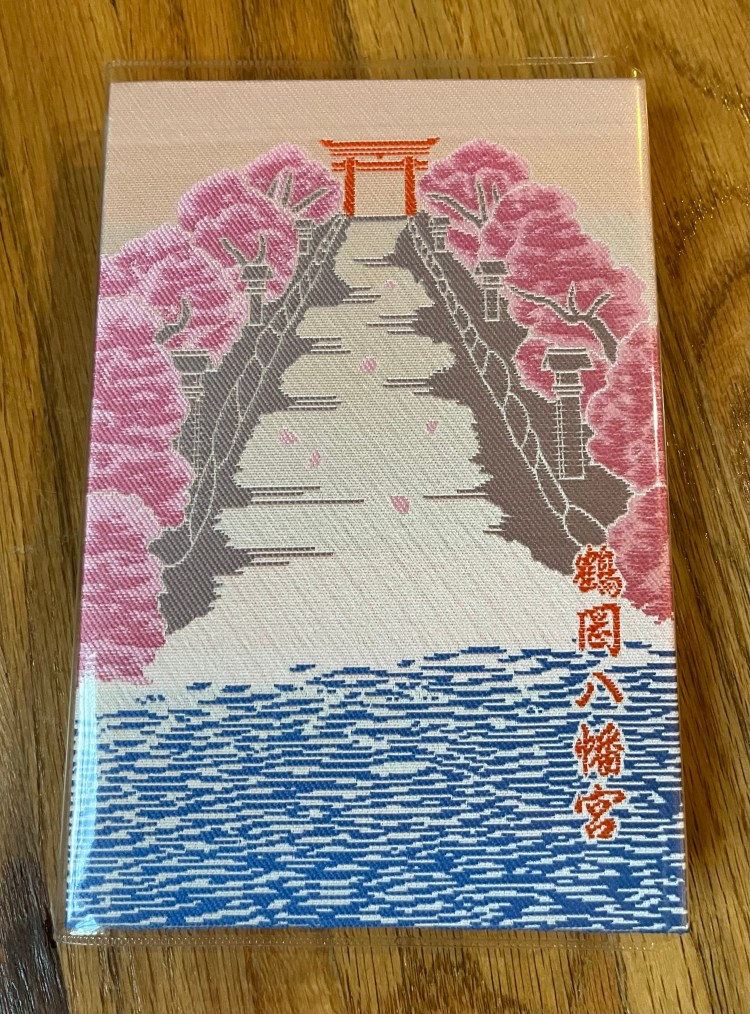
During that same trip to Kamakura, I also got a pilgrimage book for Shinto shrines as well from the famous Tsurugaoka-Hachimangū Shrine, which also had a really neat custom cover:

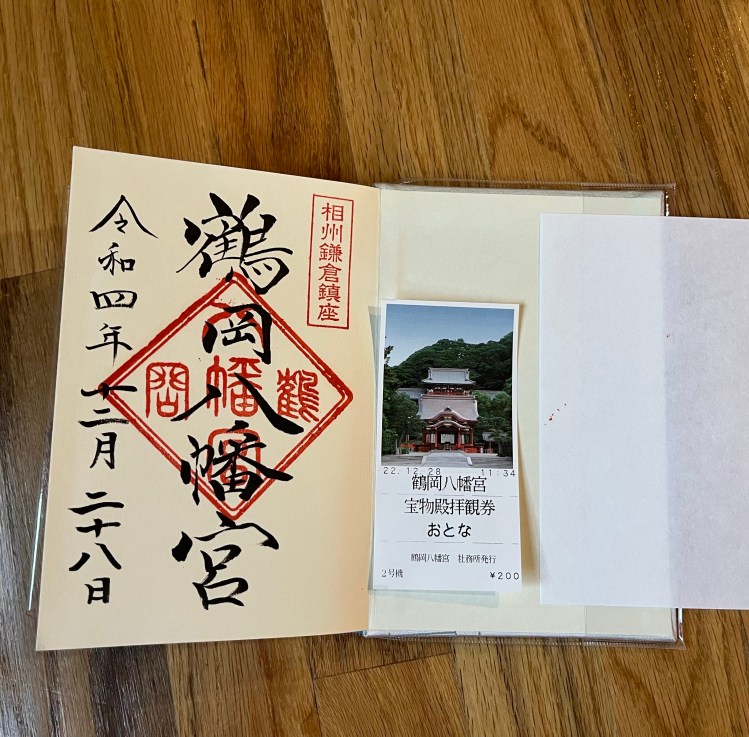
Tsurugaoka-Hachimangū Shrine has major historical significance due to its association with the old Kamakura Shogunate (mentioned here, here and here), as well as the death of Minamoto no Sanetomo. It’s a gorgeous cover, and I got a seal for this book as well:

The ticket shown here is from the museum which the family and I visited. It was neat to see real relics from the Shogunate, but that is a story for another day.

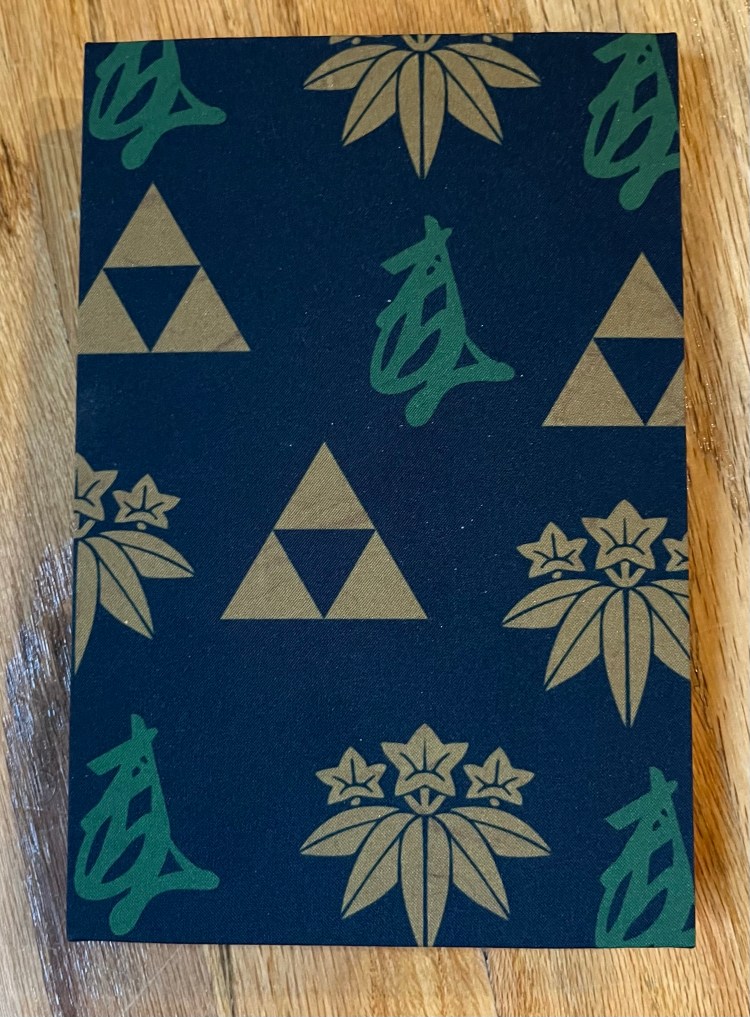
However, it turns out two books wasn’t quite enough. So, when we visited the NHK museum for the Thirteen Lords of the Shogun, the historical drama I loved to watch, I got a third book:

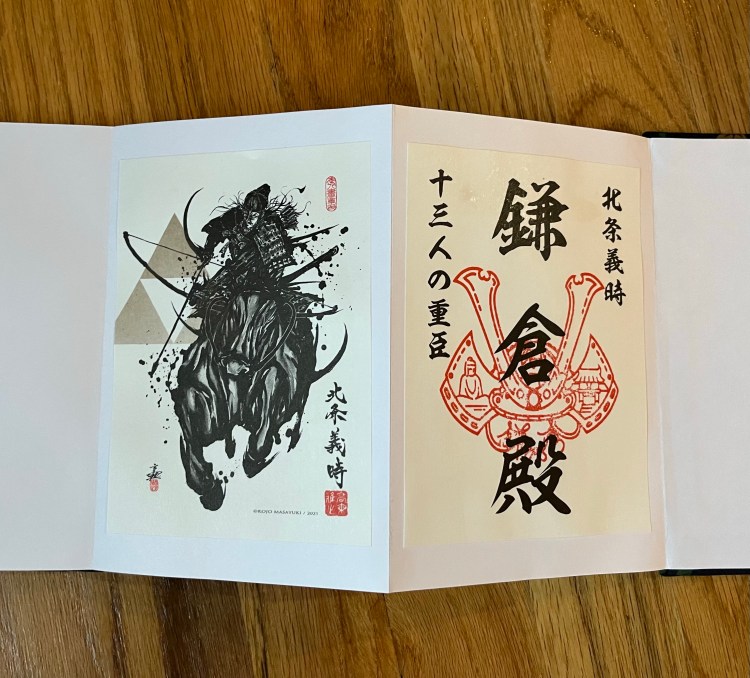
This one features the famous “triforce” logo of the Hojo family crest. I have noticed that pilgrimage books aren’t limited to just religious sites, people get stamps for all kinds of places they visit (many cities will have campaigns for kids to visit sites and get stamps too), so I decided to use this one for miscellaneous touristy sites I visit. At the gift shop, I got a couple stamps related to the Hojo clan and Hojo no Yoshitoki in particular:

Sometimes, when you visit a site, they will have pre-made “seals” rather than hand-written ones. The Great Buddha of Kamakura sold pre-made ones to avoid contact due to Covid-19, as did the gift shop. When you get such seals, you can simply glue them on. I use my kids’ Elmer’s glue sticks which do a nice job of adhering to the page without wrinkling the paper due to moisture.

Since I have three books, not one, I expected it to take much longer to fill them out. The last book I had, purchased at Todaiji Temple in Nara, took about 14 years (2005-2019) to fill out since I could only visit Japan on a sporadic basis. However, I remember my late mother-in-law carrying a well-worn book around whenever we visited Buddhist temples together. A pilgrimage is something very personal, and may last a long time if taken care of.

So, if you visit a famous site in Japan, especially temples or shrines, look for a ご朱印帳 sign nearby, and chances are you can pick up a pilgrimage book for a reasonable price and start collecting seals.

Funerary and Memorial Practices in Japan

Since my mother in law passed away recently, and my wife is back in the US, I’ve had a crash-course on memorial practices in Japanese culture, and wanted to share in case others run into this too. Much of these practices are rooted in a fascinating combination of native Japanese religion, blended with Indian-Buddhist practices and with Chinese-Confucian customs. It’s noticeably different and more structured than what Americans might be familiar with, but let’s take a closer look.

Buddhism, Not Shinto

One thing to clarify first, is that even though Japan has essentially two religions, Shinto and Buddhism, they tend to operate in different social spheres, and people are not required to profess faith in one other the other, so people freely operate between them.

In any case, Shinto places great importance on ritual purity, and death is a traumatic, impure experience. Shinto tends to focus a lot more on this-worldly relationships with the kami, so it doesn’t say much about the afterlife.

By contrast, Buddhism doesn’t emphasize ritual purity, and does have a much more detailed understanding of the afterlife. Hence, regardless of one’s personal beliefs, funerals are almost always conducted with a Buddhist temple. In Buddhist funerary practices, bodies are typically cremated, not buried, and the grieving family will help transfer the bones of the deceased into the urn in a special ceremony. Also, unlike in the West, white is the color of death and funerals, not back. You can see this in folklore regarding ghosts and such.

Parishes

Since premodern times, families in Japan have frequently registered with a local Buddhist parish or danka (檀家) for a particular Buddhist sect. Thus, even if one is not actively involved in a particular Buddhist community, the default Buddhist parish the family belongs to normally handles the funeral affairs.

This tends to give Buddhism a reputation in Japan as a “funeral religion”, but has a lot more to do with politics and history than religion itself. That’s a story for another day.

Proper Dress for Funeral

Funerals in Japan are very formal affairs, including dress code. If you ever attend a funeral there, it is proper to wear conservative, business formal attire (e.g. suit) in black, with matching black shoes. This is in contrast, for example, with my grandpa’s funeral six years ago, when half the family just wore jeans. 🤦🏼‍♂️

A Buddhist rosary is often carried as well, even if one is normally a practicing Buddhist. For those who don’t normally practice Buddhism, a simple “funeral” rosary can be easily obtained.

Funerary Gifts

An example envelope for okōden. Normally the names of the recipient family and giver would also be written too.

One practice that surprised me a bit after my mother-in-law passed away was the practice of okōden (お香典) which is money, wrapped in a special black-and-white envelope, given to the grieving family. In some cases, the monetary gift can be quite large, and is (as far as I can tell) meant to help defray funeral expenses and just support the family. It’s similar in spirit to how families in America would often “bake a casserole” for the grieving family.

In keeping with Japanese customs, the recipient will sometime later give a gift in return (okaeshi お返し) that costs roughly half what original gift was.

Purification After Funeral

It is a common practice in Japan to toss a pinch of salt over one’s shoulder after a funeral. Salt is thought to function in the same way that holy water might in the West: purification against evil spirits. This may be another practice adopted from Chinese culture, wherein it is thought that evil spirits follow tragedy or those who loss in their lives.

Posthumous Names

Another practice that has carried on since medieval times in Japan is the bestowing of a posthumous Buddhist name. Each sect has a different naming convention, but these are always bestowed to the deceased (and is written on their funerary tablet) to signify their connection to the Buddhist community and so on. These names originally were probably ordination names, allowing the deceased’s spirit to “take tonsure” as a Buddhist monk or nun. I am unclear how widely this is believed now, but in any case, it is almost universal to receive some kind of posthumous Buddhist name as part of the funeral process.

Home Veneration

A common practice, likely inherited from Chinese-Confucian reverence for one’s ancestors, is to enshrine a picture or funerary tablet to the deceased in one’s home altar. In our altar here at home, we have a small picture of my mother-in-law there below and to the left of the central Buddha statue. I remember visiting my wife’s extended family in Japan, and seeing a similar arrangement for her uncle who had died some years back due to leukemia.

No Celebration of New Year

For the first New Year following a loss in teh family, the grieving family is not supposed to take part in New Year’s celebrations. I believe this is also tied to Confucian practices. Consider this quote from the Analects:

[3:26] The Master [Confucius] said: “Men of high office who are narrow-minded; propriety without respect and funerals without grief: how can I bear to look at such things?!”

Translation by Charles Muller

and:

[1:11] The Master said: “When your father is alive, observe his will. When your father is dead observe his former actions. If, for three years you do not change from the ways of your father, you can be called a ‘real son’ (xiao; 孝).”

Translation by Charles Muller

Funerals must show proper grief if they are to properly venerate one’s ancestors, and so a number of strict practices continue to this day within the first year of mourning:

  • New Year’s cards (nengajo) are not sent out that year.
  • Families in mourning do not go to shrines or temples on New Year’s day (e.g. hatsumōdé)
  • Families in mourning do not setup New Year’s altars (kagami-mochi), nor is New Year’s food (osechi-ryōri) consumed.

Although Confucian texts imply that three years of mourning for one’s parents is proper, in practice, this is usually done for one year as far as I can tell.

Periodic Mourning

Another feature possibly adopted from Chinese culture is the set calendar of mourning that is undertaken throughout the year. These are called meinichi (命日) or kinichi (忌日) among other things, and start from every 7th day from the funeral date, up to the 49th day, and then follow a set, yearly calendar:

Day or YearJapanese NameAssociated Buddha
or Bodhisattva
7th day after funeral初七日 (shonanoka)Fudō-myō-ō
14th day after funeral二七日 (futananoka)Shakyamuni Buddha
21st day三七日 (minanoka)Manjushri Bodhisattva
28th day四七日 (yonanoka)Samantabhadra Bodhisattva
35th day五七日 (itsunanoka)Kshitigarbha Bodhisattva
42nd day六七日 (munanoka)Maitreya Bodhisattva
49th day四十九日 (shijūkunichi)The Medicine Buddha
100th day百日忌 (hyakkaki) or
more commonly 百箇日/百ヶ日 (hyakkanichi)
Kannon Bodhisattva
1st year after funeral一周忌 or 壱周忌
(both read as isshūki)
Mahasthamaprapta Bodhisattva
3rd year after funeral三回忌 (sankaiki)Amitabha Buddha
7th year七回忌 (shichikaiki)Akshobhya Buddha
13th year十三回忌 (jūsankaiki)Vairocana Buddha
17th year十七回忌 (jūshichikaiki)
25th year二十五回忌 (nijūgokaiki)
33rd year三十三回忌 (sanjūsankaiki)Akashagarbha Bodhisattva
50th year五十回忌 (gojūkaiki)

In practice, people in Japan usually only observe the first 7th day memorial, the 49th day memorial, and yearly memorials. Funerals are expensive and it’s not always practical to observe them all.

In addition to the formal memorials above, a common practice at home for the first year is tsukimeinichi (月命日), or monthly observances. These are done at home, on the same day of the month as the original funeral, and may be as simple as lighting some incense in the home altar and a short prayer. After the first year, the memorials at home also move to a yearly cadence (just like death anniversaries in other cultures).

One other note is that for these periodic memorials, certain Buddhas and Bodhisattvas are often associated with key dates. This is emphasized, or de-emphasized depending on the Buddhist sect, but these Thirteen Buddhas and Bodhisattvas are listed above where appropriate. Esoteric traditions such as Shingon and Tendai, also associate mantras with each Buddha or Bodhisattva, but that’s a topic for another day, and it’s not something your average Japanese person would know. Usually the priest keeps track of such things, or they are listed in one’s sutra book if needed.

Conclusion

This is by no means an exhaustive look at Japanese funerary practices, and there are likely mistakes or omissions here, but I hope this post sheds some light on the deep well of tradition that Japan draws upon, and how it relates both to Indian-Buddhism, and Chinese-Confucianism.

Omamori: Japanese Charms

Since New Year has come and gone, this is a time where people frequently purchase an omamori (御守り) charm for the year, while returning the previous year’s charm for proper, not to mention respectful, disposal. Because my family and I visit Japan every year since 2005 to see my wife’s family, I’ve picked up a number of omamori over the years, but it took a while to really appreciate what they were for. Just what are omamori?

Professor’s Ian Reader and George Tanabe describe omamori this way:

Omamori are amulets that represent manifestations of a spiritual entity such as a god or buddha….These amulets normally consist of a prayer or some form of religious inscription, invocation, or sacred text placed in a brocade bag or similar container and carried on the person. Sacralized by religious rituals that transform them into busshin (spiritual offshoots) or kesshin (manifestations) of the deity, they are physical objects that contain the spiritual essence and powers of a deity or buddha. (pg. 46)

Page 46, Practically Religious: Worldly Benefits and the Common Religion of Japan

The notion of spiritual offshoots is a feature of Shinto religion, thus an omamori from a Shinto shrine quite literally contains a tiny manifestation, essence or projection of the deity, or kami, being enshrined. The idea of a kami’s essence in religious objects also applies to the larger, enshrined wooden tablets called ofuda as well.

In the context of Buddhism, Japan’s other religion, Reader and Tanabe also talk about the notion of migawari omamori (身代わりお守り, that is substituting for the bearer and taking on the bad fortune themselves. For example, there are many stories of Jizō Bodhisattva, for instance, taking the place of someone in order to protect them from harm, both in antiquity and even contemporary life.

Omamori come in various sizes, styles, and for different types of protection: health, passing exams, safe childbirth, love, traffic safety and general protection. It’s very common to pick up one at a famous temple or shrine if you visit. For example, my daughter used to own a Hello Kitty amulet is for my daughter. I used to own an amulet that I purchased at Yushima Tenmangu shrine, venerating the kami Tenjin, in Tokyo, for luck with the JLPT exam back in the day. More precisely, the amulet was for gakugyō (学業, “fortune in one’s studies”).

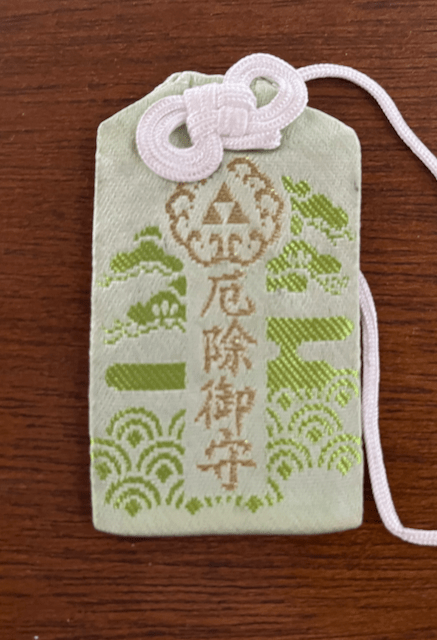
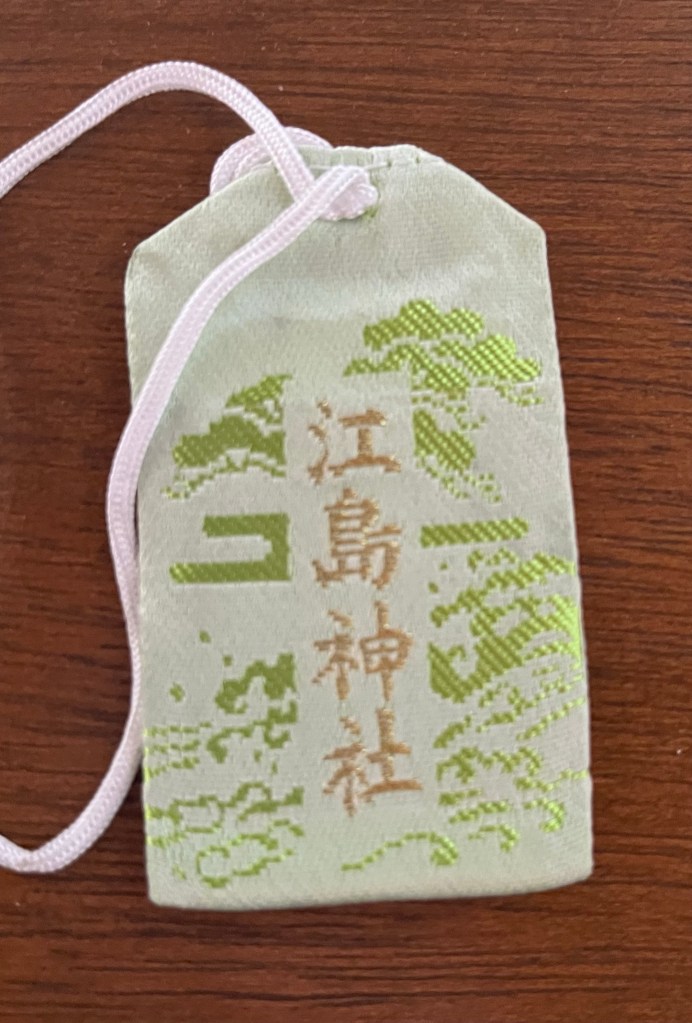
More recently, I purchased an omamori in Japan at Enoshima Shrine in 2019 (my last trip to Japan before the pandemic):

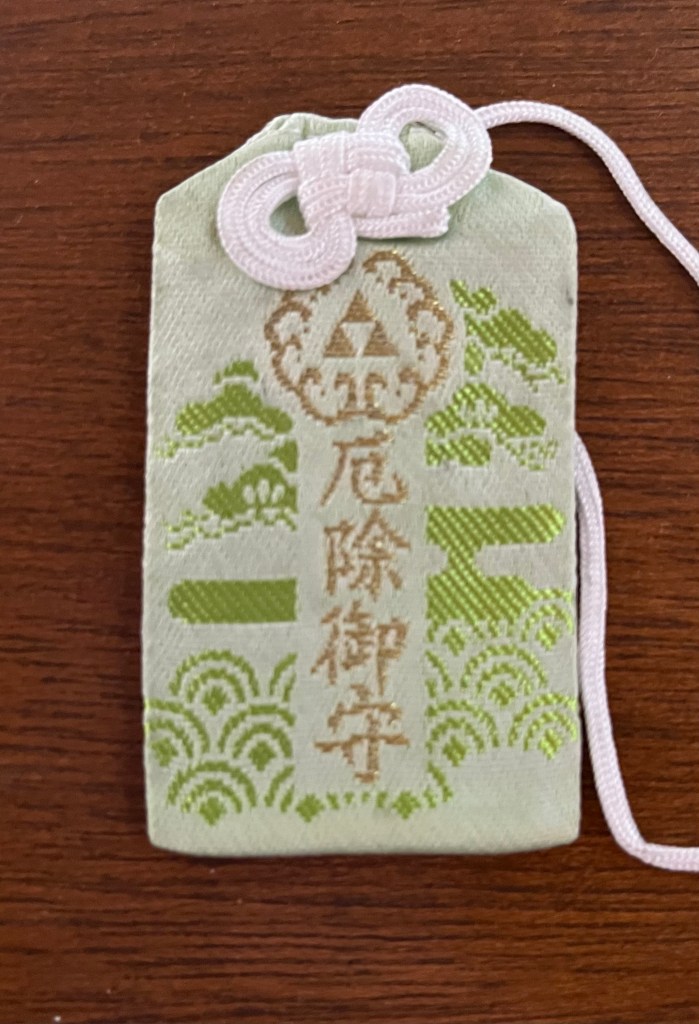
This shrine venerates the kami Benzaiten, one of the Seven Luck Gods, and contains the text yakuyoke omamori (厄除御守) meaning “amulet to prevent misfortune (in general)”. The back contains the name of the shrine: enoshima jinja (江島神社, “Enoshima Shrine”). You will almost always find omamori in small brocade bags like this one, but the designs and color schemes vary quite a bit.

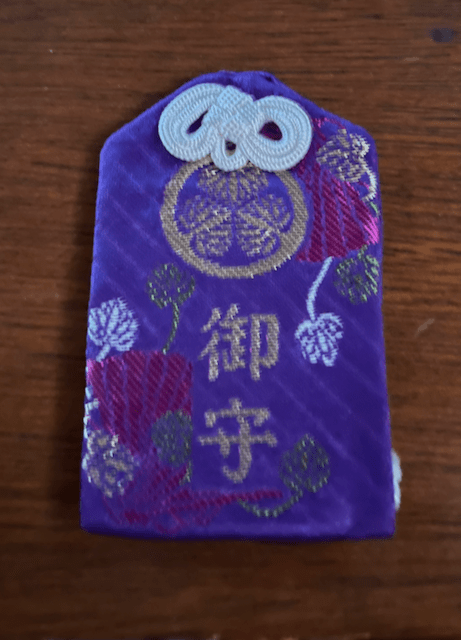
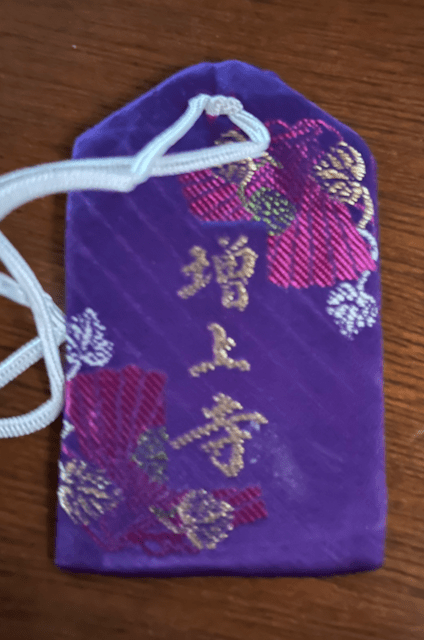
The other amulet I have in my wallet is from Zojoji Temple, head temple of the Jodo Shu sect of Buddhism, which we visit almost every year. This one provides protection (literally omamori 御守) and on the back is the name of Zojoji Temple (増上寺). Pretty basic, but I do love the color.

Since omamori are religious icons, there are certain customs that one should observe in order to be respectful:

  • You shouldn’t open the bag and see what is inside. It’s disrespectful. Honestly, the contents of the bag, usually just a small card or piece of wood wrapped in paper with a blessing, nothing special. What matters is the essence it carries.
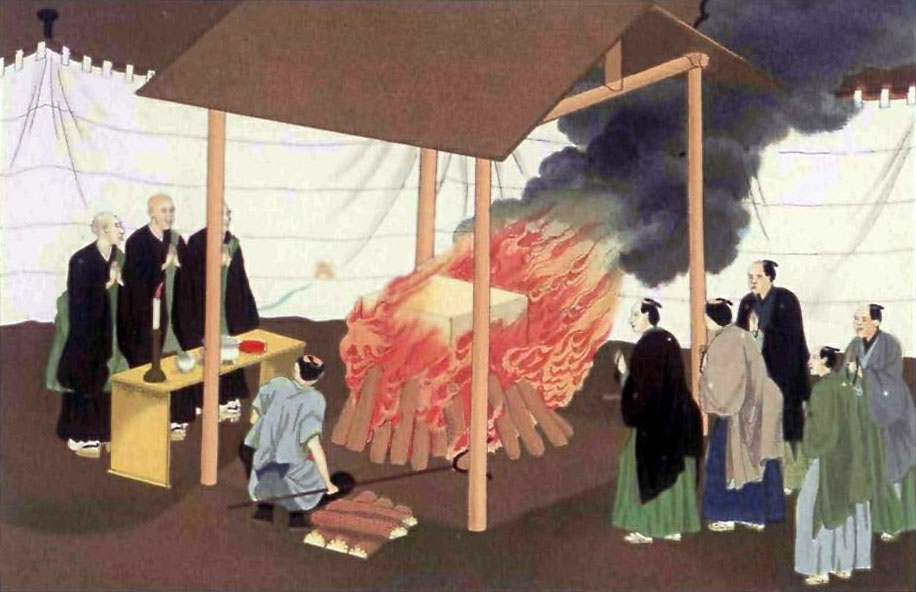
  • In Japan, toward the beginning of the year, you’re supposed to bring the charms back to the temple you got them from (or any temple that’s convenient) so they can be ritually purified and burned. It is thought that as part of their protection, they absorb evil and thus need the special treatment. Throwing them away isn’t recommended. In Reader and Tanabe’s book mentioned above, they also explore this topic and explain that ritually burning the charm is also an expression of gratitude (as opposed to throwing them away like common trash), as well as symbolizing the cycle of renewal.
  • Omamori work best when they are kept on your person. For example, it’s very common to see them tied to backpacks on children. We’ve done that for our kids when they were smaller, and I always keep my omamori in my wallet, if it fits.

Of course, most Westerners who see omamori at shrines and temples may be confused, or just treat them as souvenirs. I can’t say whether they really work or not, or really embody the deity or not. I honestly don’t know. To some degree though, it doesn’t really matter. As Reader and Tanabe write elsewhere, charms and amulets also offer a peace of mind and strengthening of faith (something tangible), but also don’t require faith for them to work. They simply represent the deity in question, and the resulting positive affect.

The Seven Luck Gods

As 2021 draws to a close, this is a nice opportunity to review a fascinating aspect of Japanese spirituality: the Seven Luck Gods!

The Seven Luck Gods or shichi-fukujin (七福神) exemplify the syncretic nature of Japanese religion, because the seven gods have different origins including some native Shinto kami to Hindu gods who have undergone a long transformation from their original forms in India in antiquity.

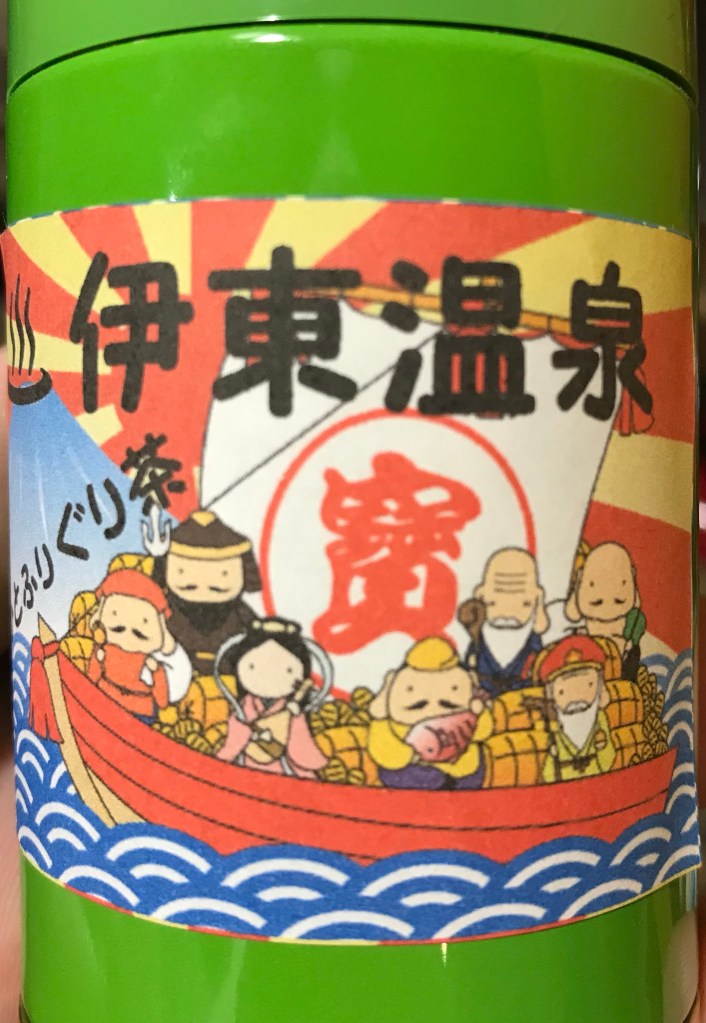
Here are the seven gods as depicted on my wife’s tea tin from left to right:

Name + KanjiAspectPossible Origin
Daikokuten
(大黒天)
Commerce, prosperity, agriculture (hence he is depicted with rice bales)Daikokuten is likely a blending of the native kami Ōkuninushi and (very indirectly) the Indian god Shiva through a Buddhist deity named Mahākāla.
Bishamonten (毘沙門天)Victory, authorityBishamonten has been a guardian deity in Buddhism for a long time, but is descended from the Indian deity Kubera.
Benzaiten
(弁財天)
Patron goddess of the artsDescended from the Indian goddess Saraswati, imported via Buddhism
Ebisu
(恵比寿)
Prosperity, wealthEbisu is a native Japanese kami that has been imported into the Seven Luck Gods.
Fukurokuju
(福禄寿)
LongevityJurōjin is a Chinese-Taoist deity who symbolized the southern pole star, and now for his pronounced skull.
Jurōjin
(寿老人)
Longevity, happiness, wealthAnother Chinese-imported Taoist figure, Fukurokuju overlaps with Jurōjin in some ways, but is distinguished by the animals that accompany him.
Hotei
(布袋)
Luck, guardian of childrenHotei is the so-called “fat buddha” in Asian tradition, but is in fact has a complicated history. TL;DR he is not a buddha, but kind of a saintly figure in Chinese-Buddhist tradition.
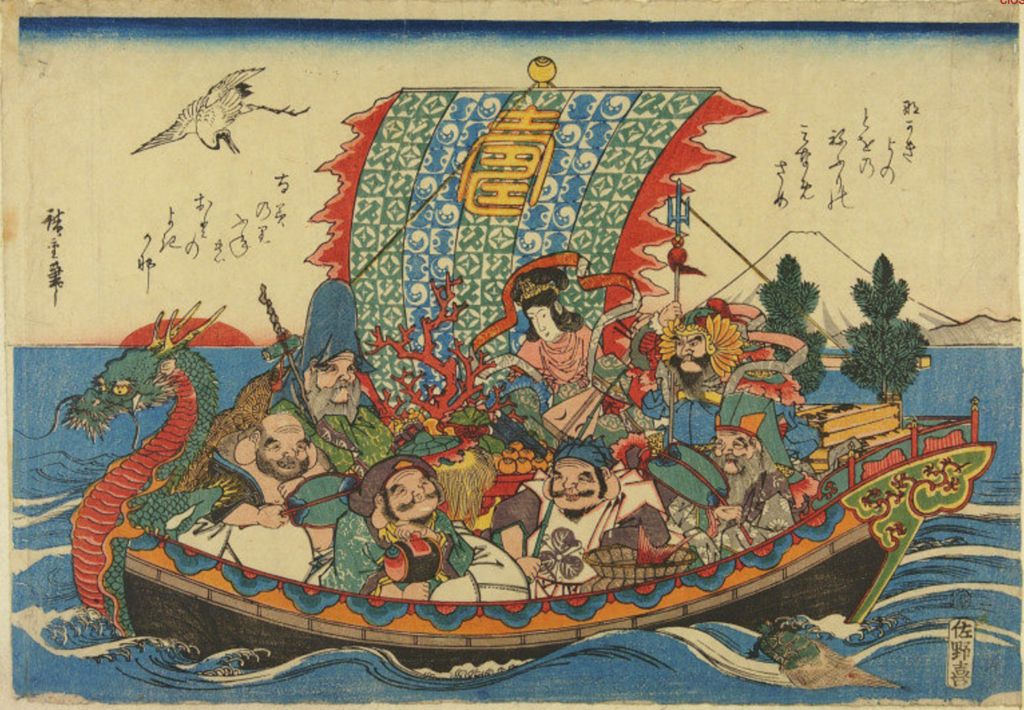
source: Wikipedia
The Treasure Ship by Utagawa Hiroshige, Public domain, via Wikimedia Commons

As with the picture above, you’ll often see the seven deities riding a “treasure ship” (takarabuné 宝船) and/or smiling, laughing and playing games in a carefree manner. In times like this, such images are particularly comforting and something to hope for in the year ahead.

From a cultural standpoint, it’s fascinating to see how Japanese religious tradition has imported various deities and traditions from Chinese Taoism, but also from India via imported Buddhist religion, and how it all blends with native Shinto religion to form what we see today.

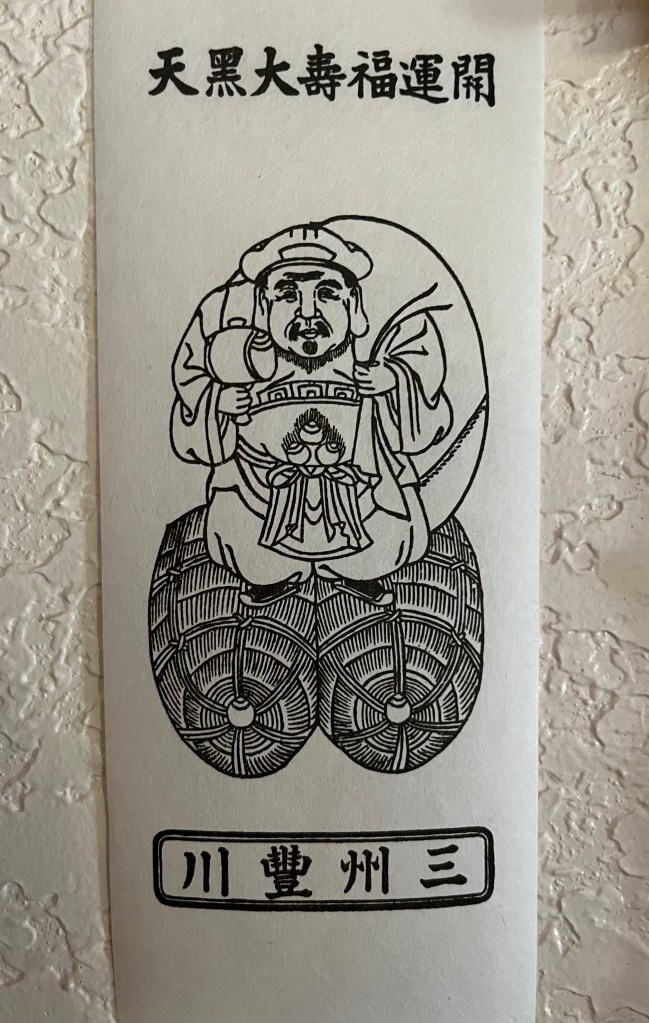
Here’s an example ofuda (お札) of Daikokuten we have in our home:

And I have an omamori charm from Enoshima Shrine from 2019 of Benzaiten I keep in my wallet;

These are just some of the examples of the Seven Luck Gods you’ll see in contemporary Japanese religious tradition.

Sacred space in Japan

This Twitter post by MK Taxi (also linked here) is a great example of sacred space in Japanese religion. The “gate” you see above is known as a torii (鳥居), and is only used for Shinto shrines. It helps to mark the boundary between the sacred interior and the mundane exterior, and are nearly universal in Shinto.

Buddhist temples by contrast, do not use torii gates. Instead, they use sanmon (山門) or “mountain gates”, a throw back to Buddhist temples in China which were often built on top of mountains. Even city temples still have such a gate, even if a small one. While Buddhism and Shinto are quite different religions, the sanmon fulfills a roughly the same role: marking the boundary between temple interior and mundane world outside.

The sanmon gates of Sojiji temple, a major Soto-Zen temple in Japan. Taken a few years back.

The notion of sacred space is not limited to Japan, but it’s interesting to see how it manifests from culture to culture.

Japanese Pilgrimage Books

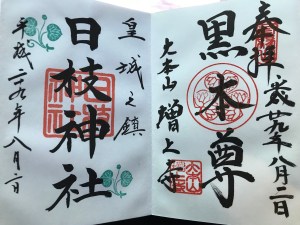
A page from my pilgrimage book, showing a visit to Zojoji Temple (right) and Hie Shrine (left), both in the 29th year of the Heisei Emperor (2017).

While many foreign tourists visit Buddhist temples (otera お寺) and Shinto shrines (jinja 神社), few know about a custom that has been around for centuries: pilgrimage books. The pilgrimage book or shuinchō (朱印帳), often called go-shuinchō (ご朱印帳), is a book for collecting stamps, often accompanied with some calligraphy, called a shuin (朱印). This practice, according to the Japanese Wikipedia article, supposedly dates back to the Muromachi Period (12th – 16th century) of Japanese history, but really took off in the Edo Period (17th – 19th century) when the government was more stable, and people could safely travel more on pilgrimages.

These days, most temples and shrines still have such books for sale, and such temples also have places to get your booked signed. The book I have was purchased at the famous temple of Todaiji in Nara way back in 2005, my first visit to Japan:1

…and since I got the book at Todaiji temple, I got my first stamp there:

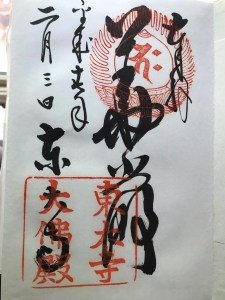
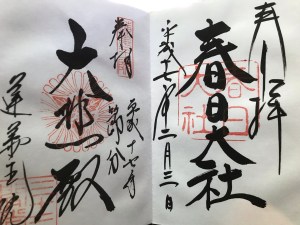
From there, I visited the venerable Kasuga Grand Shrine in Nara, and the 33 Kannon Hall (Sanjusangedō)2 in Kyoto :

Stamps from Kasuga Grand Shrine (right) and Sanjusangedō (the 33 Kannon Statues, left)

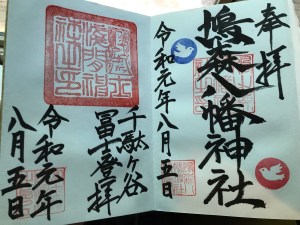
My last stamps are from 2019, my last trip to Japan before the pandemic, which also happens to be the first year of the reign of the Reiwa Emperor, so the stamps show 令和元年 (reiwa gannen, “inaugural year of Reiwa”). These stamps were both from Hatonomori Hachimangū Shrine (a very cool and underrated shrine) and probably a fun subject for another post. The “dove” stamps are because the “Hato” in the shrine name also means “dove”.

The last stamps I got, both from Hatonomori Hachimangu Shrine. The left stamp is earned for completing the ascent of the “mini” Mount Fuji there. The right stamp is for visiting the shrine.

What really makes the stamps interesting to me isn’t just collecting stamps, but also the individual calligraphy styles. Each temple or shrine attendant has their own style, and some of them are quite beautiful. My wife is trained in Japanese calligraphy, so it’s interesting to see how she rates each one. Frankly, they all look great to me.

A few things to keep in mind if you’re interesting in getting a pilgrimage book. First, the books usually cost around ¥1000 (roughly $10), and are usually sold at the same and each stamp will cost between ¥300 to ¥500. Each temple sets their own price, and with inflation prices have probably gone up over time. My memory is fuzzy. Also, when you purchase the book, if I recall corectly

You can usually the “stamp office” near the gift shop, with a sign like “朱印帳” and such. If you’re confident in your Japanese, you can simply show an open page in your book and say o-ne-gai-shi-mas (お願いします, “if you please” or “I humbly request”).

Often times, especially in busier temples, they will take your book, and give you a numbered ticket, so you can reclaim your book later. It takes time to sign each one, so you may get put into a queue. You can use that time to peruse the gift shop anyway.

…and that’s how it works! Good luck and happy collecting!

Also, here’s some other great sites on collecting shuin stamps:

P.S. Now that I’ve finally completed my book after 14 years, I plan to start two new ones (see footnote below): one for Shinto shrines and one for Buddhist temples once the pandemic is over and we can visit Japan again.

1 I found out years later that you’re supposed to have separate books for Shinto shrines you visit vs. Buddhist temples that you visit. A warning to other tourists and travelers.

2 The 33 statues of Kannon are really worth seeing if you come to Kyoto. I have no photos from the trip as they are not allowed inside, but take my word for it, it is an amazing site.

The Many Many Kami of Shinto Religion

In the past, I’ve touched on the subject of Shinto religion, and its vast number kami (神) who range from great deities (similar to the Greek gods) to little more than nature spirits and revered historical figures. This is a pretty common feature of polytheistic religion in ancient times, across many cultures: gods were quite diverse in both size and roles.

In Japanese Shinto there is a saying: ya-o-yorozu no kami (八百万の神) which means “the Eight Million kami (of Japan)”. It is not meant to be literal, but simply means that there are many, many kami within Shinto. But outside the short-list of well-known kami, such as Inari Okami, most of this pantheon is pretty obscure, even to Japanese people. Many are so local, that there might be only one or two shrines associated with them. Some are not even named, they are just thought to occupy a particular sacred space, so you might find a tiny roadside shrine somewhere to a particular kami and that’s it. Compare this with the ancient Greek daimon, Arabic djinn, or Roman genius.

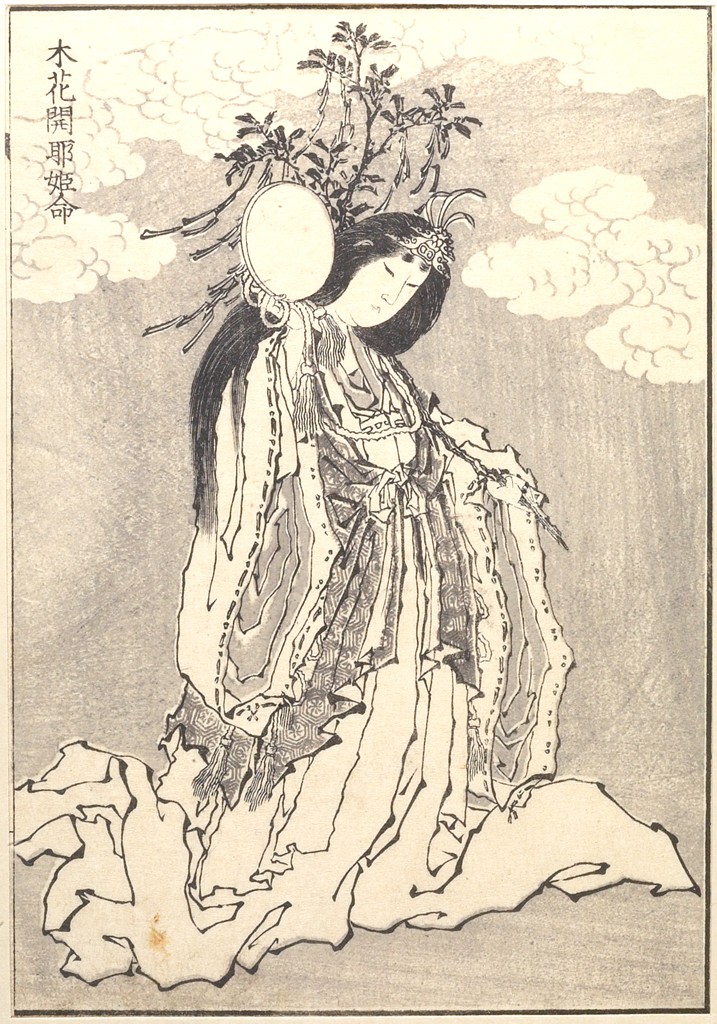
But I digress a bit. Let’s talk about one particular kami who has been particular interest of mine lately since I started writing adventure modules for Dungeons and Dragons, and delving more and more into Shinto mythology.1 She is in one sense important to Japanese mythology, but also obscure, and fascinating too. Her name Konohana-no-sakuyahime-no-mikoto (木花之佐久夜毘売命). She is often called Konohana-no-sakuya-bimé for short and is both a goddess of volcanoes, and of cherry blossoms:

Painting by the famous artist, Hokusai, in 1834, courtesy of Wikipedia and the Harvard Art Museum

Konohana-no-sakuya-bimé is probably best known as the goddess of Mount Fuji itself. You can read more about it on the English-language page of the official shrine of Mount Fuji. The mountain is treated as her form, and thus the mountain is considered sacred ground. Konohana-no-sakuyahime is also the kami of volcanoes in general, not just Mount Fuji.

Like many obscure kami in the Shinto religion, Konohana-no-sakuya-bimé appears mostly in ancient texts such as the Kojiki and the Nihon Shoki.2 These two texts are semi-mythical origin stories for Japan, but also contain many myths from antiquity and are the most common sources for Japanese mythology.3

In one such myth, found in both the Kojiki and Nihon Shoki (online here) Konohana-no-sakuya-bimé is described as the goddess of cherry blossoms and is married to Ninigi, grandson of Amaterasu and ancestor of the Japanese imperial family. Before long, she becomes pregnant. Hononinigi is suspicious of her being pregnant so fast, and she vows that if the child is born safely, it belongs to Hononinigi. To prove her point, she shuts herself in a home and sets her house on fire, then delivers the baby in the middle of the blaze. Actually, she delivers three sons. All are safe and unharmed by the blaze, and thus proving that they are Ninigi’s children after all.

In another story, posted in Wikipedia, Konohana-no-sakuya-bimé is disguised as a little girl who helps guide a villager to a stream whose waters have healing powers, and can save his village from a plague. The villager carries out the instructions of the little girl, and the village is saved. When he returns to thank the little girl, he comes to realize that the little girl is in fact the goddess herself.

To be reiterate, such kami are also obscure to most Japanese people as well. A deep understanding of a certain kami or even the pantheon as a whole isn’t really required anyway. Instead, I would argue that the whole point of Shinto is more about deepening one’s “spiritual tie” or goshin’en (御神縁 or ご神縁) with a particular kami4 than grasping a deeper teaching. It’s not that Shinto doesn’t have its spiritual truths, but it doesn’t explore complex cosmology or theological issues the way Buddhism does. It tends to have a more practical, “this-worldly” focus.

Still, the fact that a goddess of both volcanoes and cherry blossoms exists is kind of fascinating to me, and one of those examples of how very little of Shinto has been properly conveyed (not to mention translated) to English audiences.

1 Although, my background with Japanese religion is definitely more Buddhist than Shinto, I still have my personal favorite kami, and always happy to visit shrines when I can.

2 Sadly, translations of the Kojiki and Nihon Shoki in English are by and large terrible. Like, really bad. I have heard that the “Phillipi translation” (ISBN: 0691648905) is the best, but it’s also out of print and hard to find. The only sources that sell it are quite expensive too. I hate Amazon’s third-party pricing model, btw. 😦 So, I’ve turned to Japanese sources instead, but obviously this isn’t feasible for everyone.

3 In the same way, Greek mythology mostly derives from two ancient sources: Homer’s Iliad and Odyssey, and Hesiod’s Theogony.

4 The word for this is musubu (結ぶ) which means to tie something. In this case, it’s a spiritual tie though rather than tying one’s shoelaces. 😌

Happy Belated New Year!

Hello Readers!

Although the first couple weeks of 2021 have been kind of lousy for us all, I wanted to take a moment to say “happy new year!” to you all.

In Japanese, people greet one another the first time they meet after the new year with a special greeting. First, people say to one another akemashite omedetō (gozaimasu) which means “congratulations on the conclusion of the (old) year”. This is then followed by kotoshi mo yoroshiku (onegaishimasu). This is literally means “please be kind to me this year, too”. The words in parentheses are for polite conversation (drop them when speaking among friends).

This year with lockdown and such, we couldn’t do much for New Years. We didn’t risk going to our usual Buddhist temple for hatsumōde, the first temple visit of the year. Maybe we’ll make up for it later in the year, but we’ll see.

Instead, I celebrated as much as I could online.

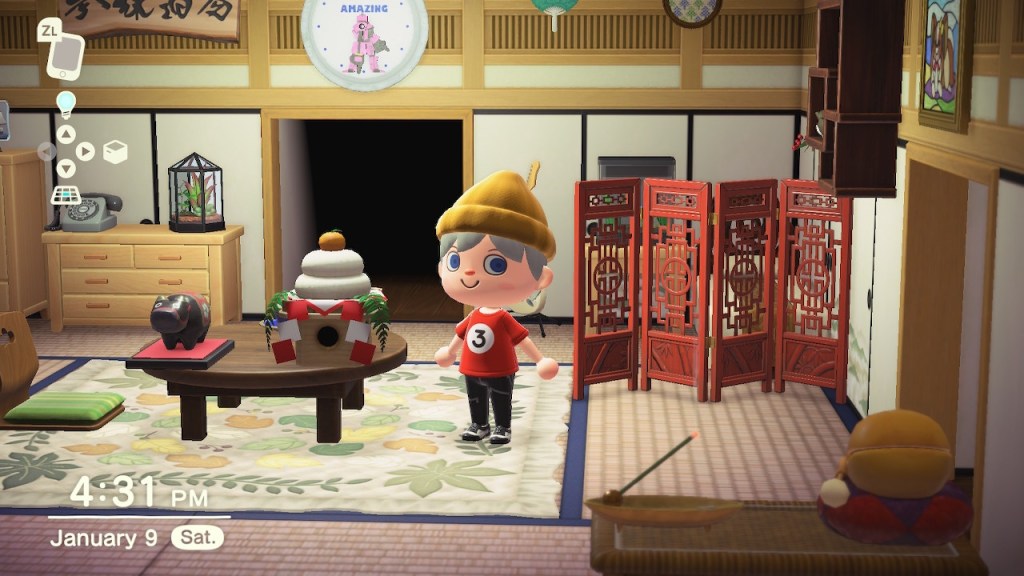
My humble abode in Animal Crossing: New Horizons. Besides the kagami-mochi on the table is a small “cow” since this year is the Year of the Ox.

There is one additional tradition that happens on the 11th of January called kagami-biraki (鏡開き), which means “breaking the mirror (mochi). Originally this was observed on the 20th day of the new year, but at some point moved to the 11th. After breaking open the kagami-mochi (more on that here) you then cook the rice cakes with sweet red beans (azuki) in a kind of red bean “stew” desert.

Our real kagami-mochi is a bit simpler, but I still like it.

Since our kagamimochi is plastic, it opens at the bottom revealing the real mochi rice cake inside. I tend to keep the little plastic daidai (bitter orange) too just because they are cute.

In any case after crazy holidays and a crazy end of the year in genera, we are hoping things will gradually calm down in the following days, weeks. I hope you all have a better year ahead too. 🎍

akemashite omedetō gozaimasu!kotoshi mo yoroshiku onegaishimasu!