JLPT N1: Setting Study Limits

As I mentioned in my previous post, as I build up my vocabulary for the JLPT exam, N1 level, the number of flash cards I have in Anki has exploded. In the last two months, I have built up more than 1200 cards in my Anki collection through studying vocabulary guides and reading Japanese manga we have lying around at home.

Because Anki is a spaced-repetition service (or SRS), the more you guess a card correctly, the less it appears. That benefits you by allowing you to focus more on cards you struggle with. But when you learn a lot of new vocabulary in a short span of time, even with SRS, daily practice can be a nightmare because a large number of cards can come in “waves” all on the same day. And if you don’t review those cards, more will soon pile up.

When you open your SRS tool and have 120+ cards to review and 20 new ones, and you are a working parent, this gets pretty discouraging. Plus, I am only one-sixth of the way through my vocabulary guide so this amount will grow a lot more in the coming months.

To deal with this madness, I learned a feature in Anki that lets me limit the number of new cards and cards to review per day:

This feature has been very helpful for me because it gives me a reasonable limit to practice daily, even though it slows down my progress. The idea is to break up the study into smaller, discreet chunks of time. It also smooths out “waves” of flashcards overwhelming me when too many of them are all due on the same day.

The question then is how much is the right amount? I’ve play around with a few values so far: 4 new cards + 45 reviews, 6 new cards + 60 reviews, 3 new cards + 30 reviews, and so on. In my experience, I found that smaller is better, so I’ve settled on 3 new cards a day and 30 reviews. If I have a slow day and more free time, I can do the Custom Study feature to learn extra cards, but if I complete my 30 reviews that’s good enough.

The difference in the long-run is small, and it’s mostly psychological, but smoothing out your study into small daily efforts helps in the long-run, I believe.
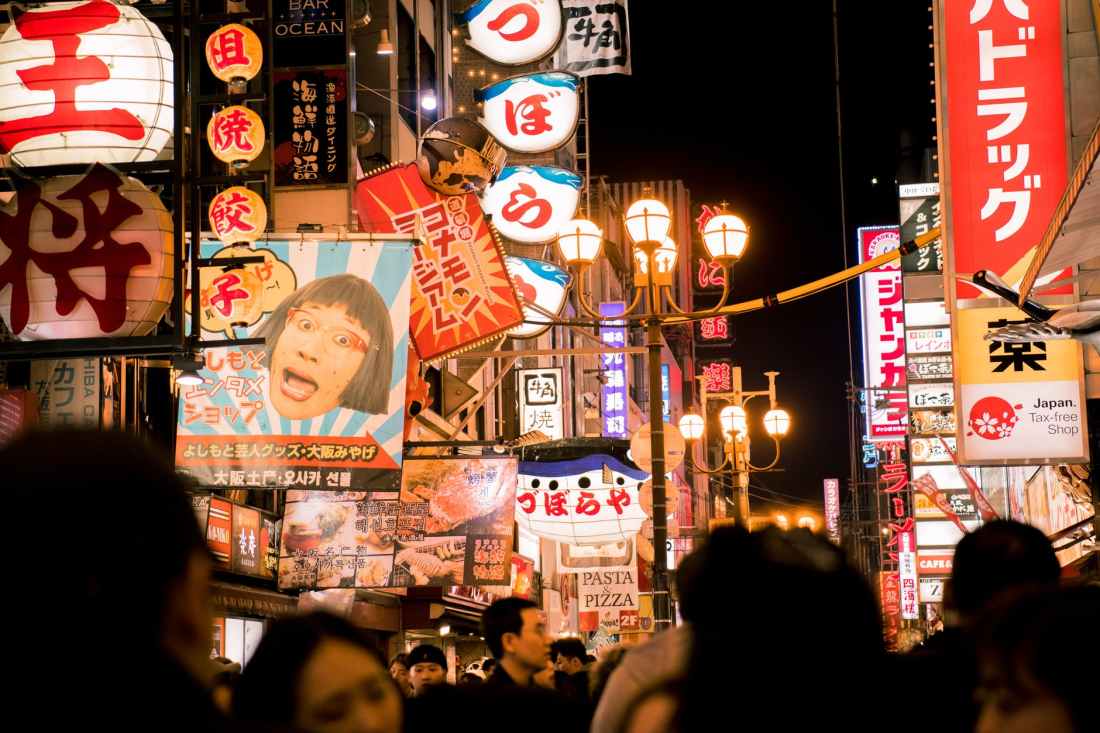
Who Is Kansai Ben?

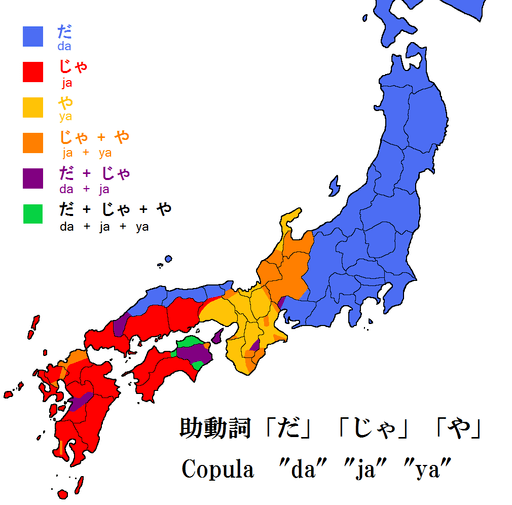
Japanese language has a number of dialects, called hōgen (方言), with the “standard” dialect being around the Tokyo area. Some dialects are based on region, some like the Kyoto dialect, are intrinsic to a city itself. But one of the most famous is the dialect found in the Kansai region of Japan around the Osaka area, called the Kansai dialect, or kansai-ben (関西弁).

Kansai dialect, like any Japanese dialect, is still Japanese language, especially where formal, polite speech is concerned. My wife’s extended family in northern Japan pretty much speaks the same language, the main difference is mainly intonation, plus a few odd words here and there (obscure enough that most language students wouldn’t care anyway). Kansai dialect though, like much of western-region Japanese, does have some notable differences:

  • Tokyo-region colloquial ending じゃん (jan), short for じゃない (ja nai) is said as やん (yan) in Kansai dialect.
  • The negative polite verbal ending ません (masen) becomes まへん (mahen).
  • Kansai dialect includes a few common phrases. For example, people often say “thanks” as おおきに (ōkini) and “really?” as ほんまに (honmani).

This blog is provides a much better overview of Kansai dialect.

Kansai dialect is a popular dialect in the entertainment industry, probably similar to how a New York accent or Texas accent is often found in American comedy. Part of this is also attributed to the image of Kansai-region Japanese people being more forthright and speaking their mind than the stuffy Kanto-region people around Tokyo area.

But yes, who knows where “Kansai Ben” is these days? Perhaps he’s hanging out with Chirashi Don (chirashi donburi the dish), Osaka Joe (Osaka Castle), or others. I guess we’ll never know.

P.S. Featured image courtesy of Wikipedia.

Finding Refuge Amidst Anxiety, Lots of Anxiety

This tweet from the awesome Sententiae Antiquae blog had me thinking lately:

When life feels overwhelming, I tend to think about a Buddhist text called the Immeasurable Life Sutra1 which is a highly influential in Mahayana Buddhism. It is one of my personal favorites. The first half of the sutra is the most extensive introduction to Amitabha Buddha, the Buddha of Infinite Light, in the Buddhist canon, but the second half tends to be a repackaging of general Buddhist teachings at the time. The second half often gets overshadowed by the story of Amitabha Buddha, but is worth a read.

In one section, the Buddha paints a rather dim picture of life in the mundane world:

“The poor and the underprivileged are constantly destitute. If, for example, they have no fields, they are unhappy and want them. If they have no houses, they are unhappy and want them. If they have none of the six kinds of domestic animals, such as cows and horses, or if they have no male and female servants, or lack money, wealth, clothes, food, or furnishings, they are unhappy and want those as well. If they possess some of them, others may be lacking. If they have this, they do not have that, and so they wish to possess all. But, even if by some chance they come to possess everything, it will soon be destroyed or lost. Then, dejected and sorrowful, they strive to obtain such things again, but it may be impossible. Brooding over this is to no avail. Exhausted in mind and body, they become restless in all their doings, and anxieties follow on their heels….Since they have not done any good in particular, nor followed the Way, nor acted virtuously, when they die, they will depart alone to an inferior world. Although they are destined to different states of existence, none of them understands the law of karma that sends them there.

translation by Hisao Inagaki

…then reiterates that this is par for the course because all is impermanent anyway:

“The reality of birth-and-death is such that the sorrow of parting is mutually felt by all generations. A father cries over the death of his children; children cry over the death of their father. Brothers, sisters, husbands and wives mourn each other’s death. According to the basic law of impermanence, whether death will occur in order of seniority or in the reverse is unpredictable. All things must pass. Nothing stays forever. Few believe this, even if someone teaches and exhorts them. And so the stream of birth-and-death continues everlastingly.

translation by Hisao Inagaki

The Buddha then uses this to remind readers that one should pursue the Buddhist path while they are still healthy and lucid:

“Why do they not abandon all worldly involvements and strive, while they are strong and healthy, to pursue the good and diligently seek deliverance from Samsara? If they do, they will be able to attain infinite life. Why do they not seek the Way? What is there in this world that should be longed for? What pleasure is there that ought to be sought after?

translation by Hisao Inagaki

“Infinite life” here, I would contend, isn’t the kind of immortality that we might associate with the Olympian Gods, but more like something you see in the Heart Sutra:

This is because in emptiness there is no form, sensation, conception, synthesis, or discrimination….There is no ignorance nor elimination of ignorance, even up to and including no old age and death, nor elimination of old age and death. There is no suffering, its accumulation, its elimination, or a path. There is no understanding and no attaining….Because there is no attainment, bodhisattvas rely on Prajñāpāramitā [the perfection of wisdom], and their minds have no obstructions. Since there are no obstructions, they have no fears.

Translation by Lapis Lazuli Texts, retrieved here: https://lapislazulitexts.com/tripitaka/T0251-LL-prajnaparamita-hrdaya/

In any case, the Buddha is pointing out that one shouldn’t get caught up in the big Cosmic Rat Race and maintain a healthy perspective.

1 Nerd moment: copies of this sutra have been found composed in the Karoshthi script in China.

Lessons Learned from the JLPT N1

In late 2021, I decided to take up Japanese-language studies once again, but this time in order to take the JLPT exam, level N1. I had passed the N2 some years ago, but had let my language studies gradually atrophy.

Since that time, I have focused primarily on building up vocabulary first, even though the vocabulary section is worth the least number of points on the exam. The reasoning is that I can’t properly read essays and more complex tasks without having a good foundation first.

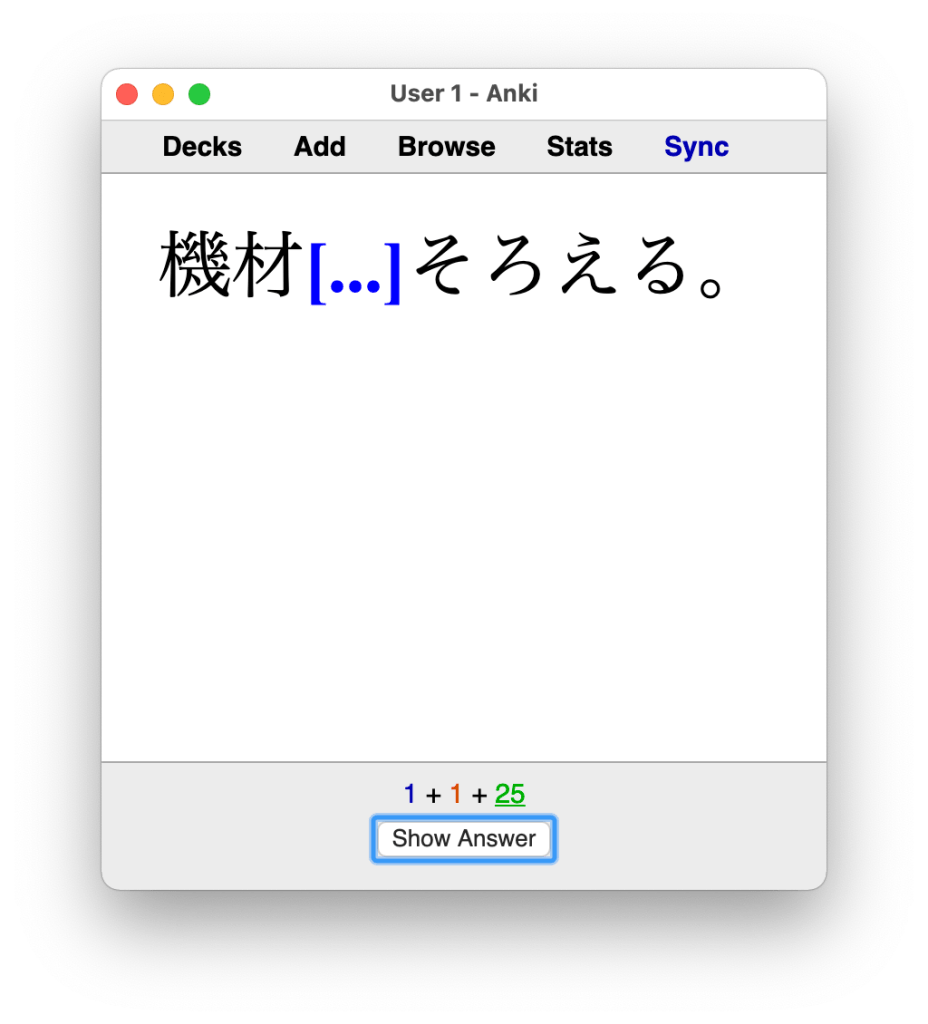
So, using this vocabulary source book, I have been gradually building up vocabulary in Anki SRS. For most of the words, I’ve been making Cloze style cards:

I realized quickly that simply memorizing words wasn’t enough, as my Japanese wife pointed out: you have to also learn which particle to use: を, に, と, or が. It’s not always obvious which is appropriate, and using grammar rules doesn’t always work. Just as with learning Latin or Greek or other languages, words have certain intrinsic aspects that have to be learned. In the case of Japanese, the te-form for verbs, and which particle they use are things you should make an effort to memorize upfront. It will save lots of headaches later.

For example the phrase: 限界に挑む (to stretch one’s limits). Why does it take a に particle instead of an を direct-object particle? There’s probably a good, grammatical reason, but for practical purposes, it’s also fair to say “it just does”.

So far in two months, I’ve completed 7 sections out of 68 of my vocabulary book in this way. Each cloze entry I put in, even for the same sentence, is a separate flashcard so a typical phrase can create one to three flashcards, and so my Anki flashcard deck has gotten pretty large: 500+ words. Having so many flashcards already means that if I forgot to review flashcards for a day or two, such as during the holidays, the backlog builds up very quickly. It can take 15-20 minutes to review all cards, which is not always possible. So, I’ve been trying to pace myself in learning new vocab, so as not to fill up the deck too quickly at once, but also keep up the reviews so as not to let the backlog grew too large. This also means not reviewing all cards at one time, but here and there throughout the day.

One bright spot out of all this is that the vocab I have been learning has popped up more than I expected in my day to day exposure to Japanese language and media. Previously, I had questioned how useful studying for the JLPT N1 would be for day-to-day Japanese usage, but to my surprise it is used more practical than I thought. It’s adult-level vocabulary, not basic foundational language, but it still comes up more than I expected. This helps bridge the gap for me between basic-intermediate Japanese and adult-level conversation or media, and means that it’s not just an academic venture for me.

The actual exam is still twelve months away, and I have a so much more to learn. It’s unclear if I’ll be ready for December, but it’s still worth a shot. Most likely though, at this rate, I’ll be looking at the 2023 exam instead however. I am not too surprised by this since I have heard elsewhere that the N1 level exam can take years to prepare, and it’s important not to burn out. Festina lente.

Getting Reacquainted With Shogi: Japanese Chess

Happy 2022, dear readers!! 🥳

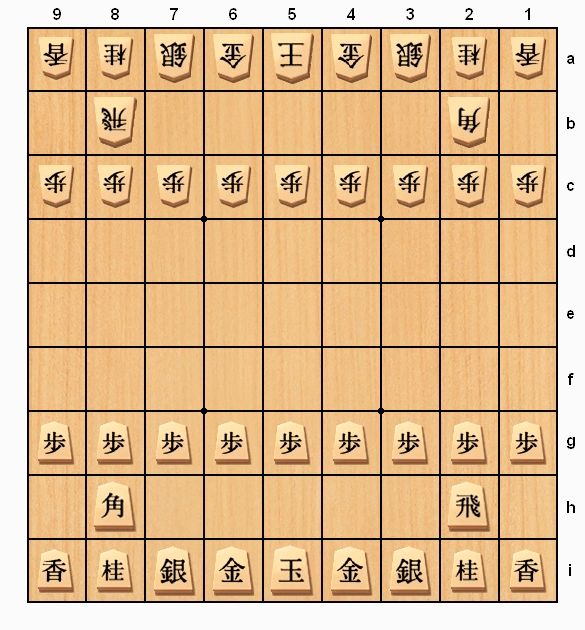
Ages ago, I got into playing a Japanese chess-variant called Shogi (将棋). Shogi as we know it has been played in Japan since the 16th century, but is based on older versions of the game, which in turn derived from continental Asian chess games. Back then, there weren’t that many books on the subject in English. Fortunately, the Wikipedia article was very thorough, so my co-workers and I learned from that, and started playing together during our down time. None of us were particularly good, but being a bunch of nerds, that also meant we could learn together.

Shogi is similar to Chess in many respects, except for one important aspect: pieces you capture can be replayed on your side. It’s thought that this rule, introduced in the 16th century, reflected the fluid nature of Japanese warfare at the time, and the switching allegiances of warlords, mercenaries and so on.

This rule adds some interesting complications as one closes in to defeat the enemy king, and drops key pieces in the right place to cut off his escape.

Sadly, after I moved on to another job, I never really played Shogi again. I tried playing online but it was fierce competition and I just wasn’t motivated enough to invest the time, grinding one loss after another, to improve. I just kind of forgot about over time.

Another challenge for Westerners in particular, is learning how to read the pieces, since they’re written with Chinese characters (kanji). My bi-racial son is learning Japanese anyway, but isn’t old enough to read most kanji yet. Fortunately, we had a solution.

Then, last month, my eight-year old son took a sudden interest in Shogi. This happened after he uncovered an old Shogi set from the closet and asked me to teach him.

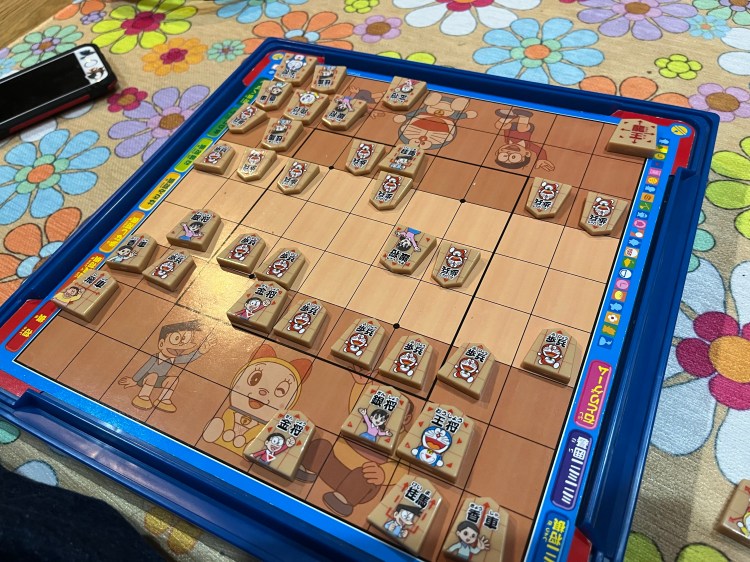
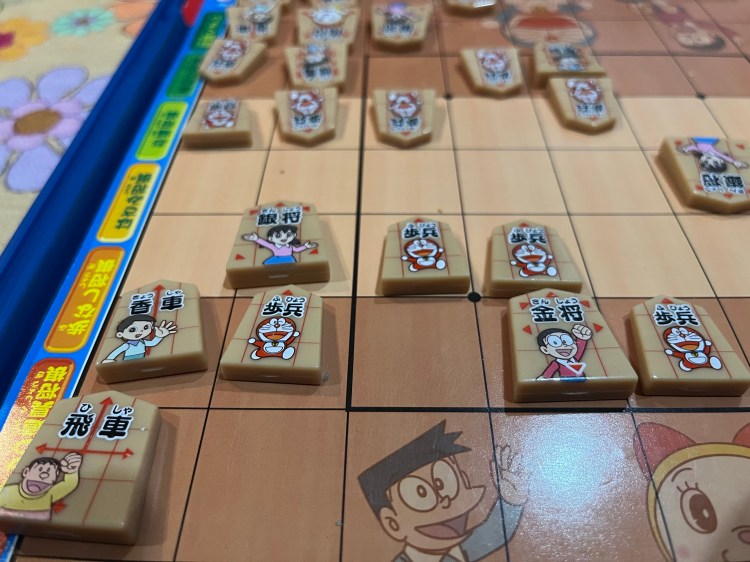
I bought this set years ago, when my daughter was a little girl, and briefly interested in Shogi. During our yearly trip to Japan, I bought her this great introductory set to Shogi and Go, featuring the famous character Doraemon:

This set is great because each piece has arrows to remind players which direction that piece can move, and furigana letters over the Chinese characters to help young Japanese kids, and so on. It also includes some optional beginner games for younger kids in order to ease them into Shogi and Go, including “mini Shogi” and “mini Go”.

My daughter enjoyed the intro games with me, but never really took Shogi after that. My son also played the mini games, but soon moved onto playing Shogi.

I would love to see a similar introductory set for Western audiences. Shogi is a really fun game, and really not that hard to learn, but getting over the language barrier can be intimidating at first.

In any case, playing Shogi with my son has forced me to dust off my old skills and give my son a good challenge, while also teaching him basic strategy and such. I don’t know if he’ll keep it up, but I am happy to see him take an interest anyway. It’s a good father-and-son moment. 😄

P.S. I may post a few other “learnings” from Shogi as time goes on. Stay tuned!

The Seven Luck Gods

As 2021 draws to a close, this is a nice opportunity to review a fascinating aspect of Japanese spirituality: the Seven Luck Gods!

The Seven Luck Gods or shichi-fukujin (七福神) exemplify the syncretic nature of Japanese religion, because the seven gods have different origins including some native Shinto kami to Hindu gods who have undergone a long transformation from their original forms in India in antiquity.

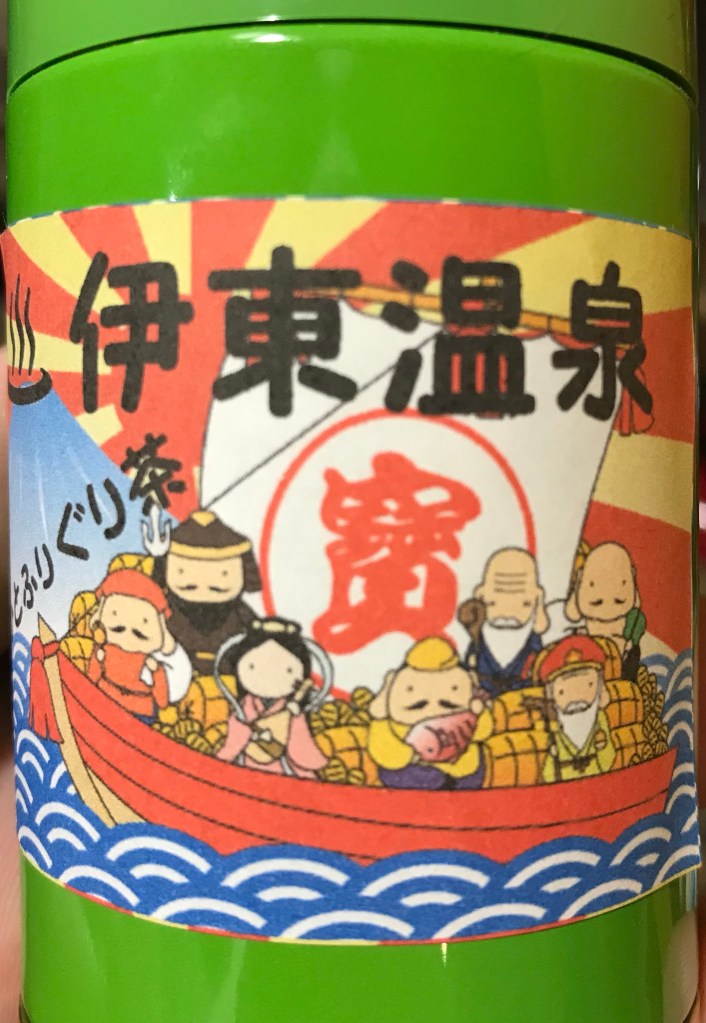
Here are the seven gods as depicted on my wife’s tea tin from left to right:

Name + KanjiAspectPossible Origin
Daikokuten
(大黒天)
Commerce, prosperity, agriculture (hence he is depicted with rice bales)Daikokuten is likely a blending of the native kami Ōkuninushi and (very indirectly) the Indian god Shiva through a Buddhist deity named Mahākāla.
Bishamonten (毘沙門天)Victory, authorityBishamonten has been a guardian deity in Buddhism for a long time, but is descended from the Indian deity Kubera.
Benzaiten
(弁財天)
Patron goddess of the artsDescended from the Indian goddess Saraswati, imported via Buddhism
Ebisu
(恵比寿)
Prosperity, wealthEbisu is a native Japanese kami that has been imported into the Seven Luck Gods.
Fukurokuju
(福禄寿)
LongevityJurōjin is a Chinese-Taoist deity who symbolized the southern pole star, and now for his pronounced skull.
Jurōjin
(寿老人)
Longevity, happiness, wealthAnother Chinese-imported Taoist figure, Fukurokuju overlaps with Jurōjin in some ways, but is distinguished by the animals that accompany him.
Hotei
(布袋)
Luck, guardian of childrenHotei is the so-called “fat buddha” in Asian tradition, but is in fact has a complicated history. TL;DR he is not a buddha, but kind of a saintly figure in Chinese-Buddhist tradition.
source: Wikipedia
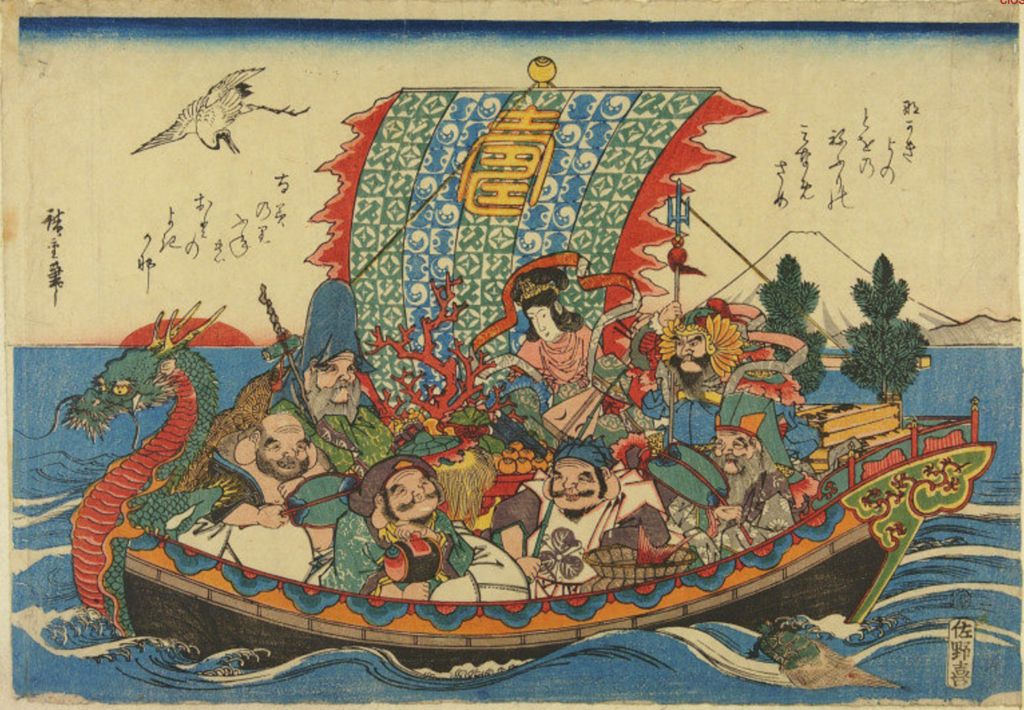
The Treasure Ship by Utagawa Hiroshige, Public domain, via Wikimedia Commons

As with the picture above, you’ll often see the seven deities riding a “treasure ship” (takarabuné 宝船) and/or smiling, laughing and playing games in a carefree manner. In times like this, such images are particularly comforting and something to hope for in the year ahead.

From a cultural standpoint, it’s fascinating to see how Japanese religious tradition has imported various deities and traditions from Chinese Taoism, but also from India via imported Buddhist religion, and how it all blends with native Shinto religion to form what we see today.

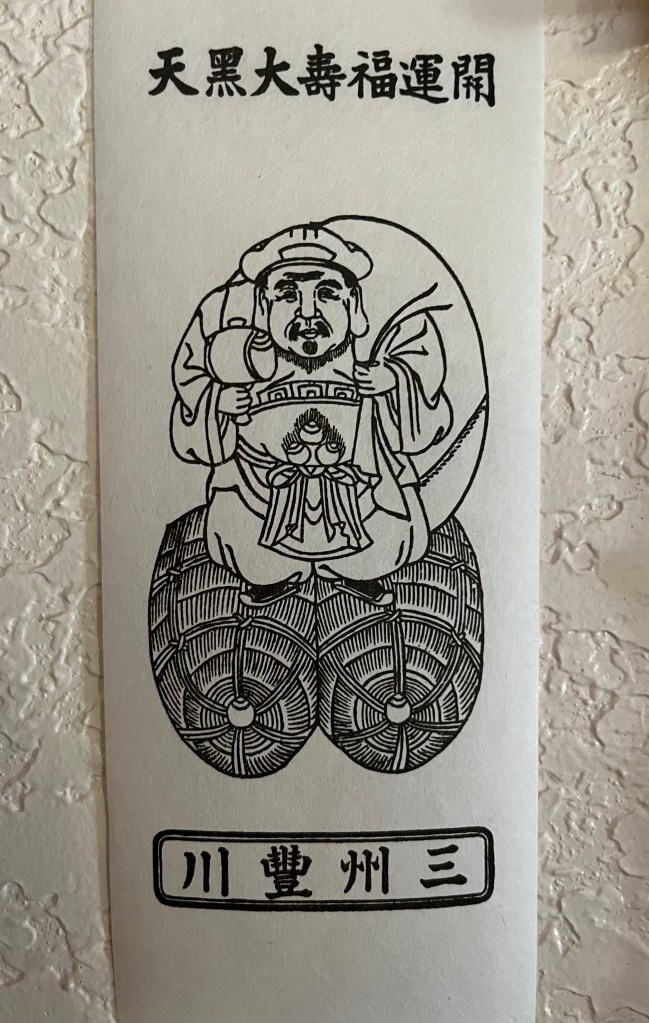
Here’s an example ofuda (お札) of Daikokuten we have in our home:

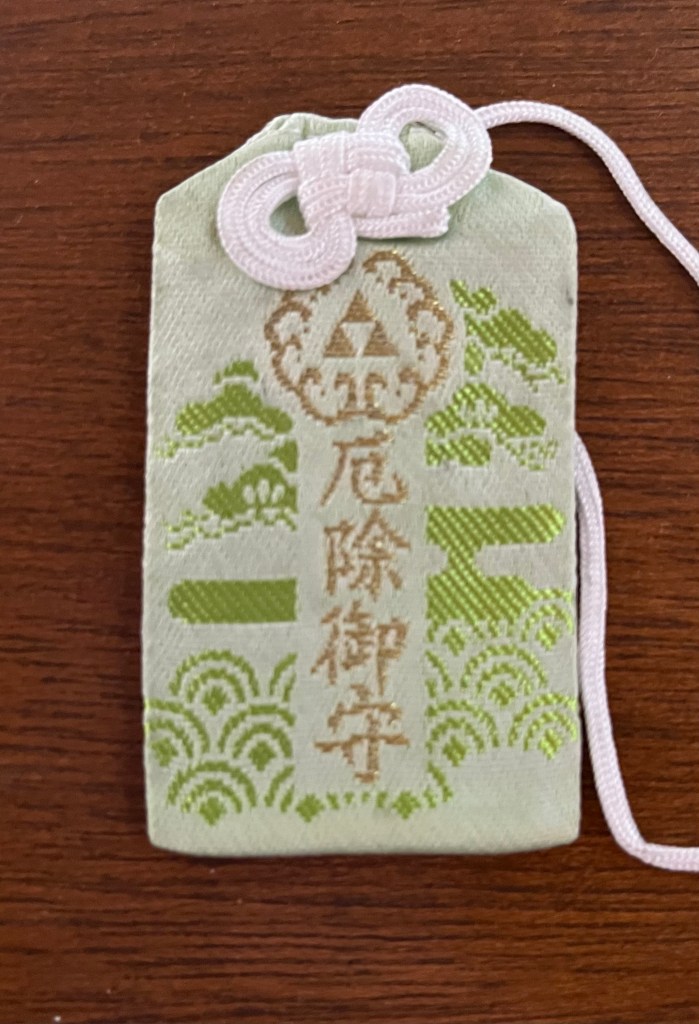
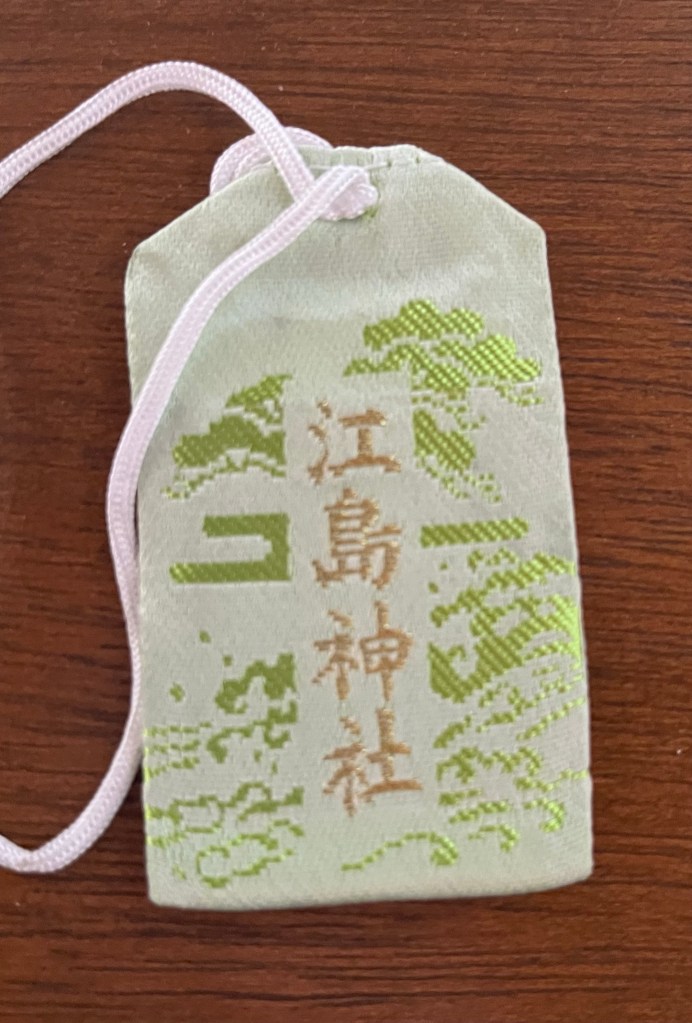
And I have an omamori charm from Enoshima Shrine from 2019 of Benzaiten I keep in my wallet;

These are just some of the examples of the Seven Luck Gods you’ll see in contemporary Japanese religious tradition.

Introducing the Karoshthi Script, a script of the Silk Road

The Silk Road, especially during the time when Buddhism first propagated out of India into the northwest and then east into China, is a fascinating point in history. Much of this is epitomized in a little-known writing system called Karoshthi.

At that time, much of the world from Europe to Asia spoke a language called Aramaic. Jesus’s native language was Aramaic, not Hebrew (though like many Jewish people at the time, he certainly knew it). Aramaic spread far and wide partly by accident, when Assyrians forced captive peoples to migrate to remote parts of their empire. Compared with the older cuneiform script, used in many Near East languages, Aramaic had a simple, straightforward alphabet that allowed people to pick it up quickly and easily.

Aramaic was also used in the Silk Road that ran from the edges of the Roman Empire, through the Parthian Empire, east to the Kushan Empire (later the Hephthalites) and across the Taklamakan Desert to Tang Dynasty China.

However, starting in the region of Gandhara (modern-day Pakistan), a new script, based on Aramaic began to appear: Karoshthi.

This video, courtesy of Vidya-mitra’s online correspondence courses, explains the Karoshthi in great detail and is worth a watch.

Some highlights from that video that I wanted to share.

First, Karoshthi was only around for a few centuries: mostly the 1st century CE to 3rd century CE. However, this overlapped with a pivotal time when Buddhism developed many characteristics in Gandhara that we now see today:

  • Mahayana Buddhist texts were developed and written down, not orally transmitted.
  • Buddhist statuary, possibly influenced from Bactrian-Greek culture, were first made.

Second, contrary to what I thought, most of these Buddhist-Karoshthi scripts were composed in a prakrit language called Ghandari Prakrit, not Sanskrit.1 According to the video, Ghandhari had some unusual features compared to other prakrit languages found in India, and Karoshthi had to be adapted for this. So, it contains some letters and styles not found elsewhere.

Third, Karoshthi wasn’t just used for Buddhist literature: it was used across a large swath of the eastern part of the Silk Road, so texts written in Karoshthi can be found in western China as easily as they are found in Pakistan, though because of geography, it tends to be found in pockets, where oasis-towns and other settlements existed.

I have been playing around with it quite a bit using Unicode and HTML as well as other ancient scripts, and was able to compile the Sanskrit phrase om namo’valokiteshvarāya2 meaning “praise to [the Bodhisattva] Avalokiteshvara”:

  • Brahmi script: 𑀑𑀀 𑀦𑀫𑁄𑀯𑀮𑁄𑀓𑀺𑀢𑁂𑀰𑁆𑀯𑀭𑀸𑀬𑁍
  • Karoshthi script: 𐨀𐨆𐨎 𐨣𐨨𐨆 𐨬𐨫𐨆𐨐𐨁𐨟𐨅𐨭𐨿𐨬𐨪𐨌𐨩𐩕

The Brahmi script such as Emperor Ashoka might have used, is written left-to-right, as you’ll notice, but the Karoshthi script is written right-to-left. This makes copy and pasting on a browser really tricky by the way. 😅

Anyhow, this is a very amateur look at the ancient Karoshthi script. Karoshthi script is something that you probably wouldn’t see very often, if ever, but it’s a fascinating historical relic of a time when commerce and information was exchanged heavily along the Silk Road, bringing empires across parts of Asia and Europe briefly together. As a Buddhist, it’s also a snapshot into the earliest forms of Buddhist, particularly Mahayana-Buddhist, literature one can find anymore.

1 Buddhist texts gradually became more and more Sanskrit-like, but that took centuries, and even then it probably wasn’t pure, literary Sanskrit as one would learn in a textbook. This phenomenon was dubbed “Buddhist-Hybrid Sanskrit” by scholars.

2 I found this phrase in a stotra (hymn of praise) published in romanized-Sanskrit from the Digital Sanskrit Buddhist Canon, namely here: Avalokiteśvarastotram (carapatipādaviracitam)

Japanese Verbs: Transitive vs. Intransitive

Even after years of studying Japanese language, and conversing with my wife, family and friend, one thing I still struggle with is a fascinating feature of the language: transitive and intransitive verbs.

The concept of transitive and intransitive verbs is nothing unique to Japanese. Some verbs take a direct object (transitive) and some don’t (intransitive). English has both, and so does Japanese. What’s interesting in Japanese is that the verbs frequently come in pairs.

Compare these two verbs:

  • 上がる (agaru) – to go up, intransitive
  • 上げる (ageru) – lift something up, transitive

They look very similar, but their usage is different:

  • 上がる (hon ga agaru) – “The book goes up.”
  • 上げる (hon wo ageru) – “To lift the book up.”

The first one expresses the state of the book itself (it is going up), while the second expresses someone lifting the book up (as a direct object). Hence intransitive vs. transitive.

But many other verbs come in pairs like this:

  • 雪が積もってる (yuki ga tsumotteiru) – “The snow is piling up.” The verb is tsumoru (積もる)
  • 雪を積んでいる (yuki wo tsundeiru) – “Piling up snow.” The verb is tsumu (積む).

Yet another example is ochiru (落ちる) and otosu (落とす) meaning to “to fall” and “to drop” respectively:

  • 落ちている (hon ga ochiteiru) – The book has fallen (i.e. in the state of “fallen”).
  • 落としている (hon wo otoshiteiru) – Dropping the book.

The last two examples illustrate an important point: the intransitive verb is often used to express state of something, almost like an adjective: 落ちている本を拾う (ochiteiru hon wo hirou) – “I pick up the book that’s fallen”.

The other thing to remember with transitive and intransitive verbs in Japanese is the particles. Transitive verbs take a direct object, so they take an を of course. Pretty easy. But the intransitive verbs don’t take an object, so you have to use が (or は as appropriate) because you’re trying to answer the question “who” or “what” is in that state.

If you can at least remember that Japanese verbs frequently come in pairs, you’ll have fewer headaches studying Japanese language. Enjoy!

Starting up the JLPT N1 At Last

It’s been ten years since I passed JLPT exam, level N2, and after doing some careful thinking, I think it’s time to prepare to take the N1 exam. Last month, the family and I went to the local Kinokuniya bookstore to pick up some new manga for my son (who has become an avid reader in both English and Japanese), and I picked up some much needed test study material.

I spent a number of recent years debating whether to invest the time for the JLPT, level N1, given how much time and practice it would take. If you test for the lower levels of the JLPT, it can typically take somewhere from 3-6 months, and based on personal experience the N2 took about a year. The N1, being the most difficult, probably takes 1-2 years.

However, since my regional test site only hosts the test once a year, I will probably shoot for December 2022, which would be about 14 months away.

We’ll see how it goes.

As to why I finally decided to take the N1, it’s a long story. Suffice to say that I really miss going to Japan yearly since the pandemic started, and I realized that I needed to focus my creative energies on something longer-term and not just goofing around with amateur writing projects and such. I like having a concrete goal, so this is a nice kick in the pants, among other benefits.

Further, the N1 represents the one hurdle I never finished, and after taking some mock tests, I feel that I have a realistic chance to pass if I spend adequate time to prepare.

So, here goes nothing!

Typing Brahmi Script in HTML

A while back, I wrote a small post on how to express Sanskrit and Pali using diacritics in HTML and the Roman alphabet. This is handy for expressing Buddhist terms accurately, since the standard 26 letters of the English alphabet don’t always tell the whole story.

Coin of Agathokles, king of Bactria (ca. 200–145 BC). British Museum. Personal photograph 2006, courtesy of Wikipedia. The coin shows inscriptions in Greek. Upper left: ΒΑΣΙΛΕΩΣ. Upper down: ΑΓΑΘΟΚΛΕΟΥΣ. The coin also shows a Buddhist lion and Lakshmi. Note the Brahmi script on the obverse, too.

While exploring Sanskrit writing systems recently, I dabbled in using HTML to express the ancient Brahmi script, which was used to write Sanskrit a long time ago, including some Buddhist scriptures, and the writings of Emperor Asoka.

Brahmi script is available through Unicode, like many other obscure symbols. The key is to know how to type a Unicode letter in browser:

 & # x(number) ;

The numerical table for each Brahmi script letter is found here and on Wikipedia. The code for “ka” (क in modern Devanagari script) is 11013, so in HTML, it would be & # x 11013 ; without any spaces. This produces 𑀓. So far so good.

But Brahmi, like other similar scripts, is an abugida. The vowels don’t usually stand alone as separate letters. Instead, they modify the base consonant. This is true with modern Devanagari as it is with Brahmi. So, in the example above, “ki” would be “ka” but modified with an “i” extension: कि in Devanagari, or 𑀓𑀺 in Brahmi. For Brahmi, I put & # x 11013 ; without any spaces, then & # x 1103a ; the code for the “i” vowel extension.

One other thing we need to cover is the consonants without a vowel. For example, in the word Buddha (buddho in Pāli language) , it would be split up into three letters “bu” “d” and “dha” with an “o” extension. The “d” here normally needs vowel, by default “a”, but if you add a virama mark, then instead of “da”, it gets cut off as “d”. In the Brahmi script, this is a & # x 11046 ; which looks like 𑀓𑁆 (k), a small line above the letter. Using the example of Buddha above, this would be 𑀩𑀼𑀤𑁆𑀥𑁄 or letters “bu” “d with virama” and “dho”.

As a bonus, the nembutsu in Sanskrit, in its simplest form, is namo’mitābhāya1 which in Brahmi script might be:

𑀦𑀫𑁄𑀫𑀺𑀝𑀸𑀪𑀸𑀬

Typing each letter by its Unicode HTML number is not a quick and easy process, but if you do it enough, it becomes somewhat easier. Soon, you’ll be typing like Emperor Ashoka in no time. 𑁍2

P.S. If you prefer to type in Devanagari, by the way, the simplest approach is to simply use the Hindi keyboard setting if you have one. You won’t need to type each Unicode letter. 😉

1 This may be a Chinese phrase rendered back into Sanskrit, not the other way around, but it does appear in the extant version of the Larger Sutra of Immeasurable Life, and something called the Dhāraṇīsaṅgraha, a collection of Buddhist dhanaris.

2 The lotus symbol, by the way is & # x 1104d ;.