For those of you who are competing somewhere, consider the following the advice from Kenko in the 13th century Japanese text, the Essays in Idleness:
I once asked someone skilled at the board game of sugoroku for hints on how to play. “Don’t play to win,” he said. “Play not to lose. Consider what moves would make you lose most quickly, and avoid them. Choose a method that will make you lose after your opponent, even if only by a single square.
This lesson from one who knows his art equally applies to the arts of governing both self and nation.
As a young kid in the 80’s I was a huge fan of the Teenage Mutant Ninja Turtles. I watched the classic TV show, ate the cereal, had a few toys, and watched all the live-action movies with my younger sisters in the theater. Yes, we loved the “Ninja Rap” too. Lately, my son, now reaching the same age, has become a huge fan too, though he prefers the newer 2018 series: Rise of the Teenage Mutant Ninja Turtles. It’s a great show, and we’ve been watching it together, quoting inside references (“hot soup!“) and talking about TMNT across the generations.
One niggling thing that Middle-Age-Japan-Nerd-Me has come to realize though is that many of the weapons used in TMNT aren’t actually Japanese weapons. In fact, the story behind it is surprisingly complicated.
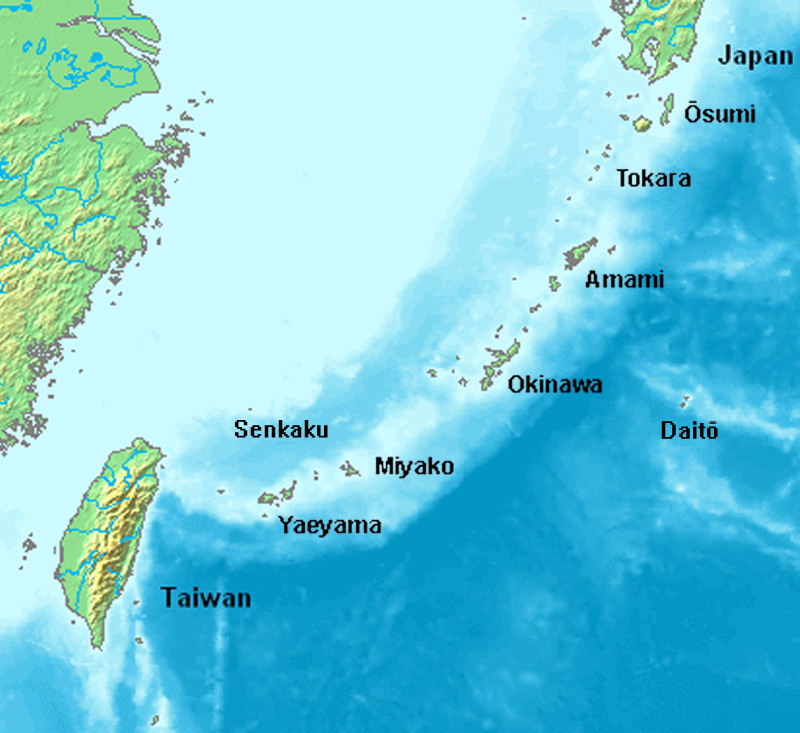
Things like karate, nunchuks, sai weapons, and such are assumed to be Japanese. However, more precisely they originate from a region called the Ryukyu Islands, which until two centuries ago was a separate culture and nation.
The Ryukyu Islands represent an ethnic group that is different than Japan, and the Ryukyu language (Uchinaaguchi) is a sister-language to Japanese: common origin, but otherwise unrelated. Initially it started as a small collection of island kingdoms, centered around the three strongest on the island of Okinawa, later unifying as the Ryukyu Kingdom (琉球國, Ruuchuu-kuku).
Seal from Qing-Dynasty China authorizing the rule of the Ryūkyūan King. The left part is in Manchu script “ᠯᡳᠣ ᡴᡳᠣ ᡤᡠᡵᡠᠨ ᡳ ᠸᠠᠩ ᠨᡳ ᡩᠣᡵᠣᠨ” (Lio kio gurun i wang ni doron), the right part in Chinese script “琉球國王之印”. George Kerr, Public domain, via Wikimedia Commons
Because the Ryukyu Islands are so small, and have limited resources, the Ryukyu people turned to sea trade and became master seafarers, who shipped around raw materials as far north as Korea and as far south as the Straits of Malacca. The Portuguese even had contacts with the Ryukyu people in some of these places. For Imperial China, the Ryukyu people were among its staunchest allies because they gained so much culture and wealth from the relationship, while providing China much needed goods from elsewhere.
However, by the early 1600’s, the nearest Japanese feudal domain of Satsuma to the north. Precipitated by border dispute over the north Ryukyu Islands (Amani and Tokara), this led to a full-scale war, and the Ryukyu Kingdom was forced to surrender. The kingdom was then ruled by the Satsuma fiefdom, first as a nominally dependent kingdom (still maintaining relations with Qing-Dynasty China), but fully annexed by 1879.
This is the background which karate and related martial arts arose.
Karate was a form of self-defense that began in the Ryukyu Kingdom, starting in the 14th century. The Ryukyu Kingdom was closely allied to China, and many Ryukyu upper-class members would spend time in China, studying culture, literature, etc, and would bring back hand-to-hand combat methods such as kung-fu, etc. Hand to hand combat became increasingly favored after the reign of King Sho Shin, who banned weapons to avoid risk of insurrection, and enforced further by Japan after the 1600’s. Many of the weapons that we associated with the TMNT, were actually imports from Southeast Asia to the Ryukyu Islands as part of this development of hand to hand combat, alongside the extensive trading. Weapons like nunchuks, tonfa, sai and so on are thus Ryukyu-based weapons (via China and Southeast Asia), often used for training purposes.
After Okinawa was formally annexed by Japan in the 19th century, karate as a martial art was also introduced into Japan where its techniques and training methods were given Japanese names for wider appeal. However, it should be clear that there was no prior tradition in Japan until this time. Japan had been a martial society for centuries, but hand-to-hand combat as we know it in China or the Ryukyu Islands never really developed there. In the same vein, ninjas would have more likely used weapons similar to the samurai class, if cheaper versions, rather than Ryukyu-style weaponry.
Understandably, the 80’s kid in me, who loved the Teenage Mutant Ninja Turtles and The Karate Kid Part II would have no comprehension that Okinawa, Mr Miyagi’s home, had in fact been a separate kingdom and culture until relatively modern times. But it is fascinating that such things that I enjoyed as a kid had a long, extensive history, with many layers.
I’ve tried to preserve these historical details in the Hamato Islands setting that I’ve been publishing for Dungeons and Dragon on DMS Guild. In A Traveler’s Guide to the Hamato Islands, I included a simple sketch map of the larger setting:
Thankfully, a fan has been providing updated and improved maps for the latest version of A Traveler’s Guide. Thanks “Mitch”!
My map-drawing skills are not particularly good, but I did want to at least reimagine the existing Kara-Tur setting based on something quasi-historical, hence I used a more 13th century layout of the geography. Great Shou remains more or less the same, but I added in a fantasy version of Korea (based on Unified Silla), and a steppe-nomad based empire (e.g. the Jurgen Dynasty here) not unlike the Mongols, Jurchen, and so on. But I also explicitly added a fantasy island, sea-faring kingdom to mirror the ancient Ryukyu Kingdom.
Further, in A Traveler’s Guide, I have made a point to distinguish the monk class (as in hand to hand combat) from the clerical monks, the former common in the lands of Uchinaama while the latter is more commonly found in the Hamato islands to the north. I don’t know how many adventures I can write that utilize this fantasy Okinawan culture, but I wanted to at least get something out there for others to build upon. I personally am excited at the prospect of writing more seafaring adventures using Uchinaama as the potential starting point.
Speaking of fantasy, after purchasing the new Mordenkainen Presents: Monsters of the Multiverse book (more on that in an upcoming post), and with my aforementioned love of the TMNT, and with a nod to Ryukyu/Okinawan culture, I made a new character for Adventurer’s League: Michaelangelo, the teenage monk ninja Tortle:
(With luck, he’ll be some kind of ninja character at level 3 and beyond…)
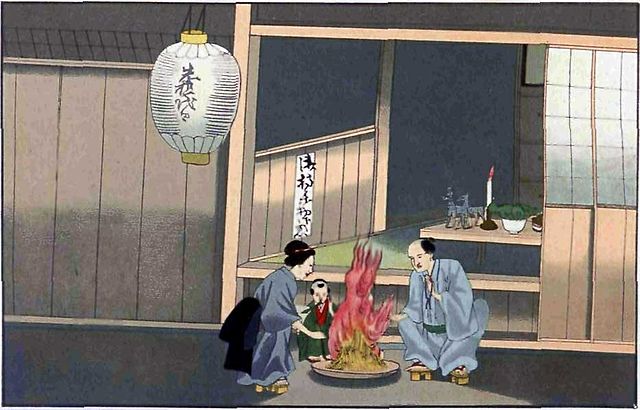
Late July through August is the Obon season in Japan, which mirrors Halloween in the West, or Day of the Dead in Mexico. It is both a time to return to one’s hometown, reconnect to family, pay respects to one’s ancestors, but also to delve into matters of death, afterlife, ghosts, etc.
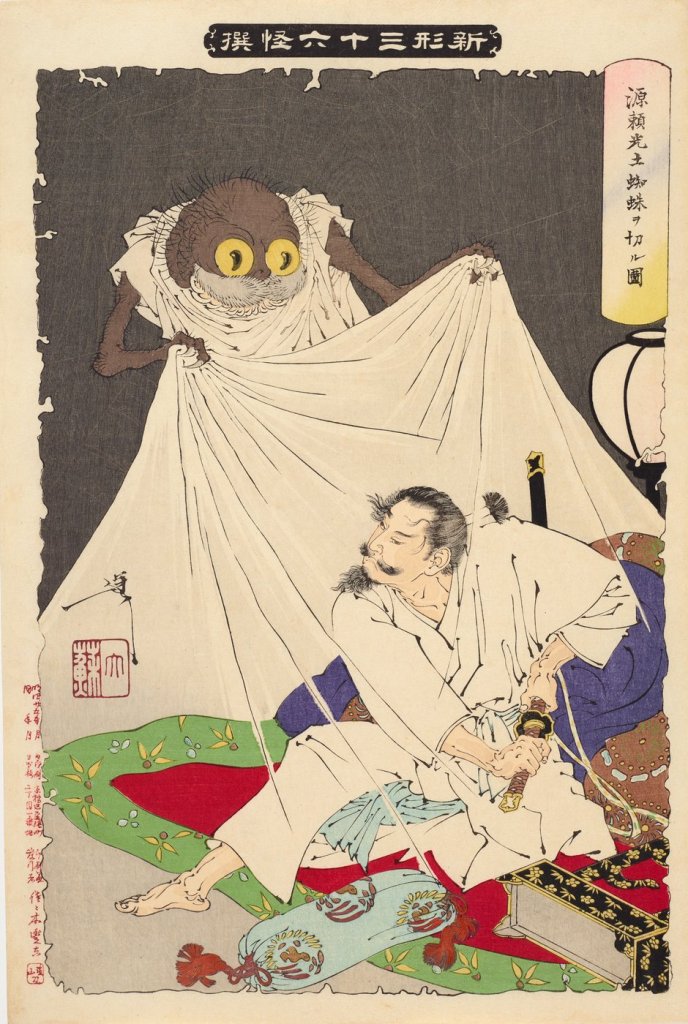
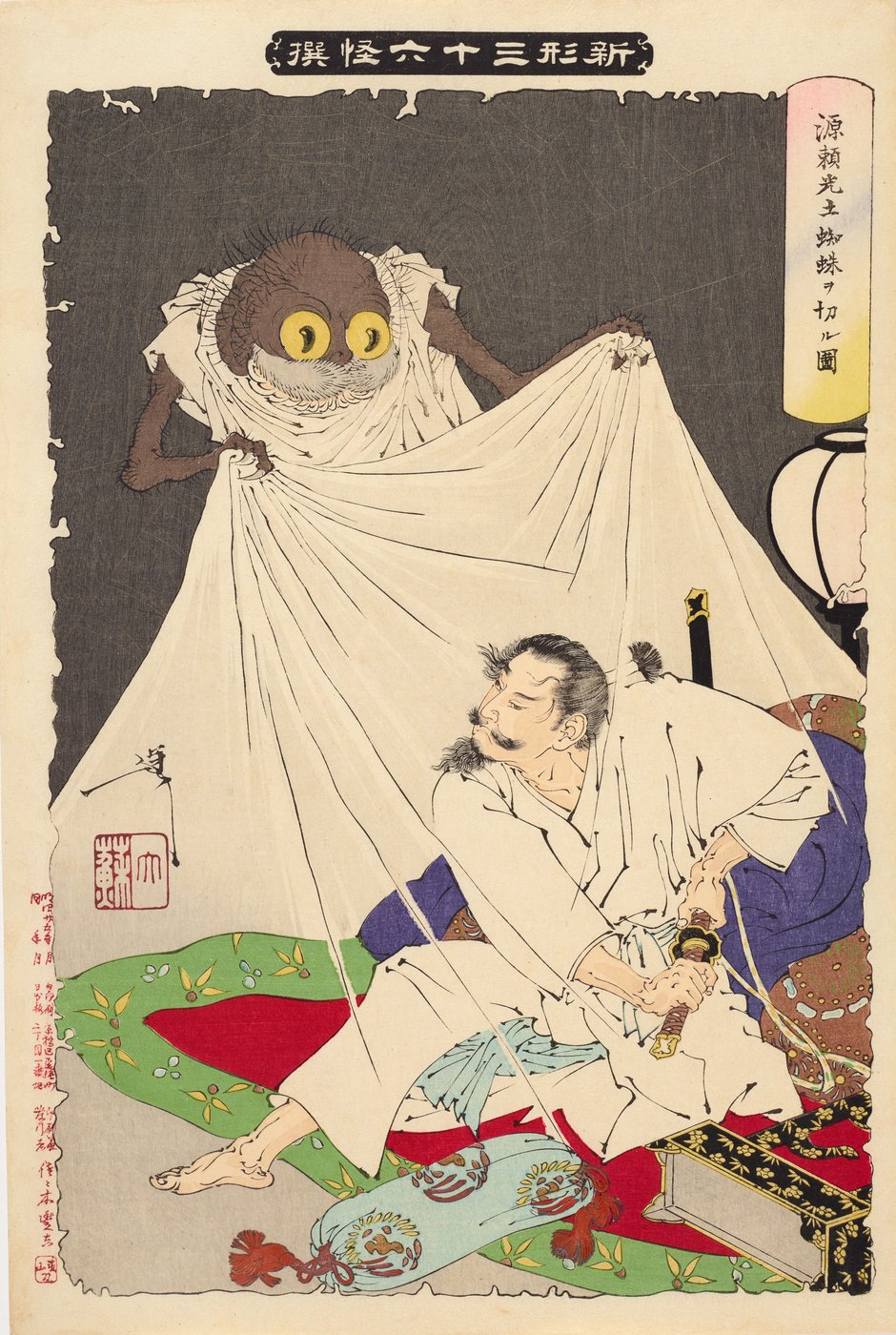
10th century warlord, Minamoto no Yorimitsu battling a spider monster, as depicted in wood-block print by Yoshitoshi in 1892 by Tsukioka Yoshitoshi, Public domain, via Wikimedia Commons. This would make a pretty neat D&D campaign by the way.
The yokai (monsters and ghosts) of pre-modern Japan differ in many ways to the traditional Halloween, gothic monsters we know, but are rich in variety from simple kasa-obaké “umbrella ghost” to terrifying nekomata “cat demon”. For people who enjoy playing TTRPG games, it is a wealth of material and inspiration, though as with any cross-cultural games, it’s important to be mindful of other people’s culture.
The rich world of Yokai is exemplified by a famous collection of ghost stories called Kaidan (怪談), compiled by the Greco-Irish author Lafcadio Hearn in 1904. Lafcadio Hearn is a fascinating man, who was one of the first Westerns to live in Japan and start a family there, and someone whose works I’ve admired for many years.1 His most well-known work today is Kaidan, but I highly recommend his other writings too. Kaidan, archaic spelling “Kwaidan”, is Hearn’s retelling of various ghost stories he’s heard with his own dramatic flourish. It is well known among Japanese audiences, and has influenced pop-culture since.
Previously, I compiled some of my favorite stories here, re-posting from the Project Gutenberg originals:
Mujina – this a short, short tale, but is a great story to retell to others. It also plays into the traditional belief of tanuki as malicious, mischief makers.
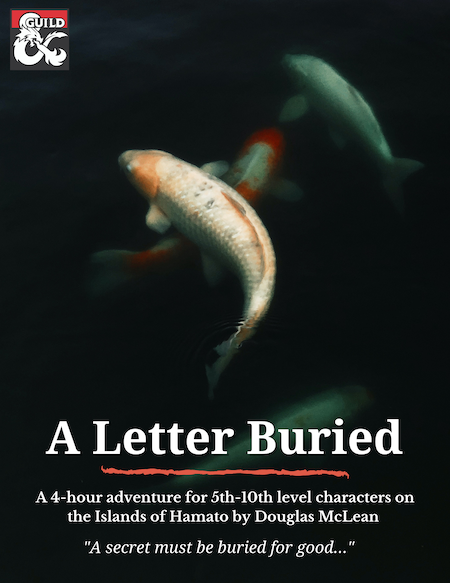
A Dead Secret – this is less of a terrifying ghost story, and falls more under the “weird” genre that you often see in Kaidan. It is one of my favorites, and was the inspiration of a Dungeons and Dragons one-shot module I published on DMS Guild: A Letter Buried.
Earless Hoichi – this story is one of the most iconic of Kaidan, and does a great job of linking the fall of the ancient Heike clan, with a compelling ghost story. The hinotama “ghost lights”, similar to will-o-wisp in the West, are a popular monster you see in Japanese pop culture and make for good D&D monsters too. I have posted monster stat blocks in A Traveler’s Guide to the Hamato Islands if interested.
Kaidan is a great book to pick up if you’re looking for inspiration, or interested in Japanese culture just as it was on the cusp of modernization from the earlier Edo Period of history to the modern-industrial Meiji Period.
1Kokoro is another good read, though it is more focused on daily life in Japan at the time, while Gleanings in Buddha-Fields delves into more spiritual matters.
Monsters from another culture are a fascinating window into premodern culture, and how they viewed the world. This includes, of all things, cats.
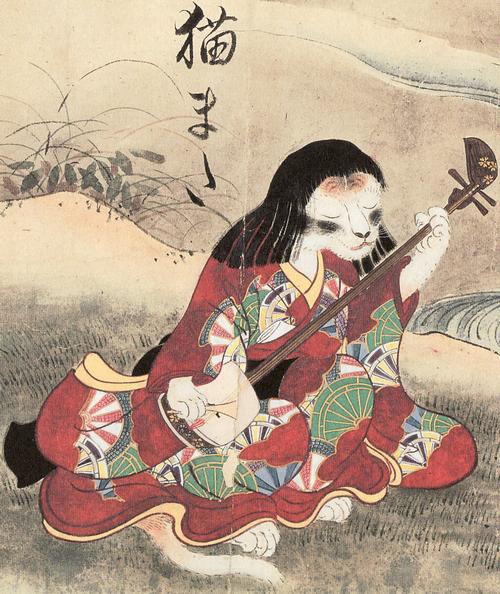
In Japanese mythology, there were variations on monsters, or yōkai, collectively known as bakeneko (化け猫) which means “ghost cats”. Such cats can range from cats who simply died and return as ghosts, to mischevious spirits who might harass or trick people. A popular example of a bakeneko is Jibanyan in the popular series Yokai Watch.
When looking at Jibanyan, note the double, or forked tail, and the hi-no-tama ghostly balls of fire that hover around him. These are popular images for yokai (multiple tails) and for spirits (ghost fire). The bakeneko in general is a prime example of yokai in Japanese mythology.
However, there is one particularly malevolent form of bakeneko called the nekomata (猫又), or “cat with a forked tail”. Yokai.com has a great article about it. Unlike the run-of-the-mill bakeneko, the nekomata is far more powerful and hostile. They are said to grow more powerful with time, and can be very large, shoot fireballs, cause plagues, etc. They even command the undead. It’s not hard to imagine a nekomata as an end-boss (BBEG) in a Japanese-themed campaign, where as the mundane bakeneko are more like nuisances, or possibly serving the nekomata in some way.
Heck, I should probably write one. 😊
Yokai in Japanese mythology in general fulfill a similar role that fey did in medieval Japanese culture: mischievous at best, terrifying at worst, and it’s fascinating how cats in particular held such a popular role in Japanese mythology.
I loved this song back in the day, but the music video sure hasn’t aged well…
Last night I finally got to play Adventurer’s League at the local gaming store for the first time in maybe a year, patiently waiting since for my kids’ school activities to end for the school term, and getting my character dusted off and ready to go.
But it was a terrible night. The adventure module we played, something from Season 7 Tomb of Annihilation, was poorly designed, and our DM was just an inexperienced kid who tried his best but hadn’t prepared enough.
The worst part though were some of the other players. I sat in the farthest back, surrounded by a number of “power players” (including one dad who brought his teenage daughter), who kept talking over me and one another. They kept pushing the rules envelope, and the DM didn’t really have the confidence or experience to make decisive choices about allowing this, or saying no to that, so the power players ran roughshod over the game. Within the first hour, I checked out, and spent the evening on the phone, venting on Twitter (rant since deleted) and hardly said anything for the rest of the night. I was all too glad to leave when it was over. The module had been scheduled for 2 hours, but we stayed almost for 5.
And yet it was more than that. The gaming store, which thankfully weathered the pandemic, still felt very different. Overly-complicated food menu, unfamiliar staff, flashier “gamer” vibe, etc. The large community of AL players I used to know back before the pandemic has almost entirely disappeared, or play their own table exclusively leaving occasional players like me at the “little kids table”. Where before we usually had 4-5 tables a night, and I knew all the senior DMs, I recognize almost no one now. That goes double for the other players.
In short, the local AL community really sucks now, and the gaming store isn’t what it used to be. When I last played during the pandemic, it had also been a bad experience, though not quite as bad. So, I just chalked it up to the occasional bad night. They happen, and you move on.
However, it’s clearly become a pattern and I finally had to face the fact that the local gaming community that I once knew is over. The pandemic and WotC’s tinkering with AL rules drove off a lot of committed players, and in a sense gutted my local community. Further, I’ve lost interest in newer D&D rule books,1 and our local regional Discord channel is very quiet now.
As I wrote back in the day, sometimes it’s better to just not play D&D than subject yourself to a frustrating and disappointing experience, but I kept trying through the pandemic hoping things would eventually recover. They haven’t. And as with Magic, I have to face that sunk-cost of investing any further in it, and give it up.
Never say never, of course. Even if I don’t like the community now, who know how things will look say five years from now. Maybe I’ll find another, healthier AL community someday. But for now, I’m putting that hobby on a shelf for the foreseeable future.
Contrarily, playing at home with my kids has been a lot of fun, and my daughter’s friends want to play with us too, so while my local gaming community has faded away, I suppose a new one is being formed right under my nose.
1 The new Mordenkainen’s book somehow just feels flat, homogenized, and takes a lot of fun out of playing certain character builds. I did get Witchlight and Candlekeep Mysteries, but have hardly cracked open either book since.
Now that I have finished up some small projects, I’ve been getting back to something I started working on last month, but haven’t finished: a new adventure module for DMS Guild. Actually a series of mini modules, 2 hours each. It’s been a while since I made one, and after burning out from working on the last module, I decided to take a break and look at what kinds of interesting monsters (yōkai 妖怪) in Japanese mythology are worthy of a good one-shot adventure.
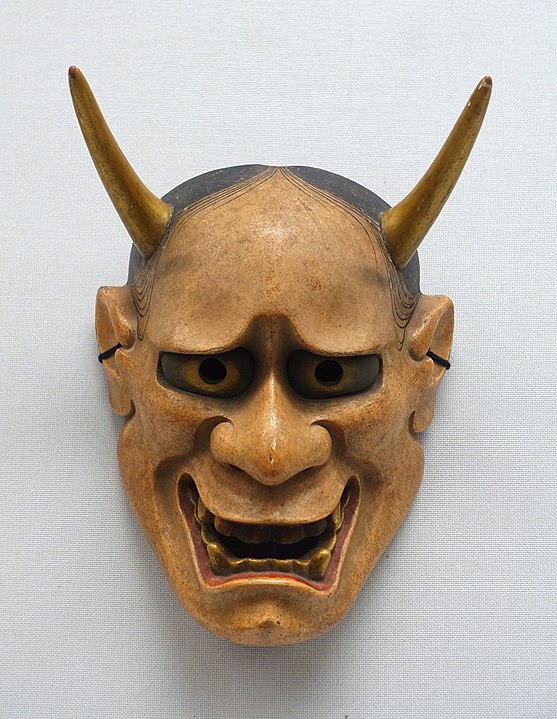
One of my personal favorite is a monster called the hannya (般若). The name is unusual because it’s also a Japanese-Buddhist term for Sanskrit prajñaparamita (“perfection of wisdom”) such as described in the Heart Sutra. In this case, the monster has no real Buddhist association, so it’s unclear why it shares the name.
Anyhow, hannya most frequently appear in old Japanese Nō plays as vengeful women who were wronged, and return from the afterlife to torment those who wronged them in the form of a bitter, angry demon. In a medieval world, where women had fewer rights and could be tossed out by uncaring husbands, it’s not a stretch to see how some women in real life probably suffered greatly, and after death people might fear their return as a vengeful spirit. You can read more about it here.
Hannya are most often portrayed in Nō using a special mask, also called hannya, that changes its expression depending on the angle: terrifying in one angle, sad and mournful at another angle.
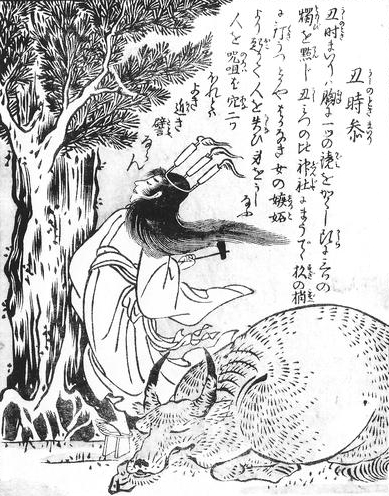
Another, similar yōkai that appears in Japanese mythology is called the ushi no toki mairi (牛の時のまいり):
This name derives from the legend that this vengeful spirit appears during the Hour of the Ox (1am to 3am) and would appear as a women with a crown of candles on her head. She would nail either a straw effigy of the person she would avenge to a tree, or a piece of paper with their name on it. In other cases, she would stalk the night seeking revenge.
The two are often conflated in Japanese folklore as well, as seen in some movies such as the 2001 film Onmyoji (a pretty underrated film). Similarly, for the purposes of Dungeons and Dragons, I decided to conflate the two into a creature similar to a revenant, but to fit Japanese mythology better, I felt that a fiend type, rather than undead, seemed more appropriate. Further, I wanted to lean into the fire theme (e.g. fires of rage), more for flavor. You can stats for a hannya in the Traveler’s Guide to the Hamato Islands among other, upcoming sources.
One lingering issue for me in writing modules based around the hannya and ushi no toki mairi is that it reinforces the old “hell hath no fury like a woman scorned” trope, which feels frankly a bit dated to me. It’s a subtle reinforcement of the old trope of women being “more emotional, less rational” than men, which is a load of tripe. But I also believe that it still retains some cultural value given how much women were mistreated and that need for a sense of justice. So, it’s a tricky subject to write an adventure module about, but given its popularity in Japanese theatre and media it’s a helpful window into another culture.
My kids drawing omikuji fortune “sticks” from a cylinder at Sensoji temple in Tokyo, Japan in 2016. The numbers written on the sticks correspond to the cabinets, where one can find their fortune.
I recently enjoyed a great video by Zee Bashew about the spell of Augury in Dungeons and Dragons:
My main Adventurer’s League character, Fenmaer Wasanthi, does use Augury from time to time, and it’s been fun, though because it’s a low-level divination spell its benefits are limited. In spite of Zee Bashew’s criticism, I think it’s still a worthwhile spell to use if you keep your expectations low. But let’s cover the spell a bit in more detail first.
The spell, as written, takes one minute to cast, or 11 minutes if cast as a ritual. You must have 25gp worth of augury “tools” that function as a recurring spell component, but the Player’s Handbook is intentionally vague about what those tools would look like. This provides a fun role-playing aspect for your character as you get to decide what those look like. For my elven forge cleric, I go with the “smithy” theme of using metal sticks (similar to the metal chopsticks used in Korean cuisine), with gold filigree, gems encrusted, etc. Since this is a spell component you can re-use, but is required for the spell, it’s a one-time cost of 25gp which you can keep reusing over and over. In my character’s DnD Beyond character sheet, I just note such spell components like so under “Other Possessions”:
Fenmaer’s DnD Beyond character sheet inventory. At 9th level, he now has access to a number of more powerful spells, but has to track their spell components too.
In any case, once the spell is employed, you can inquire about a specific action you plan to undertake in the next 30 minutes. The DM, the proverbial “god of the universe”, is then obligated to answer with one of the following omens:
Weal, for good results
Woe, for bad results
Weal and woe, for both good and bad results
Nothing, for results that aren’t especially good or bad
Here’s me drawing a bad fortune (凶, shown upper right) at the branch temple of Toyokawa Inari in Tokyo in 2018.
The spell also clarifies that if any circumstances change the situation between now and then, the spell can’t anticipate that, so it’s based purely on the current situation and how that will impact your subsequent choice.
Depending on when it’s used, Augury can be straightforward for a DM to answer, or really tough.
Imagine an adventuring party is in a dungeon, and confronted with a couple doors. The party is unclear which door to go through, and are in pretty wrecked shape already, so they would like to avoid further disaster. This is a case where the Augury spell can help tip the decision one way or another, by inquiring what happens when the party goes through a particular door. Of course, if they want to know about both doors, it would have to be cast twice (22 minutes at worst).1 Here we see a specific course of actions the party can take, and opening a particular door can lead to danger (woe), treasure (weal), an empty door (nothing) or danger + treasure (weal and woe).
On the other hand if the party wants to talk to such and such person and maybe ask for help, the Augury spell in this case would be harder for a DM to respond to. Predicting social interaction is hard because it depends in large part on how the players choose to carry the discussion, plus randomness associated with any Charisma checks and so on. Unless the other party has some clear intention toward the party, anything is possible. Another example would be using Augury to predict breaking in to a castle will work or not. There’s a lot of factors at play, and it’s too broad for the Augury spell to provide a specific answer to a specific action. Your DM would rightly push back here and say that the scope of the spell doesn’t cover something like this.
Thus we get to when Augury works and when it doesn’t. Augury is basically meant to detect upcoming danger (or benefit) based on one intended action (open door, get item, drink potion, take this road not that one, etc). As a mere 2nd level spell, it doesn’t have the power of something like Divination, but provides a quick-and-dirty “read” of the situation.
If properly employed for what it was meant to do, your DM will thank you for not putting them on the spot for unreasonable inquiries about the future. 😃
1 Of course, each time you use it after the first during a day increases teh risk of getting an inaccurate, random reading anyway, so choose wisely.
This is probably my last post on the subject, but my current active character in Dungeons and Dragons Adventurer’s League, a high-elf cleric of the Forge domain who worships Darahl Firecloak, has reached level 8. Our humble play-by-post group has been actively playing for one year, and so I would like to review the Forge cleric as a character class and what has worked best for it (and what didn’t). Obviously, I will still keep playing the character, and maybe reach level 20 for once in my life, but I’ve used him long enough that certain patterns have definitely emerged.
Unlike some of the cleric domains in 5th edition Dungeons and Dragons, the Forge cleric has a very clear theme: earth, metal and fire.1 Everything in its toolkit is geared toward these three things:
Many of the extra “domain spells” are fire spells or related to stone: Wall of Fire, Stone Shape, Magic Weapon. These are great since they are spells that clerics normally don’t have access to, yet fit the theme nicely.
Proficiency in heavy armor. Nature and Life clerics get this too, but as we’ll see it just works better with the Forge cleric, because it can be further enhanced with Blessing of the Forge and other subsequent abilities.
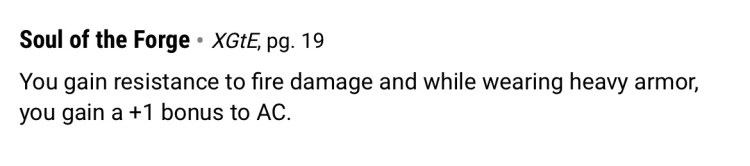
Resistance, and later immunity, to fire, which is a very handy in the right circumstances.
However, this does include a couple challenges as we’ll see
Challenges
Because the Forge cleric leans heavy into both elemental magic, and melee combat, it tends to lose out on general clerical abilities. Its channel divinity ability, Artisan of the Forge, is pretty situational, and I have yet to use it even once within an adventure module. The Turn Undead / Destroy Undead abilities are OK, but often end up being slightly underwhelming, and the Forge cleric gets no healing magic or divination magic apart from the standard fare. This means the Forge cleric has the bare minimum abilities as a cleric.
For combat, a cleric, even a Forge cleric, gets only minimal help. Spells like Searing Smite give the Forge cleric power similar to a Paladin, but it still falls behind the martial classes in that it only gets one attack, and not all of the weapon proficiency needed. Thus, an offensive build for a Forge cleric is underwhelming as I learned the hard way. The 8th-level ability Divine Strike helps a little bit by adding extra elemental damage, but you’ll still get more damage per round by falling back on your cleric spells instead.
Finally, and this is a subtle one, the Forge cleric works best with a Wisdom + Strength based build. An elf, which usually relies on Dexterity, has to allocate at least 13 Strength allocate anyway. Without Strength, a Forge cleric can’t use heavy armor, and without heavy armor, certain abilities never get activated. This means that there’s really only one effective way to play a Forge cleric, without too much room to move around.
Things To Optimize a Forge Cleric
First, heavy armor is a must. This lets you gradually increase armor class through Forge cleric abilities.
Believe it or not, all these bonuses stack according to 5th-edition rules.
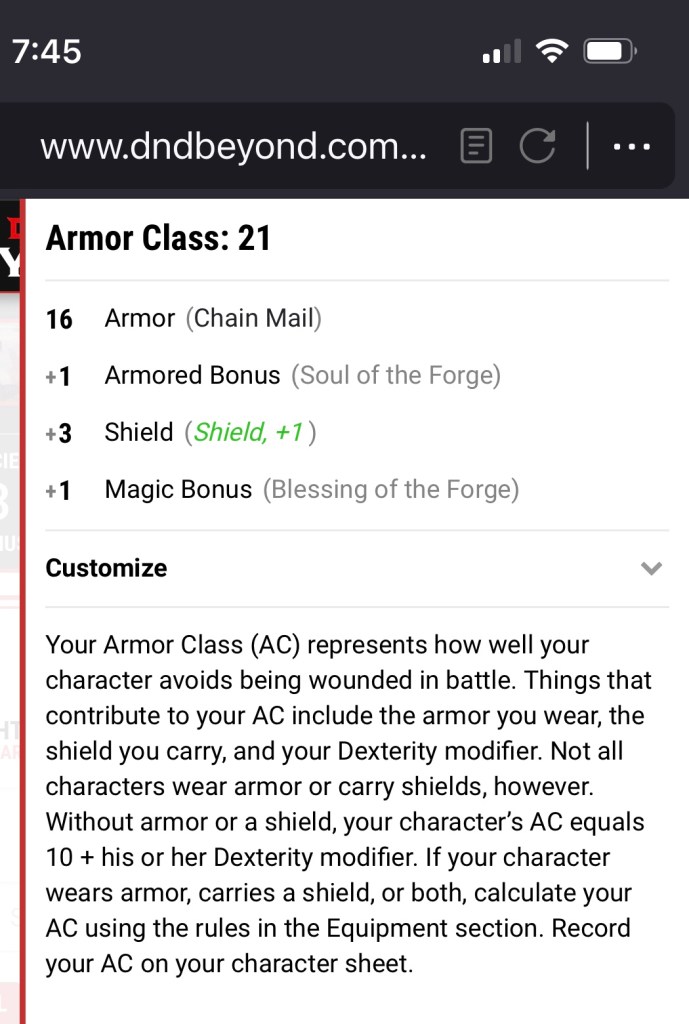
Second, learn to play a Forge cleric as a tank, not an offensive or support cleric. In early levels, it’s enough to get some chain mail armor, add Blessing of the Forge, and then use concentration spells like Bless to buff up your party members (and yourself). At level 8, using the same basic chain armor I started with,2 a +1 shield, and various Forge cleric abilities, Fenmaer has 21 AC and access to Spirit Guardians, allowing him to just get in the monster’s faces, without taking much damage, while dealing plenty simply by proximity.
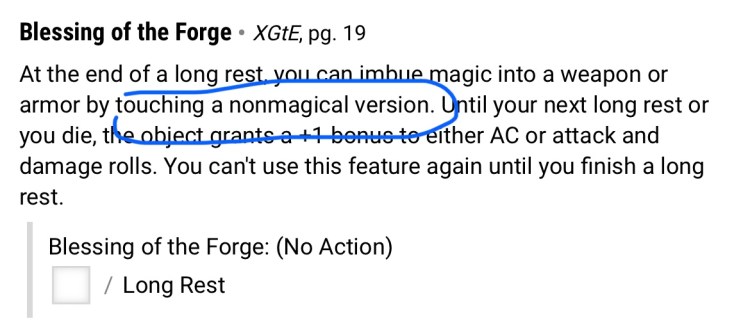
The key word here is “non-magical”. Until you get to +2 items, you probably can just stick with Blessing of the Forge for your weapon or armor.
Third, lean into your strengths, namely fire and earth magic. For example, a handy feat I took at level 8 was Elemental Adept (fire). This feat doesn’t seem to very impactful, but it does smooth out the damage output from your fire-based attacks, so it increases consistency. Searing Smite can be a frustrating spell if you only hit for 1 damage, but now it hits for slightly more, and ignores resistances. Wall of Fire? It will have more punch from now on which is great when it catches multiple enemies off-guard. I hardly use cleric staples such as Guiding Bolt or Sacred Flame simply because I can do a lot more with fire magic.
Yet another fine bonus while playing a Forge cleric…
Finally, as with all clerics or magic users, make sure to have a least one utility spell, one healing spell, and such handy. Forge clerics aren’t great healers, but they can still heal in a pinch, and divination / detection spells are always useful to have in small quantities. Even you are a melee/tank, you may still be the only salvation the party has, even if you’re not super powerful in that regard.
… and of course, have fun. This elf forge-cleric was an experimental character and not an optimal build but as I learned to make it work, I have had a lot of fun with it.
1 If only there was a cleric theme with earth, wind, and fire. Do you remember the 21st night of September? 😋
2Blessing of the Forge ability doesn’t work on magic armor or weapons, so if you get a +1 armor, you can’t enchant it anymore. It will end up with the same Armor Class anyway, but just be aware.
My kids and I have been playing a longer D&D campaign in the world of Eberron, a noir steam-punk magic setting for almost a year now, and the kids consistently seem to enjoy this setting more than other D&D campaigns we’ve run. Since we have only two players (my daughter and my son), the party consists of:
I run the sidekick characters myself, and some have come in and others rotated out.2 The hobgoblin and warforged sidekicks have been with the party since the beginning and have been a pretty integral part of the story.
Our hobgoblin cleric’s backstory is that he secretly wanted to be a wizard instead and only did the cleric role out of familial obligation. However, since Borsheg was rejected by the wizards guild, he has since gotten private tutorship on the side with a shady teacher named “Dak” who, currently unknown to the party, is a Rakshasa.
Our Warforged has become the most central character to the party though. Originally, Malbus 414’s backstory was that he had, like all Warforged, fought in the Last War, particularly as part of the 523rd Battalion in East Breland. However, it became clear that his entire platoon had been secretly conditioned by their gnomish creator, Dr Vilnius Volrani Vishkik, to attack any gnomes from a certain rival house on sight. Eventually, the kids were able to find an artificer who could remove Malbus’s conditioning, and scrape up enough money to pay for it, but at the cost of partial memory loss. The kids really got choked up when they realized that Malbus wasn’t going to be quite the same.
Out of all the stories that I’ve teased in front of kids, including demonic cults, Borsheg’s evil tutor, smuggling jobs, etc, the kids have really attached themselves to Malbus’s and have since pursued Dr Vishkik (who unknown to the kids, is now a glorified brain-in-a-jar) across continent only to discover that he has reconstituted most of the old 523rd platoon, and means to take on the Lord of Blades in Cyre in order to become a new ruler there, assert dominance over all Warforged at large. Malbus is torn between his loyalties to his old platoon, but also his new purpose in stopping Dr Vishkik, especially where violence is required.
Mechanically speaking, a Warforged is an interesting character race since it’s fully artificial, yet is also a living being. According to the 5e guide, if you play a Warforged, you (among other things):
Gain a +1 bonus to Armor Class.
Have advantage on saving throws against being poisoned, and you have resistance to poison damage, and are immune to disease
Do not require sleep, but when you take a long rest, you must spend at least six hours in an inactive, motionless state, rather than sleeping. In this state, you appear inert, but it doesn’t render you unconscious, and you can see and hear as normal. Further, you don’t need to sleep, and magic can’t put you to sleep.
These things all come from the Warforged’s artificial nature. However, as a living sentient being, you can still benefit from things like healing magic, potions, etc., so you are not a construct either. It’s not entirely clear to what degree a Warforged is a machine vs. a living being, but I’ve mostly leaned toward the artificial, and focused on the “power core” as a source of their sentience and humanity.
The mechanics of a Warforged are fun, but the role-playing side of the Warforged is what I find most compelling. Because the Last War is over, Warforged are kind of superfluous now. Society doesn’t need them anymore, and they are no longer manufactured (at least in mass-production), so they have been tossed out on the street with no clear picture of what to do with themselves. This leaves plenty of room to decide how you would want to play a Warforged. Malbus 414 initially took mercenary jobs because war was the only thing he knew, but once he met the party during the initial session, he gradually took his life in a new direction with them.
The official interview with creator Keith Baker helps clarify this and is worth a watch:
I tend to roleplay Malbus 414 similar to Commander Data from Star Trek: The Next Generation, in that he is searching for his humanity, and trying to forge a new identity for himself bit by bit as something more than just a war machine. One could conceivably do the opposite and play a Warforged who never really left the Last War. The noir, brooding atmosphere of Eberron really lends itself to this, because of the heavier emphasis on character backstory, personal challenges, etc, but if you play a Warforged within the larger universe, such as Planescape or even the Forgotten Realms somehow, the brooding war backstory can still come into play and create a good starting point for the character.
Or you could just make a character like this one:
Comment posted in linked video above
I wish Warforged were more available in other settings, not just for its useful mechanical reasons, especially in Adventurer’s League, but I am happy to play one when the opportunity comes up. Its nature lends itself to good role-playing, and its mechanics allow for all kinds of interesting character / class options.
1 My son is a huge Kirby fan.
2 Our half-orc rouge-scout sidekick died a few weeks back in a random encounter, and the elf fighter replaced him since the party was near Valenar anyway. I keep a pool of sidekicks in the backlog in case I need to replace one. Still, the half-orc scout was a good character in his own right, and the kid and I kind of miss him already, even as we enjoy the new character.
For some time now, I’ve been actively playing a high-elf cleric of the forge domain named Fenmaer Wasanthi in a small play-by-post community for Dungeons and Dragons’s Adventurer’s League. It’s been great fun, and one of the few consistent bright spots in the last two years for me. Fenmaer had initially been something of a throw-away character that I had intended to use for the new season 10 rules of Adventurer’s League (and never did), but when the season 11 rules came out, fixing a lot of issues, I decided to bring back Fenmaer and try things out.
My characters home is Elventree, near the city of Mulmaster, where a small, dwindling community of high-elf forge masters still maintains an obscure cult to Darahl Firecloak. Fenmaer being (comparatively) the youngest has been tasked to rekindle the community through acquired knowledge and experience. When our PbP group started doing adventure season 7 modules (“Tomb of Annihilation”) in Chult, I also had a small side-story where Fenamer got in touch with a scattering of Darahl worshippers in Port Nyanzaru as well.
Darahl’s sketchy history makes him an interesting “anti-hero” elven deity, who is not affiliated with evil, but also sundered from the rest of Elven pantheon too and forced to “go it alone”. That said, when trying to flesh out Fenmaer’s backstory and role-playing, I realized that there is not a lot of information about his deity, Darahl Firecloak.
The main source of information comes from one issue of Dragon Magazine, issue 251, which can be found online in PDF form. Fifth Edition material on Darahl (i.e. Mordenkainen’s Tome of Foes) largely preserves this without adding much too it. Below, I’ve included basic information both canonical (Dragon Magazine + Mordenkainen’s) followed by additions that I’ve added for Fenmaer specifically. If you like, feel free to use it, adapt, etc. Spread the faith of Darahl to player characters far and wide. He’s not a picky deity, as you’ll see. 😋
Canonical Information
Starting with the basic stats:
Name: Darahl Firecloak, originally Tilvenar
Nicknames: The Even-Tempered, Lord of the Green Flame
Alignment: Lawful Neutral, leaning toward good
Follower Alignments (optional): typically LN, LG or NG
Symbol: A greenflame between two outstretched hands
Domain: Forge (5th edition), Earth and Fire (3rd edition?)
Symbolic Weapon: longsword
Darahl Firecloak was originally part of the elven panthan, the Seldarine, and served under Rillifane Rallathil, but after being offered a cursed artifact by Lloth and the Unseelie Queen of Air, his avatars went beserk and caused a great deal of destruction before being pacified again. However, the damage had been done and Darahl lost many followers, while also being shunned by the other elven deities. Darahl left the plane of Arvandor and made his home in the 1st layer of Arcadia where he first took the name “Darahl Firecloak” and began to reinvent himself. Darahl is now much more open to non-elvish followers, and alliances with non-elven deities such as Dumathoin of the Dwarves, Urogalan of the Halflings, and Flandal Steelskin of the Gnomes for example.
Because Darahl is so open to other followers, he has even some followers from the Underdark, particularly Duergar. For this reason, both Lloth and Laduguer oppose him. Darahl, according to Dragon magazine, is often invoked by followers at the start of a new undertaking such as digging a new mine, or crafting a magical artifact, or to help avert disasters such as earthquakes and forest fires. Offerings by the faithful include precious minerals or minor magical items. Priests are also called firecloaks and often dress in motifs of yellow, red and brown with a green flame somewhere.
That’s the canonical stuff. Let’s move on to Fenmaer’s religion in particular.
The Molten Path
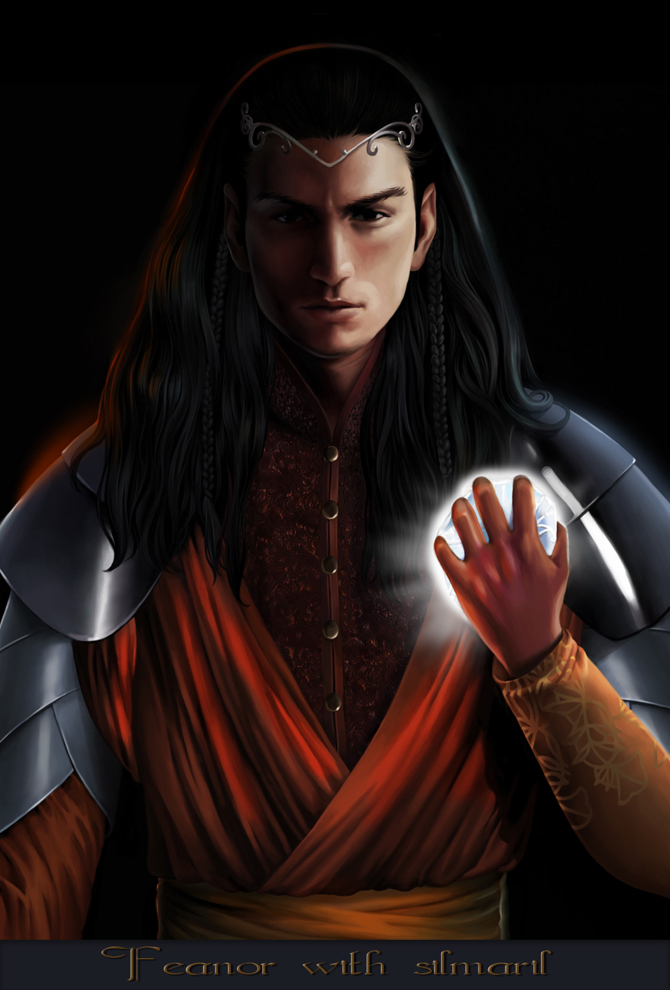
Fenmaer’s high-elf community in Elventree were more prosperous in the past and their craft earned the respect of their neighbors as well as other traders from afar. I was heavily inspired by the Noldor of J.R.R. Tolkien’s The Silmarillion who also had unparalleled crafting skills in comparison to other elves and races. The Elventree high elves remained somewhat apart from their more numerous wood elf neighbors and fellow residents in Elventree, yet as the human community of Mulmaster later flourished, the elves diminished. Thus, the high elf community did what elves do best: retreat further in isolation, only to their detriment.
The elders of Fenmaer’s community teach an offshoot of Darahl’s religion called the Molten Path. Contemplatives, priests and some mages as well, seek to burn away their own “impurities” (just as metal is purified by fire) through a hard work ethic, devotion to their craft, and community. Through this they believe they see the handiwork of Darahl in all things, and in themselves.
According to the high elves of Elventree, Darahl dwells in Arcadia at a place called Maldinnon, the Peerless Forge, where he guards the Eternal Flame,1 and uses it to mold and craft the many things of the world. In Platonic philosophical style, that which He crafts is said to be the peerless example of that object to which all others seek to emulate in their craft. By contrast the elemental evil represents attempts to corrupt the peerless works of Darahl and profane his craft, and must therefore be opposed by all followers.
Through the PbP adventures, I’ve had Fenmaer recite a few prayers and liturgy, sometimes more serious, sometimes more joking:
“Hail Tilvenar full of fiery grace…deliver us from elemental evil… and lead us not down the path of rust and ruin…”
and a benediction like so:
I call upon Darahl Tilvenar, the blessed Firecloak, who keeps the Sacred Flame free from impurities, and molds metal as he molds souls into fine vessels for the good of others. Be ye most kindly disposed to us, let your warmth and radiance fill the hearts of this family and guide them through the darkness with your light. Let not the elemental evil obstruct their path. May their coffers be bountiful and their worries few. (then in Elvish…) Vardo nu luini yassen Tilvenárii eleni ómaryo airetári-lírinen.
or:
Tilvinarë na-molonen! (Tilvenar don’t fail me)
Fake elvish
or:
Tilvenar, may your fiery Cloak descend upon us!
and:
In the Name of the Firecloak
When Fenmaer reached 7th level, he acquired the Divination spell, and used it to contact Darahl for some questions concerning their next adventure. I described the ritual like so:
Using the ground iron, copper, silver, gold and copious coal dust, Fenmaer draws a large, intricate “sand mandala” on the ground between him and a small lit brazier. The different ground materials form different colors in the mandala. Once that’s done, his chanting continues on in Old Elvish for a while until observers notice that the filings have somehow heated up and are glowing red hot. Not melting, just red hot. Finally, he poses his question…
So, those are some non-canonical examples of how I applied Darahl’s religion in role-playing Fenmaer. Like any religion, one can imagine many regional differences, or even liturgical differences among communities, so in role-playing a follower of Darahl, feel free to adapt, adjust or innovate your own liturgy or community teachings. Or feel free to use what’s here and help spread the Word.
P.S. a big thanks to my DM and my fellow players who put up with Fenmaer’s religious antics. 😄
1 I had envisioned it as a white-hot flame until I saw the Dragon Magazine article later. You are welcome to decide what the actual color is, dear readers.









 Gleanings in Buddha-Fields





You must be logged in to post a comment.