Chanting The Kannon Sutra

Chapter 25 of the Lotus Sutra is a popular devotional text in East Asian Buddhism. It is often referred to as the “Avalokiteśvara Sutra”, or kannongyō (観音経) in Japanese, or more formally the kanzeon bosatsu fumonbongé (観世音普門品偈, “Chapter on the Universal Gate of Kanzeon Bodhisattva”).

Despite the name, it is not a stand-alone text, but simply a famous chapter in the larger Lotus Sutra. This particular chapter is the main introduction to one of the most popular Bodhisattvas in Buddhism: Avalokitesvara (Kannon in Japanese, Guanyin in Chinese, etc.). The chapter describes the attributes of Kannon that are familiar to Buddhists, such as their vows to help all beings who call on them, their ability to take on various forms to teach people, and their unwavering compassion to lead all beings to Enlightenment.
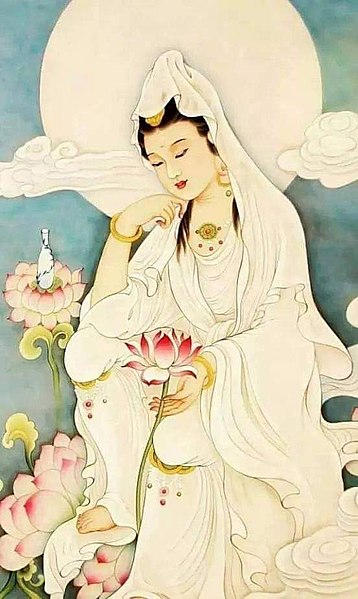
A more Chinese-style image of Kannon (a.k.a. Guan-yin) in her more motherly form, photo courtesy of Wikipedia.

The chapter as a whole is long and would be difficult to chant, so the verse section, not the narrative section, is frequently used for liturgical purposes. The Lotus Sutra often describes things in narrative form, then summarizes again in verse form. However, even the verse section alone is longer than the Heart Sutra, or the Shiseige, so just chanting the verse section is a bit challenging. In my experience it takes about 5-7 minutes.

For this reason, medieval Buddhists in Japan also devised an even shorter version called the Ten-Verse Kannon Sutra.

The sutra is frequently recited in both Zen and Tendai liturgies, among others, but it is not well known to Westerner lay-Buddhists. I had difficulty finding an online copy I could use as a reference here, even in Japanese, due to its length.

However, ages ago, I picked up a sutra book at the famous Sensōji temple in Tokyo, and once I figured out what the Kannon Sutra was, I copied it character by character to an old version of the blog, but then lost it later when I changed blogs. Recently, I was able to recover the text (not easily) from the original HTML I wrote, and posted it back on here with minor edits.

I have also provided a PDF version here if you want to print it out and use at home.

Also, special thanks to this website for providing much needed reference information on pronunciation and Chinese characters. My original, recovered text had a few errors, embarrassingly.

Examples

I found a few examples on Youtube that you can follow along if you are learning to chant the Kannon Sutra as shown below.

From Eiheiji temple (one of two home temples of Soto Zen). Note that they chant this at a pretty fast pace.
This example from Zenshoji Temple, a Shingon-sect temple, in Niigata Prefecture, has line by line annotation. The chanting pace is slower and easier to follow.

These examples are very similar, other than slight differences in pacing and pronunciation of certain Chinese characters. For people who are learning to recite the sutra, just pick what works until you get the hang of it.

Translation

I decided not to post the translation side-by-side with the text, the way I do with the Heart Sutra and such. This is due to formatting reasons on the blog, plus also length of the text makes this more difficult. I may revise this later.

For now, I highly recommend checking out a modern translation here by the excellent Dr Burton Watson. In that translation, the verse section starts after the phrase “At that time Bodhisattva Inexhaustible Intent posed this question in verse form“. The Buddhist Text Translation Society also has an excellent translation of the verse section here.

Disclaimer and Legal Info

I hereby release this into the public domain. Please use it as you see fit, but if you attribute it to this site, greatly appreciated. Also, please bear in mind this is an amateur work, and should not be taken too seriously.

Dedication

I dedicate this effort to all sentient beings everywhere. May all beings be well, and may they all attain perfect peace.

Namu Kanzeon Bosatsu

The Kannon Sutra, verse section

(2025 edition, with minor typo fixes)

Preamble

Original ChineseJapanese Romanization
妙法蓮華經
観世音菩薩 
普門品偈
Myo ho ren ge kyo
kan ze on bo satsu
fu mon bon ge

Verse Section

Original ChineseJapanese Romanization
世尊妙相具
我今重問彼 
佛子何因縁
名為観世音
Se son myo so gu 
ga kon ju mon pi
bus-shi ga in nen
myo i kan ze on
具足妙相尊
偈答無盡意 
汝聴観音行
善応諸方所
gu soku myo so son
ge to mu jin ni
nyo cho kan on gyo
zen no sho ho jo
弘誓深如海
歴劫不思議 
侍多千億佛
発大清浄願
gu zei jin nyo kai
ryak-ko fu shi gi
ji ta sen noku butsu 
hotsu dai sho jo gan
我為汝略説
聞名及見身 
心念不空過
能滅諸有苦
ga i nyo ryaku setsu
mon myo gyu ken shin
shin nen fu ku ka
no metsu sho u ku
假使興害意
推落大火坑 
念彼観音力
火坑変成池
ke shi ko gai i
sui raku dai ka kyo
nen pi kan on riki
ka kyo hen jo ji
或漂流巨海
龍魚諸鬼難 
念彼観音力
波浪不能没
waku hyo ru go kai
ryu go sho ki nan
nen pi kan on riki
ha ro fu no motsu
或在須弥峰
為人所推堕 
念彼観音力
如日虚空住
waku zai shu mi bu
i nin sho sui da
nen pi kan on riki
nyo nichi ko ku ju
或被悪人逐
堕落金剛山 
念彼観音力
不能損一毛
waku bi aku nin jiku
da raku kon go sen
nen pi kan on riki
fu no son ichi mo
或値怨賊繞
各執刀加害 
念彼観音力
咸即起慈心
waku ji on zoku nyo
kaku shu to ka gai
nen pi kan on riki
gen soku ki ji shin
或遭王難苦
臨刑欲寿終 
念彼観音力
刀尋段段壊
waku so o nan ku
rin gyo yoku ju shu
nen pi kan on riki
to jin dan dan ne
或囚禁枷鎖
手足被杻械 
念彼観音力
釈然得解脱
waku ju kin ka sa
shu soku bi chu gai
nen pi kan on riki
shaku nen toku ge datsu
呪詛諸毒薬
所欲害身者 
念彼観音力
還著於本人
shu so sho doku yaku
sho yoku gai shin ja
nen pi kan on riki
gen jaku o hon nin
或遇悪羅刹
毒龍諸鬼等 
念彼観音力
時悉不敢害
waku gu aku ra setsu
doku ryu sho ki to
nen pi kan on riki
ji shitsu bu kan gai
若悪獣圍繞
利牙爪可怖 
念彼観音力
疾走無邊方
nyaku aku shu i nyo
ri ge so ka fu
nen pi kan on riki
jis-so mu hen bo
蚖蛇及蝮蠍
気毒煙火燃 
念彼観音力
尋聲自回去
gan ja gyu fuku katsu
ke doku en ka nen
nen pi kan on riki
jin sho ji e ko
雲雷鼓掣電
降雹澍大雨 
念彼観音力
応時得消散
un rai ku sei den
go baku ju dai u
nen pi kan on riki
o ji toku sho san
衆生被困厄
無量苦逼身 
観音妙智力
能救世間苦
shu jo bi kon yaku
mu ryo ku hitsu shin
kan on myo chi riki
no ku se ken ku
具足神通力
廣修智方便 
十方諸国土
無刹不現身
gu soku jin zu riki
ko shu chi ho ben
jip-po sho koku do
mu setsu fu gen shin
種種諸悪趣
地獄鬼畜生 
生老病死苦
以漸悉令滅
shu ju sho aku shu
ji goku ki chiku sho
sho ro byo shi ku
i zen shitsu ryo metsu
真観清浄観
廣大智慧観 
悲観及慈観
常願常瞻仰
shin kan sho jo kan
ko dai chi e kan
hi kan gyu ji kan
jo gan jo sen go
無垢清浄光
慧日破諸闇 
能伏災風火
普明照世間
mu ku sho jo ko
e nichi ha sho an
no buku sai fu ka
fu myo sho se ken
悲體戒雷震
慈意妙大雲 
澍甘露法雨
滅除煩悩燄
hi tai kai rai shin
ji i myo dai un
ju kan ro ho u
metsu jo bon no en
諍訟経官処
怖畏軍陣中 
念彼観音力
衆怨悉退散
jo ju kyo kan jo
fu i gun jin chu
nen pi kan on riki
shu on shitsu tai san
妙音観世音
梵音海潮音 
勝彼世間音
是故須常念
myo on kan ze on
bon on kai jo on
sho hi se ken on
ze ko shu jo nen
念念勿生疑
観世音浄聖 
於苦悩死厄
能為作依怙
nen nen motsu sho gi
kan ze on jo sho
o ku no shi yaku
no i sa e go
具一切功徳
慈眼視衆生 
福聚海無量
是故応頂礼
gu is-sai ku doku
ji gen ji shu jo
fuku ju kai mu ryo
ze ko o cho rai

Conclusion

Original ChineseRomanization
爾時持地菩
薩即從座起
前白佛言世
尊若有衆生
ni ji ji ji bo
sa soku ju za ki
zen byaku butsu gon se
son nyaku u shu jo
聞是観世音
菩薩品自在
之業普門示
現神通力者
mon ze kan ze on
bo sa bon ji zai
shi go fu mon ji
gen jin zu riki sha
當知是人功
徳不少佛説
是普門品時
衆中八萬四
to chi ze nin ku
doku fu sho bus-setsu
ze fu mon bon ji
shu ju hachi man shi
千衆生皆發
無等等阿耨
多羅三藐三
菩提心
sen shu jo kai hotsu
mu to do a noku
ta ra san myaku san
bo dai shin

In the coming weeks, I hope to post a couple more such chants from the Lotus Sutra, as they are popular both in Tendai and Nichiren communities in particular, and I am learning to chant these too.

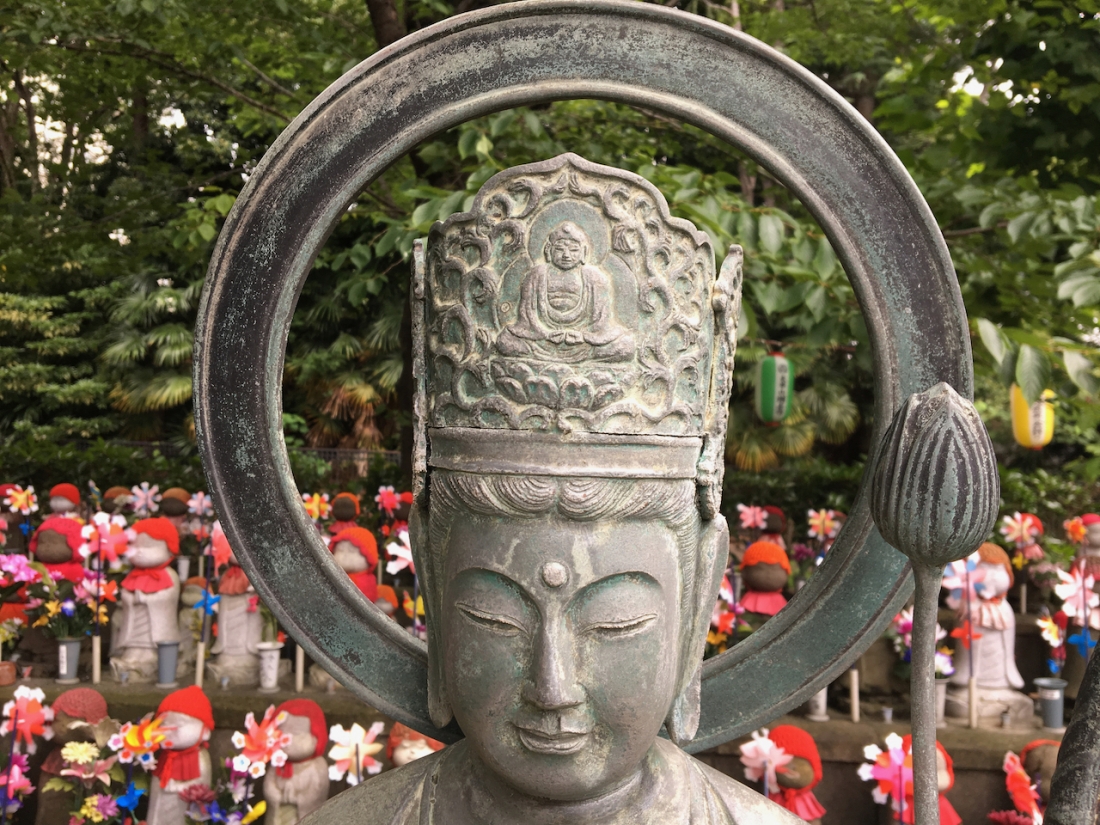
P.S. Featured photo was taken by me at Zojoji temple in Tokyo, Japan, with an image of Kannon Bodhisattva wearing a crown that features an image of Amitabha Buddha.

The Three Pure Land Sutras

While writing a recent blog post, I realized that I had mentioned, but never explained, what the Three Pure Land Sutras are in the Buddhist tradition, and their significance to Mahayana Buddhism as a whole.

Think of this as a handy reference post. I haven’t done one of these in a while. 😊

The Buddhist Canon

When you think of most world religions, they are usually based on one or two books. Christianity has the Bible (including both Old and New Testaments), Islam has the Qur’an plus Hadiths, and so on. Things get fuzzier with religions like Hinduism and Buddhism where they are not based on one or two books, but instead layers of texts written at different periods of time. Such religions have a kind of “accumulated” religious tradition.

As an organized religion, Buddhism begins and ends with the historical Buddha, Shakyamuni. His birth name is Siddhartha Gautama, but in the Buddhist tradition he is called “Shakyamuni”, or “Sage of the Shakya clan”.

Long story short, all Buddhist texts, called “sutras”, are considered sermons of Shakyamuni Buddha, passed down through the generations, first by word, and later written down. Modern historians question the historicity of this, since the very earliest sutras were recorded around 100 BC, 400 years after the Buddha lived. Also some sutras, especially those in the Mahayana Buddhist tradition, were definitely later compositions since they have a more narrative flow quite different from earlier ones.

Why did the early Mahayana Buddhist compose a new set of sutras? My personal guess is that these authors took fragments of early teachings and repackaged them in a more “hip” (relative to the times) and smoother format for easier distribution.

In any case, Buddhism doesn’t have a strict dependency on the sutras the way other religions might. The Dharma, the teachings of the Buddha, is more like the Laws of Physics: something all around us whether we believe it or not. Shakyamuni Buddha’s contribution was to both uncover the Dharma and articulate it. So, the sutras, as purported sermons of the Buddha, are our best guide to understanding the Dharma, but they have their limits.

Sutra Format

Buddhist sutras can be volumes long, or extremely short, very specific to a topic, or kind of general in their teachings. Many were composed in India to address specific audiences, while others were composed in China, but made to look like they were from India for authenticity. As the featured photo above shows, many sutras are preserved in Classical Chinese (not modern Chinese) instead of Sanskrit, despite originating from India. The sutra book above is from a Japanese temple, so each Chinese character includes pronunciation guides (furigana) for Japanese audiences.

Finally, because there are so many sutras, many Buddhist traditions tend to gravitate toward one sutra or set of sutras for their theological foundation. This is especially true in Mahayana Buddhism.

Mahayana Buddhism teaches the notion of “expedient means” (lit. Upaya in Sanskrit): this means that any and all of these sutras are suitable to someone somewhere for progressing along the Buddhist path. “Different strokes for different folks”.1 Mahayana Buddhism is (speaking frankly) broad and messy, but it also strives to be as accessible as possible to a variety of people since one of its founding tenets is that all beings are capable of enlightenment. They just each start from different circumstances.

Sutras of the Pure Land Tradition

The Pure Land Buddhist tradition is probably one of the largest, if not the largest in East Asian Buddhism, but it’s not a single sect or school. It is a loose network of traditions across several countries, from Tibet to Japan, all centered around three key sutras and devotion to Amitabha Buddha, the Buddha of Infinite Light. Professor Charles B Jones compared it to the tradition in Catholicism venerating the Virgin Mary within the larger Christian tradition: some Christians do, some do not. In the same way, some Buddhists are devoted to the Buddha of Infinite Light, and some are not.

In any case, across all Pure Land traditions, the primary textual sources are called the Three Pure Land Sutras. In short, they are:

English TitleSanskrit TitleChinese with
pinyin
Likely Country of Origin
Immeasurable Life SutraSukhāvatīvyūha Sūtra, longer version佛說無量壽經
(Fó shuō wú liàng shòu jīng)
India, before 2nd century
Amitabha SutraSukhāvatīvyūha Sūtra, shorter version佛說阿彌陀經
(Fó shuō Ā mí tuó jīng)
India, before 4th century
Contemplation SutraAmitāyurdhyāna Sūtra佛說觀無量壽佛經
(Fó shuō guān wú liàng shòu fó jīng)
China, possibly 4th century

Note that many other sutras mention or focus on Amitabha Buddha too, but the three above are the primary sources.

Let’s look at each one individually…

The Immeasurable Life Sutra

This sutra, known more formally as The Sutra of the Buddha of Immeasurable Life, is the oldest and longest of the three. In English, it would probably take about 2 hours to read, so it’s not short, but not a tome like the Lotus Sutra either.

The general format is (in order):

  • A long preamble about the progress of a Bodhisattva to full Buddhahood (patterned from Shakyamuni’s life)
  • The origin of Amitabha Buddha, and his 48 vows to help all beings
  • The virtues of Amitabha Buddha, and benefits of those who encounter his light
  • Why someone would want to be reborn in his Pure Land, and the three grades of people reborn there
  • Contrasting this world with the Pure Land (spoiler: our world sucks)
  • General Buddhist exposition about the hassles of this life (again, trying to emphasize the Pure Land)
  • Admonition by Shakyamuni Buddha to be reborn there

What’s interesting about the Immeasurable Life Sutra is that it’s a fairly good primer, covering many general Buddhist subjects, from a Mahayana-Buddhist perspective, while also explaining in detail who Amitabha Buddha is, and why the Pure Land is a worthwhile goal.

Sometimes I still find little hidden gems in there when I read it.

Note, for ritual and chanting, the sutra is much too long to chant, so people often chant key sections, for example the Shiseige in Japanese-Buddhist traditions. The featured photo above is part of the Immeasurable Life Sutra.

The Amitabha Sutra

The Amitabha Sutra, known by the more clunky name Shorter Sukhāvatīvyūha Sūtra, is by far the shortest and simplest of the three Pure Land sutras. It is not quite as short as the Heart Sutra (it takes about 10 minutes to recite/chant compared to the Heart Sutra which takes 1-2 minutes), but it is often chanted as a whole.

The Amitabha Sutra condenses many things about the Immeasurable Life Sutra into a much simpler and shorter narrative, mostly describing the wonder of the Pure Land of Amitabha Buddha. and why one would want to be reborn there:

  • The land is very beautiful and safe, with nothing to fear. It reflects Amitabha Buddha’s goodwill toward all beings.
  • The land is very conducive to Buddhist practice since everything there relates to Buddhism somehow, even the birds singing, or the wind blowing.
  • You will be in the presence of a great many teachers, Bodhisattvas, and even the Buddha Amitabha himself.

From there, the sutra lists many, many Buddhas who attest to the Pure Land, and reiterate that it’s worth being reborn there.

Finally the sutra states that one can be reborn there by simply being mindful of the Buddha.

The Contemplation Sutra

The Contemplation Sutra, also known as the The Sutra on the Contemplation of the Buddha of Immeasurable Life, is the newest sutra, and believed to have been composed in China, not India. It is the most “visual” of the three sutras since it describes a long, complex meditation exercise one can do to be reborn in the Pure Land of Amitabha Buddha. The sutra starts with a story about the Buddha (Shakyamuni) helping Queen Vaidehi who is in prison due to her son’s treachery. She wants to escape this world of misery, and so the Buddha teaches her the following visualization exercises, which are meant to be done in order:

  1. The setting sun in the west
  2. Placid water that becomes clear ice, then beryl.
  3. The ground as made of precious jewels, like sand
  4. Trees that are jeweled, countless in number
  5. Pools of water with precious jewels as sediment
  6. Jewelled pavilions, countless in number
  7. A great dais made of a lotus flower
  8. The Buddha, golden in color, seated upon that dais, then flanked by his two bodhisattvas on each side, also on their lotus seats.
  9. Details of the Buddha, Amitabha
  10. Details of the Bodhisattva, Avalokitesvara
  11. Details of the Bodhisattva, Mahastamaprapta
  12. Oneself being reborn in the Pure Land in a lotus bud
  13. Visualizing the Buddha Amitabha in a specific way, leading beings to the Pure Land
  14. Rebirth in the Pure Land for those of superior grade
  15. Rebirth in the Pure Land for those of middle grade
  16. Rebirth in the Pure Land for those of lower grade

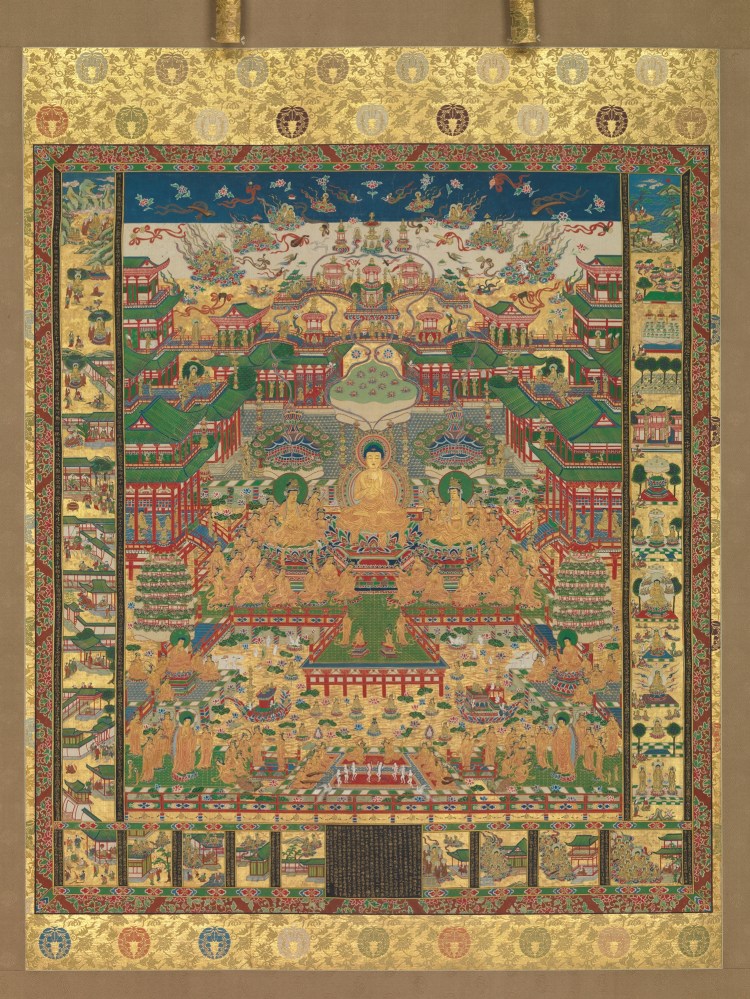
Because the visualization exercises listed in the sutra are so detailed, they have often been depicted in Buddhist artwork such as the Taima Mandala.

Significance

Of course the Three Pure Land Sutras are important to the Pure Land tradition, but they are also influential in other Buddhist traditions, and also in Buddhist art and culture in the medieval period. Even today in various communities, people relive the origin story of Amitabha Buddha in chanting and liturgy, and art related to the Pure Land still persist in such things as video games and other media. It has greatly influenced East Asian Buddhism and continues to influence Buddhism at large.

I like the Immeasurable Life Sutra in particular, and every once in a while like to read through it again. I suppose it’s my “go to” sutra.

Namu Amida Butsu

1 This is does not mean an “anything goes” approach to Buddhism, of course. Stories of “crazy wisdom” and other such things are exaggerated and rarely practiced in Buddhism. Instead, teachings such as the The Four Dharma Seals provide a theological “anchor”, as well as the Buddhist tradition. Not everyone may like the idea of following a religion tradition, but as with any long tradition, it has the benefit of collective experience across generations, so long as we are not overly bound to it.

Zen, the Pure Land, and Buddhism Lite

Warning: long, (mostly) unedited, stream of thought. Sometimes it’s just funner this way. 😄

Since my trip to Japan and back, I’ve been kind of debating something in the back of my head.

Much of my background in Buddhism since as far back as 2005 has been in the Pure Land tradition, especially Japanese “Jodo Shu” and to a lesser-extent “Jodo Shinshu” sects. The sure openness and simplicity are very appealing, especially when I am having a hard time in my life. At other times, I see my conduct as backsliding or lazy, or that I am not grounding myself enough in the here-and-now, and so I tend to shift toward Zen. At such times, the passivity of the Pure Land path seems out of place with what I feel Shakyamuni Buddha would have wanted to us as disciples to do.

Buddhism, as a world religion, is a religion of doing not believing.

But the reason why the Pure Land tradition is so popular across many Asian cultures, and increasingly in the West is that it realistically assesses the situation of lay followers and provides an accessible path for them to follow.

The monastic/lay-disciple relationship within Buddhism has always been a challenge throughout its history since it tends to relegate the lay disciples as passive followers. The doing of Buddhism tends to favor those who are willing to commit the time and energy into it (i.e. mendicants, renunciants, etc), leaving the laity to support them, or at least participate as time allows.

The Buddha was not insensitive to this, and sternly reminded his followers that without the lay community, they could not be a Sangha. Further, many of the original precepts in the monastic code were to avoid monks and nuns abusing their authority over the laity, including the Rains Retreat. Further, when the lay community and monastic community have a healthy relationship, everyone benefits.

The catch is that even with good intentions, the laity are often put in a more passive role. Many of the traditional sutras in the Buddhist canon are intended for fellow monks, not laity. Many of the practices require time and effort that laity simply can’t do.

While Pure Land Buddhism does help to address this, I realized that it can also lead to complacency. When dealing with my puppy, who while adorable is still behaving like a puppy, or dealing with constant pressures at work, such things tend to bring out the worst in me, and simply reciting the nembutsu over and over doesn’t seem like a particularly effective strategy.1 Further, I don’t want to forget about my experience last year, and some of the insights I gleaned from that.

On the other hand, I’ve never really liked the Zen tradition, especially in the West. Western Zen tends to feel weirdly divorced from the tradition it inherits from, sometimes flippantly so, and tends to feel sterile and lacking any sense of community. People seem come to Zen centers and practices because they need something, not because they are happy to be there.2 The Zen community in the West is comprised of he same sort of people who argue online about why such-and-such Star Wars series is good/bad, or try to out-do one another in their knowledge of Zen esoterica. In other words, it’s saturated with smarmy nerds.

In much of the current Asian-Buddhist tradition, both the Pure Land and Zen tradition stand at opposite poles between utter passivity (“it’s OK, I have faith in Amida Buddha”) or utter DIY (“I’m gonna meditate my way to Enlightenment!”). There are many efforts over the centuries, to somehow wed the two traditions, and these efforts usually gravitate toward one pole or the other. The famous Chinese monk, Yunqi Zhuhong,3 was a particularly effective example of this, but Yunqi isn’t well known in the West. Ven. Thich Nhat’s Hanh’s interpretation of Pure land through the lens of Zen, Finding Our True Home, was a pretty good modern attempt as well.

Still, these are somewhat intellectual exercises, and not always useful to lay people who may not always understand either tradition. So, going back to my main concern: how do you make Buddhism accessible (and easily understood) to a wide, non-Buddhist audience while still keeping faithful to the Buddha’s teachings on discipline, wisdom and cultivation. Further, how do you keep the “heart” of Buddhism so it doesn’t become a nerdy, sterile exercise?

I think this is where the Lotus Sutra really comes in handy. The Lotus Sutra by itself is hard to discern, and pretty tough to read, but if you’re already familiar with Buddhism, I think it helps provide the “heart” of Buddhism and helps address the question: what’s the point of it all? The parables in the Lotus Sutra are also a really great way to get around intellectual discussions and convey Buddhist teachings in a way people can adopt and carry with them, hence their popularity throughout antiquity.

However, as with Zen or the Pure Land, it’s important not to get a one-sided, literalist view of the Lotus Sutra either, or a person will go off the rails. It’s a historical text, written with a specific audience in mind, and has to be taken into context. Yup, I said it.

Anyhow, to that end, I have been thinking about this and I feel there are certain universal practices in buddhism that, regardless of sect you follow, are really beneficial to observe. By beneficial, I mean, you are aligning with teh intention of what the Buddha would have wanted us to follow either as a lay-person or as a monastic disciple. In previous blogs, I called this “Buddhism Lite”, since it distills the tradition to as simple and generic an approach as I can. You can re-name it something else.

Buddhism Lite

  • Uphold five precepts – In my opinion, this is the most fundamental practice for lay Buddhists, and really dove-tails nicely with the other practices below. If you have to prioritize the precepts versus meditation and such, prioritize the precepts. They are also the easiest to integrate in everyday life.
  • Recite “nembutsu” – in this context I am using nembutsu as simply recollecting the Buddha, and venerating him. The Buddha is our beacon in this world, and so it behooves us to give due gratitude. To me, the simplest way to venerate the historical Buddha is to recite the phrase Namo Shakamuni Buddha. If you prefer another Buddha or Bodhisattva, that’s totally fine. In the end, there is only one Dharma,4 and each figure simply embodies it. The Dharma is what maters most, not the particular Buddha.
  • Mindfulness meditation – as much as I tend to avoid mindfulness meditation, there’s no denying that it’s central to Buddhism. It is the practice the Buddha prescribed most to followers, and has a tangible value both in the near term and in the long term. I won’t prescribe how much a person meditate; just work it into your life in a way that’s sustainable (like physical exercise).
  • Optional: Uposatha – I haven’t really talked about this much, but Uposatha is traditionally when the Buddha would set aside time for devout laity and the monastic community to practice together. Think of the Uposatha as like the Sabbath, or Sunday services, etc. Uposatha is traditionally held on six days of the calendar month: the 8th, 14th, 15th, 23rd, 29th and 30th days.5 The example below is a Uposatha service you can observe at home on Uposatha days, based on existing traditions. As with meditation, make it sustainable for your life.
    • Praise to the 3 treasures:
      • “I go to the Buddha for refuge”
      • “I go to the Dharma for refuge”
      • “I go to the Sangha for refuge”
    • Confession of transgressions: All of the misdeeds I have committed in the past are the result of my greed, anger and delusion. I repent these misdeeds.
      • The key here is not to “flog yourself”, it’s about observing scientifically when your own conduct fell short and acknowledging this, wiping the slate clean, and resolving not to do them again.
    • Recite a sutra, or part of a sutra: your choice.
    • Recite the “Nembutsu” three times – see above.
    • Dedication of merit – you are not just practicing for yourself, but also for the benefit of others.

I think the key here is balancing devotion to the Buddha as a teacher, with putting things into practice in real life, and avoiding complacency.

Anyhow, this has been a somewhat rambling stream, but it was easier to just write it all out in one shot than try to explain in something more polished and shorter. If you made it this far and find it useful, thanks!

1 This is something I recall from a Jodo Shu called the ippyaku-shijūgo-kajō-mondō (百四十五箇条問答) or “One Hundred and Forty Five Questions and Answers” addressed to Honen:

Q: Is it better to recite Nembutsu abstaining from doing evil and doing only good, or to recite Nembutsu believing only in the true wish of Amida Buddha?

A [from Honen]: Abstaining from the evil while doing good things is the total admonition of Buddha. But for us, living in the real world, we disobey the admonition, so by believing from the bottom of our hearts in the real wish of Amida Buddha to save all kinds of people, we are able to say “Namu Amida Butsu”. Amida Buddha will lead all people into the Pure Land without any discrimination between people with or without wisdom, or between those who can or cannot keep the precepts. Please keep this in mind.” (Clause 145)

http://www.jodo.org/teachings/teachings01.html

2 From Brad Warner’s blog:

Plus those adoring audiences of sincere truth seekers that I imagined would hang on my trippy words of wisdom were nowhere to be found in his case. Instead, he was surrounded mainly by curiosity-seekers who never stayed around long, or by needy hangers-on who often became angry and belligerent when they weren’t satisfied with what he taught — which was always. He did have a handful of sincere students, but we were not much help when it came to supporting him.

http://hardcorezen.info/so-you-want-to-be-a-dharma-teacher/7843

Although I don’t really follow Mr Warner, this has been my limited experience as well.

3 I wrote much of this Wikipedia article, so I may be biased. 😏

4 Chapter two of the Lotus Sutra, by the way:

But stop, Shariputra, I will say no more. Why? Because what the Buddha has achieved is the rarest and most difficult-to-understand Law. The true entity of all phenomena can only be understood and shared between Buddhas. This reality consists of the appearance, nature, entity, power, influence, inherent cause, relation, latent effect, manifest effect, and their consistency from beginning to end.”

source: https://nichiren.info/buddhism/lotussutra/text/chap02.html

In other words, the Buddhas all awaken to the same Dharma, and have the same qualities and awareness. The Dharma is what matters. Also, the Vakkali Sutta in the Pali Canon.

5 How would Uposatha look in February? I would probably just bump the 29th and 30th to March 1st and 2nd respectively.

Pure Land Buddhism at Large

Recently, I took some personal time to delve deep into Pure Land Buddhist teachings, re-reading some old books, but also some new ones. In particular, I was very impressed by Charles B Jones’s latest book, an excellent survey of the entire Pure Land tradition in Mahayana Buddhism.

If you’re not familiar with Pure Land Buddhism, this is a broad, broad tradition in East Asia, focused on a single Buddha named Amitabha, not the historical Buddha (Shakyamuni). There are way more devotees of the Pure Land path in many Buddhist countries versus, say, Zen practitioners. It is said that Amitabha, according to the Buddhist canon (a.k.a. the sutras), made a great series of vows to provide a refuge for all beings if they with to be reborn there. In this refuge, one will unfailingly become an enlightened being, by virtue of being so close to a living Buddha.

This might seem weird at first glance, since Shakyamuni Buddha started the whole religion in the first place, right? It’s a long story of how we got to something like Four Noble Truths to something like an ethereal paradise where people can go simply by reciting his name.

Charles B Jones’s book actually does walk through how this tradition evolved from an advanced meditative practice in India to the forms we see today, so that alone is worth reading the book. However, there’s another side to this issue that Jones’s book also covers: sectarian bias.

Way back in 2005, shortly after I married my Japanese girlfriend (now wife), we made our first trip to Japan to visit her extended family. The culture shock hit hard: I hardly knew the language, the customs and food weren’t what I expected, and the Buddhist religion that I was so interested in made no sense to me. I remember seeing Amitabha Buddha at Chion-in temple in Kyoto, and while it was very beautiful, it felt like weird superstition to me. This wasn’t mentioned in any of my books about Buddhism! Someone in Japan even asked me what I thought about it all, and I made some stupid, arrogant comment about superstition, etc.

But it was still nagging me when I got home later, and that’s when I discovered the Jodo Shu homepage in English. I slowly started to unravel things, and eventually became a devoted follower (still am in many ways), but at the time, this was very niche Buddhist teachings outside of some Western organizations like the Buddhist Churches of America (also a wonderful org, highly recommend).

Since then, there have been a lot of books published in the last 20 years about Pure Land Buddhism, but they are almost always sectarian, and obfuscate the variety of practices in favor of one single approach. I learned Pure Land Buddhism through Jodo Shu/Jodo Shinshu sectarian sources, including one overtly nationalist book by D T Suzuki (don’t get me started on that guy…), and it colored my understanding for a long time.

For all the increased information on Pure Land Buddhism in the West, it’s still based on very biased, sectarian sources, namely Japanese sects such as Jodo Shu and Jodo Shinshu. This isn’t necessarily wrong, and as a long-time follower of these traditions, they really helped me a lot when I was first getting on my feet.

However, long time readers may note that I’ve danced around other aspects of Pure Land Buddhism, but until recently I had no idea how broad the tradition was, and the many ways people have tackled the theological questions behind it.

Through Jones’s book, I realized that the tradition is huge, and varied in its approach. It’s not just a “Japanese Buddhism versus Chinese Buddhism” comparison either. Many thinkers over the centuries in many countries and eras have grappled with these questions:

  • What is the nature of Amitabha Buddha and the Pure Land? Is it mind-only? Does it literally exist X yojanas to the West? Or is it right here?
  • Similarly, is Amitabha Buddha the embodiment of the Dharma or a literal Buddha who excels at reaching out to people?
  • What is the point of striving for rebirth into the Pure Land? Is it to awaken one’s mind here and now, or is it to reach a refuge in which one can progress along the Buddhist path more easily?
  • How does one do it? Do they rely on Amitabha Buddha’s compassion (e.g. other power) or does one strive to be reborn there? Is it a “meet in the middle” situation?
  • What is the nianfo/nembutsu (念佛/念仏), and is the nianfo/nembutsu sufficient on its own to accomplish rebirth in the Pure Land, or are other practices required?

Charles B Jones covers all the ways people have interpreted these questions, in India, in China and in Japan and the variety of responses and interpretations is surprising.

For example, if we only consider the questions of whether the Pure Land and Amitabha arises from one’s own mind, a Zen-style interpretation, or a more literal savior to that exists elsewhere reaching out to others, we get a spectrum of interpretations. However even if you have two different teachers both advocate for a literal interpretation of Amitabha Buddha, they will differ on whether reciting the nianfo/nembutsu alone is enough, or what practices one should do to strive there.

Even when two teachers agree on a set of practices leading to rebirth in the Pure Land, they might differ on how much of it is due to one’s own efforts versus Amitabha’s compassion and power of his vows.

Thus, what you get is a really complicated, three-dimensional matrix of views.

For example, the Chinese Buddhist teacher, Yunqi Zhuhong (雲棲袾, 1535–1615),1 advocated a very sophisticated approach that tried to reconcile both the mind-only or “principle” interpretation of Amitabha Buddha with the more literal or “phenomenal” one often used by lay people. In his mind, both were essentially correct, and it was perfectly fine to approach from either mentality, so long as one kept up the essential practices: reciting the nianfo (nembutsu in Japanese), reciting sutras, devotional acts, etc. It confirms what I suspected for a long time: that there is more to Pure Land Buddhism than just the nembutsu.

I never even knew about Yunqi Zhuhong until a few weeks ago (I pretty much rewrote the entire Wikipedia article linked above using more sources), and this shows how sectarian views, even when benign, obscure aspects of the tradition and make it hard to understand Pure Land Buddhism at large. One can easily apply this to other Buddhist traditions such as Zen, or Theravada, etc.

Another challenge in Buddhism has always been accessibility, and Charles B Jones shows how the Jodo Shu and especially Jodo Shinshu sects in Japan really excelled at outreach to common people instead of the aristocratic Buddhist followers who focused on esoteric Buddhist practices.2 However, in order to make Buddhism very accessible to large segments of the population, it’s clear they also took some liberties in how they interpret some of the issue above, and these are issues that they have to continuously defend, theologically, to this day.

Anyhow, there’s no clear answer here on who’s right or not. Jones’s book does a great job showing all the different approaches, arguments, and the virtues and challenges of each one, and thus the reader is welcome to decide for themselves. It’s so rare to find such a balanced and thorough overview of the entire tradition. For my part, I haven’t fully decided for myself what the right approach is (hence all the book reading lately), but it really helped give me a broader picture, and plenty of food for thought.

Namu Amida Butsu

1 Pronounced as “yoon-chee joo-hong”

2 Another interesting contrast that Jones’s book shows between Chinese Buddhist history versus Japanese: Japanese Buddhist history starts with the Imperial Court patronage and over generations gradually filtered down to the general population, thus it required patronage, sects, etc. Chinese Buddhism by contrast “percolated” up from small communities, often influenced by foreign merchant communities, and thus never had to organize sects, schools and such; Buddhist communities just sprang up organically.

Towards a Modern Buddhism, Sort Of

In my limited spare time, I often follow the amazing Youtube series: Extra History, which covers a lot of unspoken, or lesser-known aspects of world history in the form of short mini-series. One mini-series covers the history of Indonesia through the maritime empire of Majapahit. The last video covers the conversion of Indonesian culture from Hinduism/Buddhism to Islam:

One of the points raised was that Islam was a much more portable religion since it only required books (namely the holy Qur’an), and Arabic religious-cultural practices. In contrast, Buddhism has typically required elaborate monasteries and temples. This is not always the case however, as Buddhism arrived in China as a merchant’s religion as well, and gradually “percolated up” through Chinese society (quoting Charles B Jones in this excellent book, which I’ll cover in another post soon) but it suffered greatly when Buddhism was persecuted around 845, destroying many of the great monastic centers of learning that had sprung up over the centuries.

Setting aside the virtues of one religion versus another (which is definitely not my point here), it shows how religion is healthiest when it is portable, flexible, and adds value to the society at large, rather than stifling it. I would term this “heavy religion” versus “lightweight religion”.

One can easily look at any religion and finds examples where religious institutions meshed with politics, or became bloated with doctrine, dogma and philosophy after an initial period of innovation. One can easily find examples where religion catered to the well-educated elite, and became aloof to the problems of people on the ground.

This is the problem I think that faces Buddhism in the West.

Buddhism began as an ascetics religion, since this was very commonplace at the time in India (5th c. BCE), hence it prioritized the monastic community, and the monastic community has in turn provided an important element of stability and continuity across the ages. But also, that was a particular time, place and culture. Even when Buddhism circulated in Chinese culture, they ran into cultural clashes with the native Confucian literati that found the monk’s begging for alms, and living celibate in monasteries (instead of fulfilling filial duties to parents) grating and disgraceful. This forced Chinese Buddhist communities to adapt and disregard some practices from India while defending against Confucian criticism.

Similarly, the import of Asian Buddhism to the West has hit plenty of culture clashes, too many to list here. Some of this comes in the form of shady teachers, who abuse the teacher-disciple relationship, monastic communities that demand excessive alms and funding, or cults that can’t “make it” back home, but find fertile ground in the West preying upon naïve people. Finally, speaking from personal experience, many Buddhist converts in the West can behave elitist, even when well-intentioned, thus conflating bad stereotypes about “liberal, elitist culture”.

People have tried to solve this culture clash in a number of ways, either reinventing Buddhism to fit a “hip, new Western society” (groan…), or double-down on traditional Buddhist culture, either becoming insular or making well-meaning, but flawed attempts to translate traditional culture to a different culture. Or, they’re just shady guru cults.

None of these approaches are wrong, by the way (except the cults), but it underscores challenges for religions in crossing one culture to another.

But put yourself in the shoes of a working-class person in small town in rural America, with a demanding, minimum-wage job trying to support their kids. Expecting such a person to master the subtleties of Tibetan culture, or to learn Sanskrit mantras, or to find a reliable Zen meditation teacher is asking a lot. Some people make it work, most simply can’t.

It’s not their fault either; these Buddhist practices are all luxuries that the vast majority of society can’t realistically invest time in. Most people spend most of their time just making ends meet. It was true in medieval Asian society as much as it is today. While people in Silicon Valley can afford comfy desk jobs and trips to the next door coffee shop in between meetings, the people working in that coffee shop have to work annoying day jobs serving their coffee, and take a long commute home with 2-3 buses. And don’t forget the unseen people cleaning up the tech office overnight, scrubbing toilets, etc.

The point is is that all of these people are important to society, and if religious teachings aren’t relevant, useful, and meaningful to all of them, it will never spread beyond niche communities.

This is the problem that Buddhism faces, I think. I don’t have a good solution for this either. In Asia, similar problems have been dealt through lay-oriented Buddhist communities, both modern and medieval, gradually developed over decades or even generations, where monastic institutions are minimal or non-existent, and practices are straightforward and portable, yet steeped in deeper meaning in line with mainstream Mahayana Buddhism. Such communities have yet to fully take root in the West, and until they do, Buddhism will remain a tiny niche in the West and doomed to wither on the vine.

May Illness

In Japanese culture there is a phrase, gogatsu-byō (5月病), which means “May Illness”. It’s a tongue-in-cheek saying that describes the feeling of haziness or lethargy that many people experience in late April/early May.

In Japan’s case, this is keenly felt by students whose school year ends in April (not June),1 and new office workers who often start their careers in May. People are burned out in April and by the time May rolls around, they get tired plus the weather is warm and pleasant.

Another phrase you hear around this time is:

春眠暁を覚えず

shunmin akatsuki wo oboezu

I’ve talked about this phrase before, and its origin in a Tang-Dynasty Chinese poem, titled “Spring Dawn” (春曉 Chūn Xiǎo) composed by poet Mèng Hàorán (689/691–740, 孟浩然). In Japanese he was called mōkōnen. The original poem was translated into Japanese at some point, and the first verse became a phrase all its own. Here’s a side by side comparison of the original Chinese with the Japanese translation plus English:

ChineseRomanizationJapaneseRomanizationTranslation1
春眠不覺曉Chūn mián bù jué xiǎo春眠暁を覚えずShunmin akatsuki wo oboezuI slumbered this spring morning, and missed the dawn,
處處聞啼鳥Chùchù wén tíniǎo処々に啼鳥を聞くSho sho ni teichō to kikuFrom everywhere I heard the cry of birds.
夜來風雨聲Yè lái fēngyǔ shēng夜来風雨の声Yarai fūu no koeThat night the sound of wind and rain had come,
花落知多少Huā luò zhī duōshǎo花落つること知る多少Hana otsuru koto shinnu tashōzoWho knows how many petals then had fallen?
1 Translation courtesy of http://www.chinese-poems.com/m9.html

Even if you don’t live in Japan, that sense of late spring haziness is something we can all appreciate.

1 If I recall correctly, Japanese students don’t have a long summer break, like kids i, the US. Instead they have more breaks scattered throughout the year, and so summer break in Japan only lasts a few weeks.

The Amazing Adventures of Xuanzang

One of the most important figures in Buddhism and East Asian history is, arguably, also one of the least known outside of some cultural circles. I am talking about a famous Chinese monk named Xuan-zang (玄奘, 602 – 664).1 Recently, I found an old, but fascinating book on my shelf I had forgotten about, titled The Silk Road Journey With Xuanzang by Sally Wriggins. This book tells the story of Xuanzang as a young monk, who decided to journey to India to see historical land of the Buddha.

The “Flaming Mountains” near the city of Turpan on the Silk Road. Photo by es:User:Colegota, CC BY-SA 2.5 ES, via Wikimedia Commons

He is also celebrated in this video from Extra History:

Why would he do this? In his own words:

The purpose of my journey is not to obtain personal offerings. It is because I regretted, in my country, the Buddhist doctrine was imperfect and the scriptures were incomplete. Having many doubts, I wish to go and find out the truth, and so I decided to travel to the West at the risk of my life in order to seek for the teachings of which I have not yet heard, so that the Dew of the Mahayana [Buddhist] sutras would have not only been sprinkled at Kapilavastu, but the sublime truth may also be known in the eastern country.

Translation by Li Yung-hsi in The Life of Hsuan Tsang by Huili (Translated). Chinese Buddhist Association, Beijing, 1959

But journeying from China to India can’t be all that hard, right?

In fact, it was extremely difficult and dangerous, and a big reason why even getting Buddhism to China was such a big deal in the first place. First, one has to…

A 14th century Japanese painting of Xuanzang journeying to India. Courtesy of the Tokyo National Museum, Public domain, via Wikimedia Commons
  • Cross the Taklamakan Desert, then
  • Journey through the Kingdom of the Western Turks, hopefully unscathed, then
  • Follow the Tian-Shan mountains for weeks, then
  • Cross over the Oxus River (modern-day Afghanistan), then
  • Pass over a small mountain range that you might have heard of: the Himalaya mountains, meanwhile
  • Avoid getting robbed by bandits (Xuan-zang did encounter a few)
  • Avoid thirst and starvation, and
  • Avoid exposure to the elements (extreme heat and cold), and finally once India
  • Follow the Ganges River for thousands of miles downstream to the city of Benares.

The so-called “silk road” between China and India was not a simple road that people could just traverse, but a series of inter-connected trade routes, and due to the harsh climate and difficult environments, also a very dangerous one. Powerful steppe warrior tribes of Uyghurs and Turks, not unlike the Scythians, dominated much of these no-mans-lands, and were fickle with whom they protected and supported.

The revered remains of the Buddha’s hut in the Jeta Grove, modern-day Shravasti, myself, CC BY-SA 2.5, via Wikimedia Commons

While in India, Xuanzang journeyed to many areas. Among other things, he beheld the giant Buddhist statues in Bamiyan, Afghanistan (now destroyed), visited the Jeta Grove where the Buddha frequently resided with his followers, and many of the great cities along the Ganges River before residing at Nalanda University for some time.

Xuanzang’s residence in China, photo by Gisling, CC BY-SA 3.0, via Wikimedia Commons

Technically Xuanzang wasn’t the first Chinese monk to accomplish this. Another monk named Faxian (法顯, 337 – 422)2 was the first of several. Faxian stayed only in the northern part of India, then took a ship back to China. Xuanzang journeyed all over India, studied at the famous Nalanda University (coincidentally mentioned in the BBC recently) and then walked all the way back too. The trip took a total of 11 years.

When Xuanzang returned to China, he was feted by the Emperor and was given a team of translators and scholars to help translate and compile all the texts he brought back. This led to an explosion of information for the Chinese Buddhist community and helped the Yogacara school gain deeper roots in East Asian Buddhism which we still benefit from today. Much of these records were gradually lost in India, but preserved in China thanks to people like Xuanzang.

One other historical note here, when Faxian came to India, Buddhism was still a prosperous religion, but when Xuanzang visited centuries later, it was clearly declining in some areas, and slowly being replaced with the Hindu religion we know today.3 Some Buddhist monasteries he encountered still maintained certain practices but no longer understood why. Other monasteries still survived as great centers of learning, with others were completely deserted. It’s not surprising then, centuries later, when Turko-Afghan warriors invaded India and established a Sultanate, Buddhist institutions were easily swept aside.

One thing that’s often overlooked is the language barrier. Chinese language and Sanskrit (as well as spoken Prakrits) are miles apart. They have no common linguistic ancestry. The effort to translate old Buddhist texts from Sanskrit to Chinese during the Tang Dynasty had been a major undertaking and required multiple efforts to properly refine the translation. But Chinese Buddhist monks who could actually speak Sanskrit or any Indian language would have been very rare indeed. Xuanzang must have relied on translators, or somehow learned to speak it well enough to survive so long in India. That invaluable ability to speak it fluently would have been very helpful on his return trip when he translated the volumes of texts he brought back to China.

Also, keep in mind that translating concepts such as the “phenomena of the mind” is much, much harder than translating, say, a shopping list. This was an extremely challenging undertaking.

Xuanzang’s adventure became the inspiration for a 16th-century Chinese novel called “Journey to the West” (西遊記). This Chinese novel was hugely popular, and you can often see movies and dramas about it both in China and Japan. In Japan, it’s called saiyūki. When my wife and I were first married, we enjoyed watching the 2006 drama with SMAP’s Kattori Shingo as the lead actor. We also have an kid’s manga version Japanese for our son. Even the image of Goku from Dragon Ball takes some influences from Journey to the West (a simian-like being riding a cloud, for example).

The book is a fantastic overview of many places along the Silk Road, Afghanistan, Pakistan, Kashmir, and India that Xuanzang saw and wrote about, and are only dimly understood by Westerners. In many places where the US has been involved in overseas conflicts, it’s simply amazing how much history has been there, and how many different feet have tread upon that ground, including monks like Xuanzang and earlier by the Bactrian Greeks of Alexandar the Great.

In any case, I’ve always been a big fan of Xuanzang, and I feel he deserves a lot more recognition in history. So, to help readers remember who he was, I made a song about him based on the original Spiderman theme song ( original lyrics):

♫ Xuanzang-man, Xuanzang-man.

Does whatever a Buddhist can

Goes around, anywhere,

Catches sutras just like flies.

Look out!

Here comes the Xuanzang-man.

Is he tough?

Listen bud—

He walked the entire way there.

Can he cross a de-sert?

Take a look over there.

Hey bro!

There goes the Xuanzang-man.

In the chill of the night,

At the Roof of the World,

He crossed a ravine,

With only a rope bridge!

Xuanzang-man, Xuanzang-man,

Friendly neighborhood Xuanzang-man.

Wealth and fame, he’s ignored— Wisdom is his reward.

To him, Life is a great illusion—

Wherever there’s a stupa,

You’ll find the Xuanzang-man!♫

Try it out a few times. A few parts of the wording are a bit awkward, so I probably need to work on it some more.

P.S. Featured image is a photo of the Taklamakan Desert, photo by Pravit, CC BY-SA 4.0, via Wikimedia Commons

1 Pronounced like “Shwan Tsahng”. In Japanese, the same name is pronounced as Genjō.

2 Pronounced like “Fa Shien”.

3 A common misconception is that Buddhism arose from Hinduism, but this is inaccurate. Buddhism and Hinduism both have a common cultural ancestor in the ancient religion of the Vedas. Buddhism ultimately rejected the deistic religion of the Vedas and its veneration of the early gods, relegating them to secondary status, but Hinduism embraced it and gave it much more philosophical weight. Hinduism as we know it simply didn’t exist, and the religion of the Vedas was more similar to, say, ancient Greek religion around the Olympian gods.

Happy Year of the Rabbit

A set of figurines for the Japanese zodiac we purchased in our recent trip.

Hello Readers and Happy New Year! In Japanese, people greet each other for the first time using the stock phrase akemashite omedetō gozaimasu (明けましておめでとうございます) which means something like “congrats on the opening of a new year”.

Note that Japanese New Year is based on Chinese New Year, but since early industrialization period, the Meiji Period, Japan moved away from the lunar calendar to the Western solar calendar.

The traditions inherited from Chinese culture still persist, even if the calendar changed, thus the original zodiac is still in place, and the new year is still frequently referred to as “spring” even if it is no longer anywhere close to meteorological spring.

In any case, it might sound a bit early but Happy Year of the Rabbit!

Consulting Yi Jing the Dungeons and Dragons Way!

In my high school years, I was exploring many different facets of spirituality before I finally settled on Buddhism in my early twenties, and that included divination and other things. I dabbled in Tarot with a friend, but later took up the Yi Jing after finding a book at my local Waldenbooks bookstore. Even now I still consult it from every once in a while to kind of “check in” on my circumstances.

For those not familiar, the Yi Jing (易經, also spelled I Ching, or I Jing, etc) or “Book of Changes” is a very, very old divination book in Chinese culture that predates Confucianism, Buddhism, etc, and represents early Chinese religious thinking. Like many of the ancient classics from the Spring and Autumn Period of Chinese history, it was later re-interpreted by Confucius as the Four Books and Five Classics with an increasing philosophical and moral spin to it. But at its heart, the Yi Jing was a divination text, and remains so to this day.

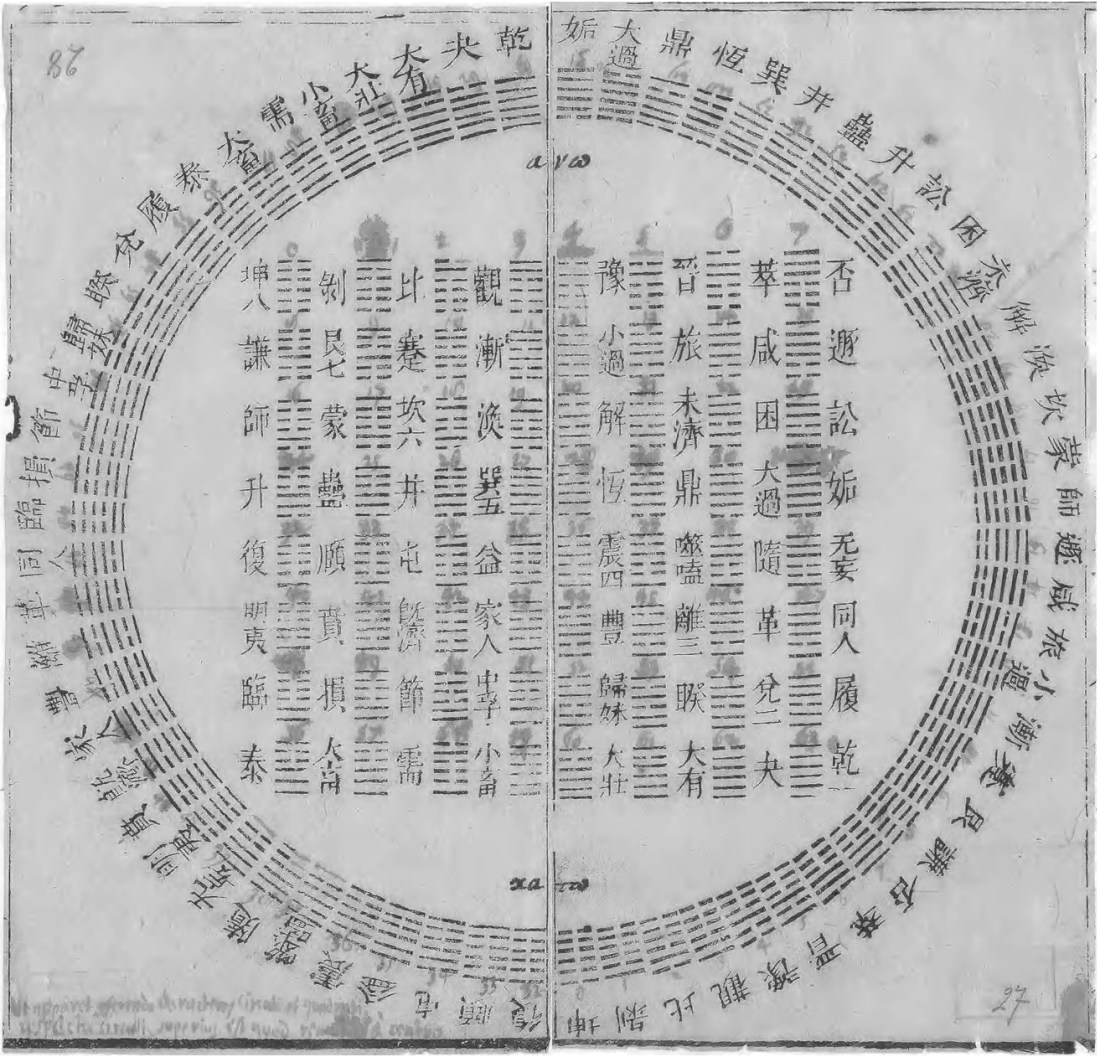
As the name implies, the Book of Changes isn’t about specific predictions of the future (i.e. will I win the lottery?), but more about the changes and shifts around you. The central theme is the ebb of flow of Yang (陽) vs. Yin (陰). When consulting the Yi Jing, you create a hexagram, or 6 lines, from the bottom up, consisting of a combination of solid lines (yang) or broken lines (yin), forming such hexagrams as ䷑, ䷏, ䷋ and so forth. There are 64 possible combinations.

Also, if one or more lines is “old yang” or “old yin” that means it’s subject to change and thus you get two hexagrams, because the old yang line(s) become yin, and the old yin lines become yang. More on this later.

Anyhow, as I learned it, the key to consulting the Yi Jing is to form a question in your mind regarding a choice you’re going to make such as “what will happen if I do X?”, or alternatively, a question about the future such as “how will 2023 turn out?”. Also, as with any divination, don’t abuse it just to get the answers you want. Take what you get and make the most of it. Learn from it.

Anyhow, let’s talk specifics.

A bundle of 50 yarrow Achillea millefolium subsp. millefolium var. millefolium stalks, used for I Ching divination. Photo by CharlieHuang, CC BY-SA 4.0, via Wikimedia Commons

Traditionally, the Yi Jing is consulted using a bundle of 49 yarrow sticks, but the method is complicated, and most Westerners don’t have access to a bundle of yarrow anyway, let alone the experience in how to use them.

In my younger years, I used the “three coin” method by flipping three coins for each of the six lines, but mathematically this does not quite produce the same result as the yarrow stick method. It’s accessible, and easy to do, but if you want traditionally accurate results you need something else.

A few years back I found an article on Wikipedia that shows how Dungeons and Dragons can produce results that are the same as yarrow stalks, and as a player, I have plenty of the requisite dice,1 so I switched to that method instead.

The method I post here is based on the 3d4 method because it produces results the same as the yarrow stick method, and (according to above article) keeps the tradition association of yang with odd numbers, and yin with even. Plus, I love d4 dice in particular. 🥰

So, get three d4 dice like so:

And make your first roll, then add up the total.

Now draw the bottom line of the hexagram based on this criteria:

  • If it is odd, draw a solid line: ⚊ This is Yang.
  • If it is even, draw a line with a gap in the middle (a broken line): ⚋ This is Yin.
  • If your total was 7, also put a dot (or some other marker) besides the solid line. This is “old Yang”.
  • If your total was 4 or 12, also put a dot (or some other marker) besides your broken line. This is “old Yin”.

Now repeat these steps for the second line from the bottom, third line from the bottom, etc until you have 6 lines total. Traditionally, there is a larger space between the 3rd and 4th lines to make things easier to consult later.

Did your hexagram have any old Yang or old Yin? If so, draw a second hexagram in the same order, but convert any old Yang or old Yin into the other. A solid line becomes a broken line (⚊ → ⚋), a broken line into a solid (⚋ → ⚊). This implies your fortune will shift or change over time into something else. This is the Book of Changes after all. 😌

So, for example first the line of your hexagram (from the bottom) was old Yang, it would change to yin:

Anyhow, once you have your hexagram, or pair of hexagrams, you can consult your results. Using a chart from a book or online, look up the bottom pattern (the first 3 lines), followed the second pattern (top 3 lines). Together these form your hexagram listed in the Yi Jing. If you had a changing pattern and got two hexagrams consult them in that order.

Classical Chinese is a very difficult language to interpret due to its pithiness, and so quality of translations of the Yi Jing runs the gamut. I am not an expert, but I do notice some interpretations are just easier for me to read than others. As for accuracy to the source text, 🤷🏼‍♂️. I can’t recommend any particular version, either. You may need to look around and find one you like and make it your own.

Of course, even if you are not interested in using the Yi Jing as a means of divination, and yet do play Dungeons and Dragons, the methods and techniques outlined above make a perfectly fine fantasy roleplaying tool as well for whatever setting you might play, including my Hamato Islands series.

Anyhow, good luck!

P.S. Featured photo is of a diagram of the Yi Jing hexagrams owned by Leibniz in 1701, source Wikimedia Commons.

1 If you need more dice, consult your friendly, local gaming store.

The Real Treasure Was Inside Us All Along

A reprint of the Taima Mandala, one of my favorite works of Buddhist art, with the Jodo Shinshu-sect crest at the top and bottom, Metropolitan Museum of Art, CC0, via Wikimedia Commons

Recently, I have been reading up on the Obaku sect (Ōbaku-shū, 黄檗宗) of Japanese Zen Buddhism: the same sect that Tetsugen was a disciple of. Obaku Zen is the third and last Zen sect to come to Japan to China, centuries after Rinzai and Soto were imported. Rinzai and Soto were both imported from China during the Song Dynasty. Obaku had the same lineage as Rinzai Zen, but was imported at the end of the Ming Dynasty, and had evolved over time to include some elements of Pure Land Buddhism, but with distinctly Chinese-Zen flavor.

In Japan, due to the Obaku sect’s common ancestry with the Rinzai sect, it was gradually absorbed administratively by the latter, but it’s arrival in Japan also reinvigorated Zen-monastic discipline. Soto and Rinzai sects frequently studied for a time at Obaku temple communities.

Obaku Zen, though small, still retains its more Sinified liturgy (sutra recitation is pronounced in a more more Chinese, less Japanese, style) and integration of Pure Land teachings.

For example their temple homepage lists an interesting excerpt from an earlier publication about the meaning of the Pure Land of Amitabha Buddha in a Zen context. What follows is the original excerpt, plus my rough translation:

この世で実在するのは心だけであり、総ての事物、現象は心の働きによって仮に現れたものであるとする「唯心」という考え方に基づけば、「浄土」も心の中にある。即ち自分自身の身こそが阿弥陀仏なのである。

If we take this world that exists as none other than Mind only, such that all of its affairs, its phenomenon, and such all depend on the movements of the Mind, and thus are “Conscious-only”, then the “Pure Land” is that which dwells in the heart. That is to say, Amitabha Buddha is this very self.

from「己身」の「弥陀」 (“Amitabha Buddha of the self”) from 黄檗宗青年僧の会発行「黄檗」(“Obaku Zen young monk’s periodical ‘Obaku'”)

To borrow that 1980’s cliché found in every Saturday morning cartoon: the real treasure was inside us all along.

The term “Conscious-only” or yuishin (唯心) is the Buddhist term for the Yogacara Buddhist school of philosophy, which taught that all things we perceive, think and feel are ultimately projections of the mind itself. It’s a subject that is super fascinating and far beyond the scope of this post, but important to understand that the Yogacara tradition of Buddhism has had a huge influence on Buddhism at large. I highly, highly recommend the book Living Yogacara: An Introduction to Consciousness-Only Buddhism if you’d like a general overview of Conscious-only Buddhism. It is a book that I come back to every now and then.

In any case, this concept of the Pure Land as the mind only might seem far-fetched given the overall trend, especially in Japanese Buddhist history, to focus on Amitabha Buddha and the Pure Land as separate, external entities. However if you’ll recall, the Chinese monk Ouyi who also lived in Ming Dynasty promoted a similar outlook:1 that in the end the real Pure Land was our Mind, and yet it’s perfectly fine to continue practicing Pure Land Buddhism as if it were external.

You might even say that the real bodhisattvas we encountered were the friends we made along the way. 🤪

Namu Amida Butsu

1 It’s tempting to argue that the Zen traditions of Soto and Rinzai that came to Japan earlier are more “pristine” than the later Obaku tradition, but I think that’s it’s a highly romanticized view of the past. Further, it’s important for religious traditions to “till the soil” from time to time, innovate and such. We can’t recreate the original 5th Century BCE community of the Buddha and his direct disciples, nor can we recreate the early Zen traditions in China and so on. We can learn from them, and keep innovating as time goes on. Later Zen tradition in China probably reflected continuous innovation as it vied with other schools of thought: Confucian, Taoist, other Buddhist schools, etc.