
I found this nice excerpt from the 25th chapter of the Lotus Sutra, better known as the “Kannon Sutra” for some, and just wanted to share:
All darkness is dispelled by the light of his wisdom
Chapter Twenty-five of the Lotus Sutra, the “Kannon Sutra”, by Rev. Senchu Murano. You can find an alternate translation by Dr Burton Watson.
As spotless and as pure as the light of the sun.
The light destroys the dangers of wind and fire,
And illumines the whole world brightly.
His precepts out of his loving-kindess brace us up as thunderbolts.
His wishes out of his compassion are as wonderful as large clouds.
He pours the rain of the Dharma as sweet as nectar,
And extinguishes the fire of illusions.
By the way, fun language-nerd fact: I noticed that my two books on the Lotus Sutra (Watson and Murano translations) both translate this passage using “he/him/his” pronoun, but both in the Lotus Sutra, and in popular culture, Avalokitesvara1 is frequently described as both male or female: a princely figure (male), a loving mother figure (female), etc. Here are just some examples from a Vietnamese-Buddhist temple in Lynnwood, WA:
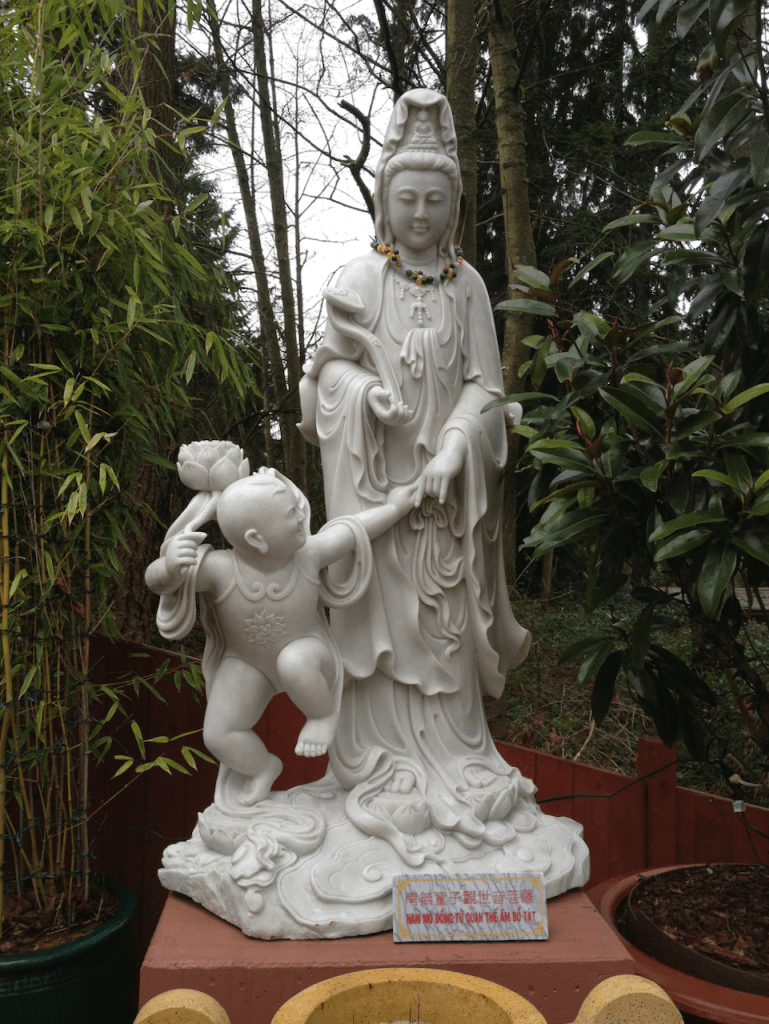
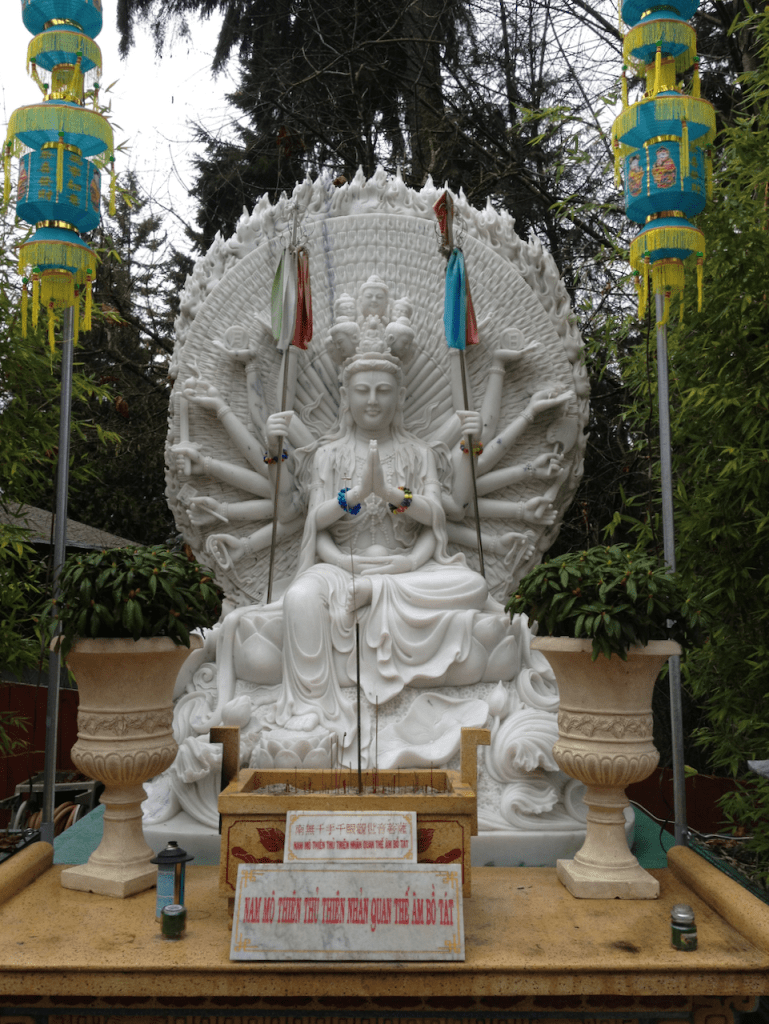
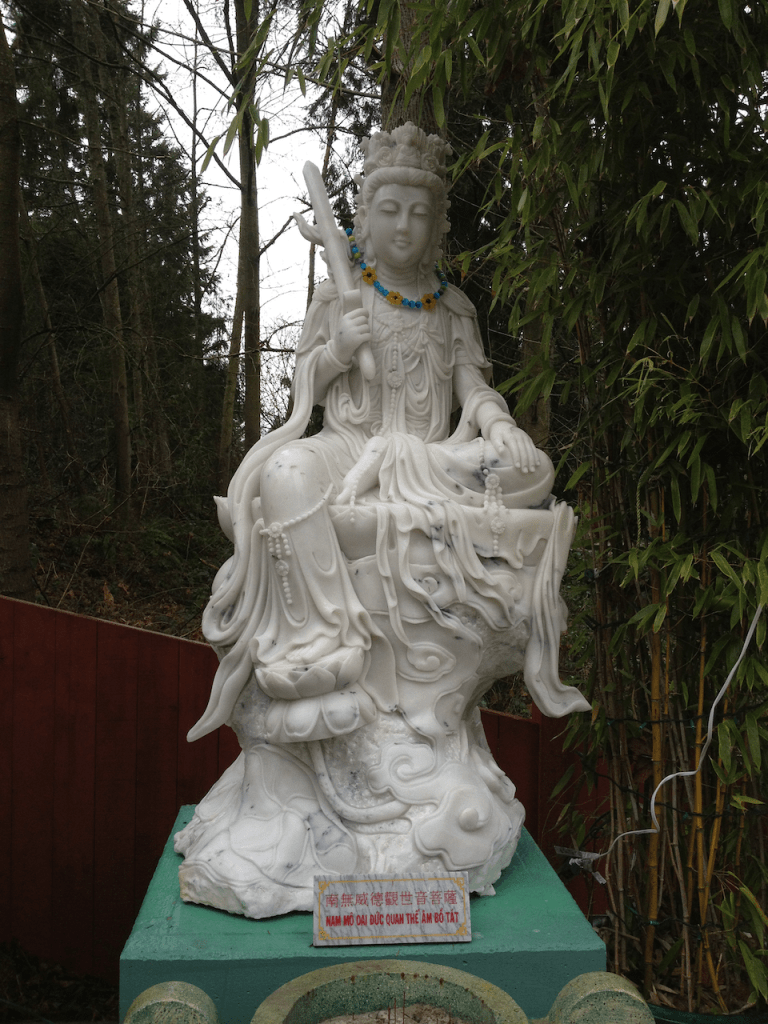
In East-Asian Buddhism, the sutra is preserved in Classical Chinese, so I looked at the translated section above and it shows neither pronoun. Instead, the Chinese Character 観 is used which is the first character of Avalokitesvara’s name: 観世音.
This is hard to do in English: a pronoun is usually required, but in many languages, it’s not. In this case, the original text just abbreviated “Avalokitesvara” into a single character into the passage above.
Clever.
Namu Kanzeon Bosatsu
1 a.k.a. Guan-yin, Kannon, Gwan-seum, Chenrezig, etc. To confuse matters, how the Sanskrit name is spelled in English varies. The most phonetic spelling is Avalokiteshvara, but it’s often spelled the more Sanskrit-ey way Avalokiteśvara, expect that ś is hard to print sometimes. Thus, confusingly it becomes Avalokitesvara (no “sh” sound). Transliterating one language to another, especially languages so different like Sanskrit and Chinese is really tough…… but it’s also fun to see how different generations approached it.
Discover more from Gleanings in Buddha-Fields
Subscribe to get the latest posts sent to your email.
 Gleanings in Buddha-Fields