
As part of our trip this summer to Japan, including Kyoto and Nara, we visited the temple of Kiyomizu-dera (lit. “The temple of pure water”). We had visited this temple wayyyyyy back in 2005 during my first even trip to Japan, but in 18 years I have learned a lot about Buddhism in Japan and it was nice to come again with a more discerning eye, and a better camera. Unlike our last visit, which was in the middle of January, this last visit was in July when it was extremely hot and muggy, despite the seemingly cloudy weather.
This post is meant to be an updated tour of Kiyomizudera, but if you want more details about the temple, feel free to read the original post, or checkout the official website.
Anyhow, Kiyomizudera sits upon a hill toward the outskirts of Kyoto (which sits in a valley), and leads up to a path like so.
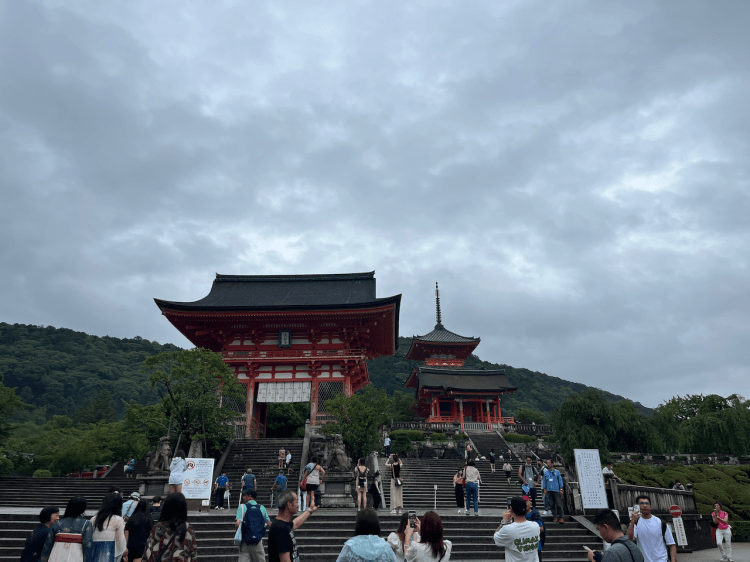
If you go up the stairs on the left, and pass under the gate, you will see the following
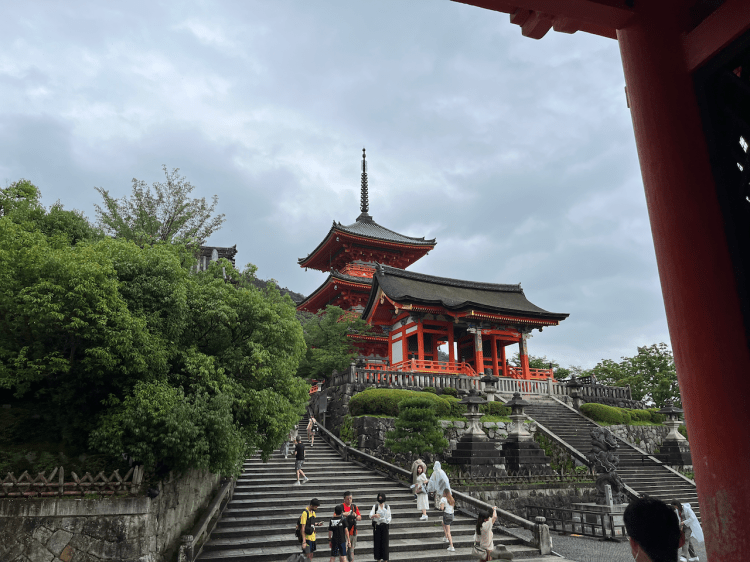
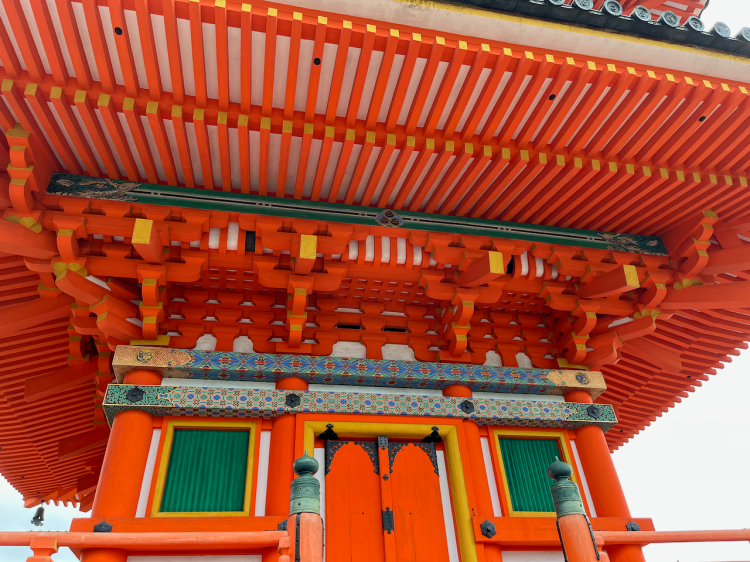
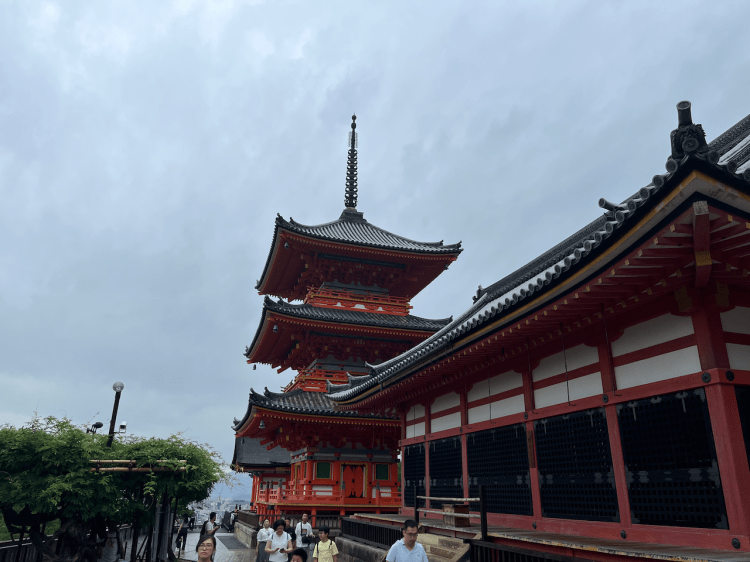
Up close, the tall pagoda (a Buddhist stupa) is very brightly colored. This reflects style used in early Japanese architecture, versus later more subdued color schemes.
From a bird’s eye view, Kiyomizudera is laid out like an “L”, but flipped vertically. From the pagoda you can see a long veranda overlooking the famous drop-off to the right, and the main temple to the left (hard to see in this photo). Further back, the path turns right.
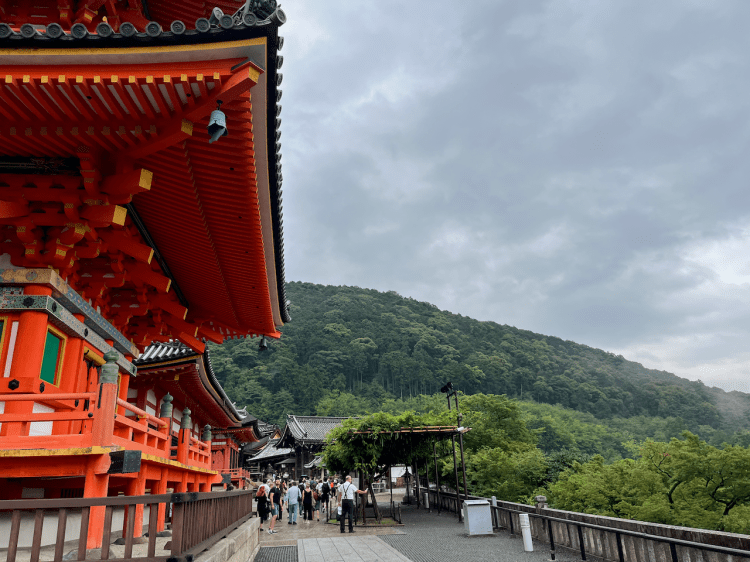
Looking backward…
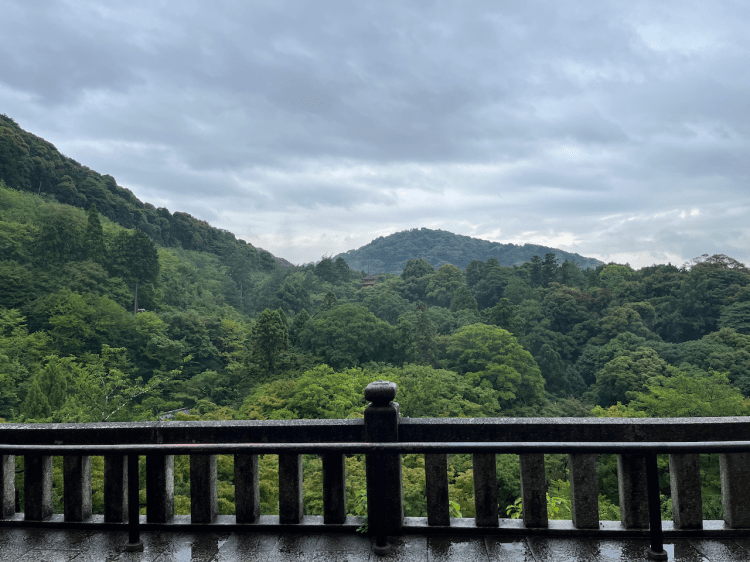
Here is the aforementioned drop-off which lets you look out over the hillside:
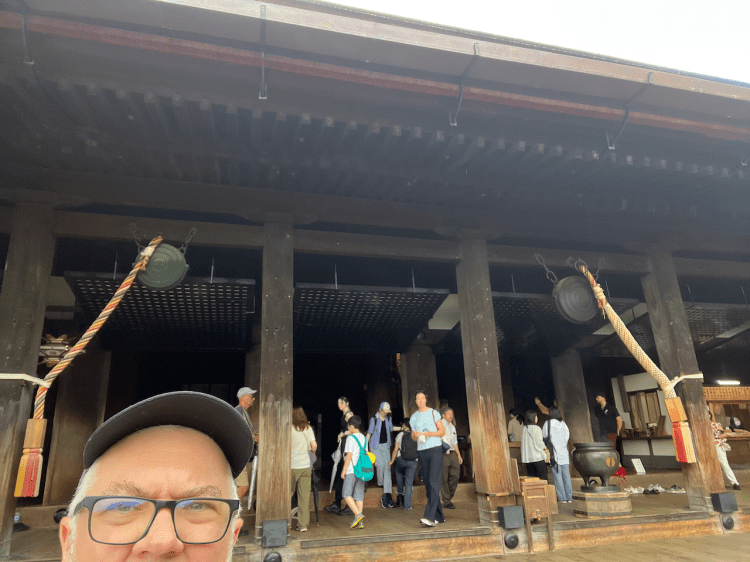
Directly behind the drop-off, is the main temple, devoted to the Bodhisattva Kannon. Unfortunately, photos are not allowed inside, so instead you can see my handsome face just outside. Inside, the statue of Kannon is shielded behind a wire mesh, with a large Buddhist bell that people can ring, offer veneration, etc. You can see the central figure on the official website here. This is a good example of the classic “1000-armed” Kannon, whose many arms express Kannon’s countless and varied efforts to help all beings. Kannon epitomizes many aspects of Mahayana Buddhism all in one nice image.
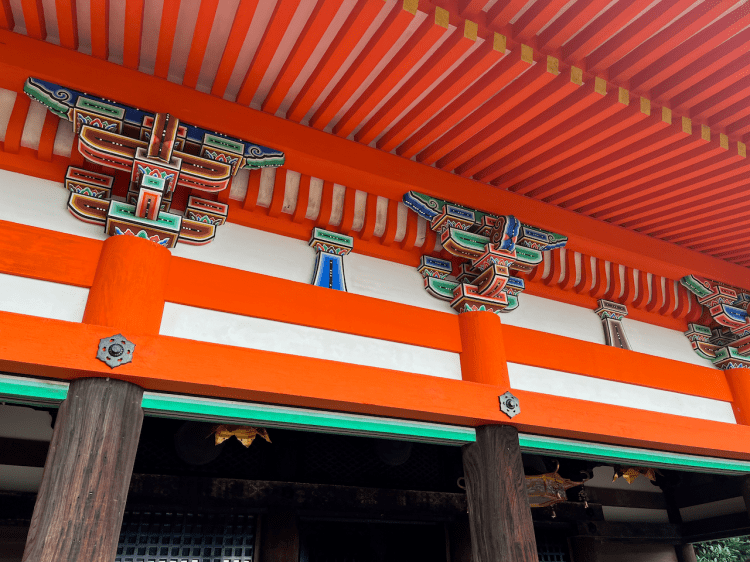
If you were to look up you can see some very pretty architecture.
If you go further, around the “bend” of the “L”, to the right are a couple sub-temples:
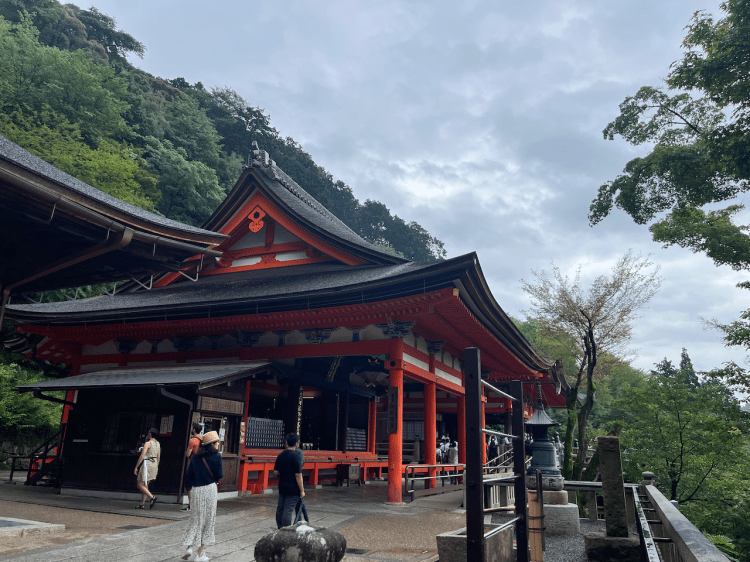
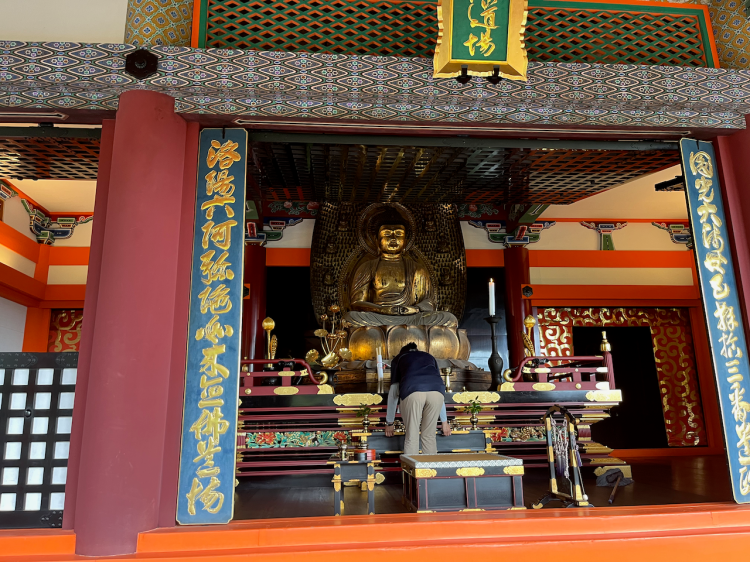
This sub-temple is devoted to Amitabha Buddha (e.g. Amida Buddha). Amida Buddha is the central figure of Pure Land Buddhism, which is prominent in the Tendai Buddhist tradition (of which Kiyomizudera is one such temple). Later Pure Land-exclusive sects all branched from Tendai: Jodo Shu, Jodo Shinshu, Ji-Shu, etc.
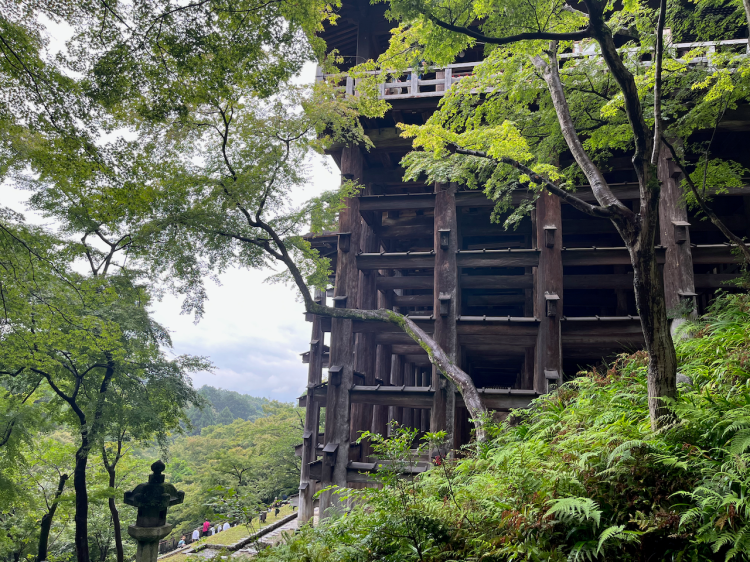
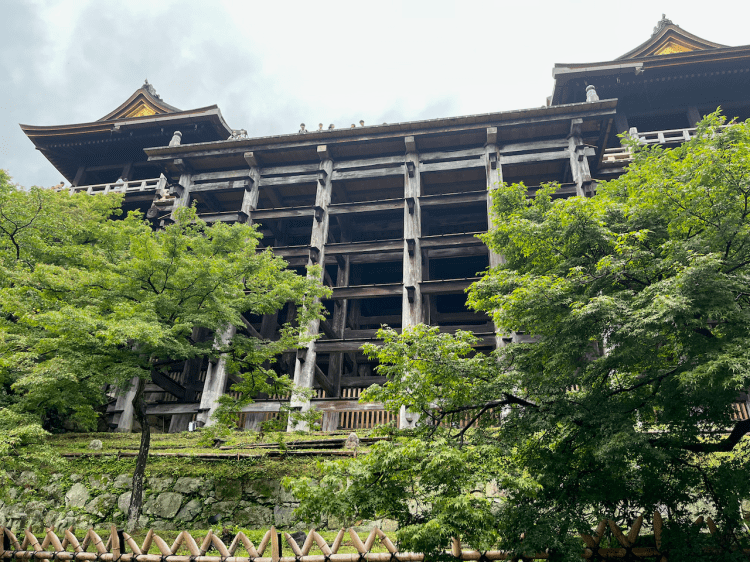
Near the bend of the “L”, there is a set of stairs that will take you down to the lower level. The drop-off I showed before was built entirely with wood, using pegs and no metal nails. Yet, as you can see, it is very well-constructed.
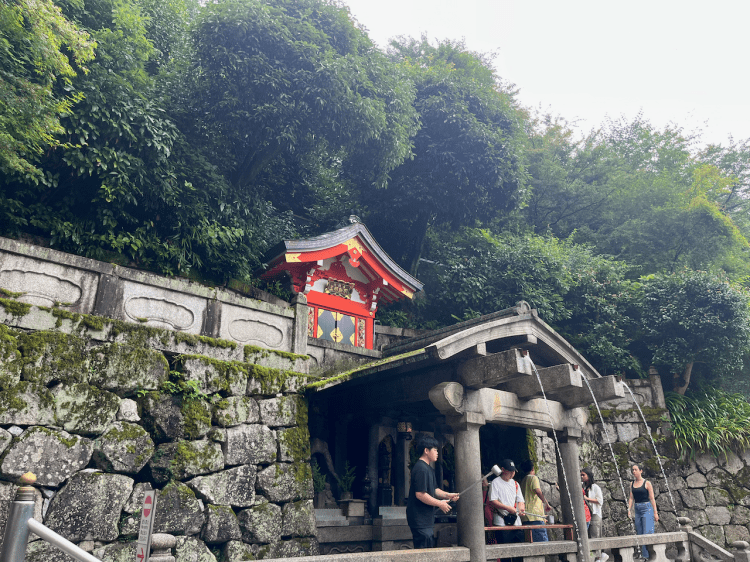
At the bottom is a small waterfall and spring from which the temple gets its name.
A view of the drop-off, from the bottom.
Kiyomizudera is a pretty neat temple, and as one of the oldest in Kyoto, it has seen countless, countless visitors of all kinds. It was nice to come once again, and pay respects to Kannon Bodhisattva here, and to better understand the layout and the significance of the temple with the benefit of experience and hindsight.
P.S. Been thoroughly busy these past weeks, and blogging a lot less than I used to. Most of this is related to holidays, but also work. Hopefully things will quiet down again soon.
Discover more from Gleanings in Buddha-Fields
Subscribe to get the latest posts sent to your email.
 Gleanings in Buddha-Fields