
On our recent trip to Kyoto and Nara, we spent our last morning in Nara visiting the venerable Shinto shrine called Kasuga Taisha (春日大社), or Kasuga Grand Shrine (English / Japanese).
The English site doesn’t really explain the history or significance of the shrine though. Kasuga, along with neighboring the Buddhist temple of Kofukuji, were centers of power for the elite Fujiwara clan. Both the shrine and the temple were sponsored by members of the Fujiwara clan, and as the clans fortunes grew, so did the prestige of these sites.
Anyhow, the legend of Kasuga Grand Shrine is said to begin when a Shinto kami named Takemikazuchi no mikoto was said to have ridden up Mount Mikasa on the back of a white deer. I picked up a children’s book of old stories about Kasuga Grand Shrine, and the cover depicts this legend:
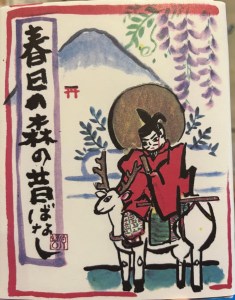
In time, other kami had been added to the shrine, and venerated too (namely Ame no Koyané, Himegami, and Futsunushi no mikoto), but often are just revered as a single deity. Fun fact: Ame no Koyané is the patron deity of the Fujiwara clan itself.
One other note: Kasuga Grand Shrine is built along side a primeval forest, meaning a forest that has never been cut down in recorded history. You can see the forest from the shrine, but access is generally not allowed.
Anyhow, the main entrance to the Kasuga Grand Shrine is here, just to the right of Kofukiji temple:

From here, there is a long causeway leading to the shrine proper. You can see thousands of stone lanterns on either side. According to my Japanese sources, these lanterns are paid through donations by patrons extending all the way back to the Heian Period (8th – 12th century), and number up to 3,000 total.

You also run into some Nara Deer as well. Nara Deer are considered sacred, and thus roam freely throughout the larger Nara park area.

When you get to the torii gate, you are close to the Shrine:

Then follow the path to the left…

The courtyard of the Shrine is somewhat small, but contains several noteworthy things. For example, this wisteria tree is quite old:

This is the inner sanctum of the shrine, and requires an admission fee to go in, but it’s well worth it.

Inside the inner sanctum, visitors follow a set path, where you can see many hanging lanterns:

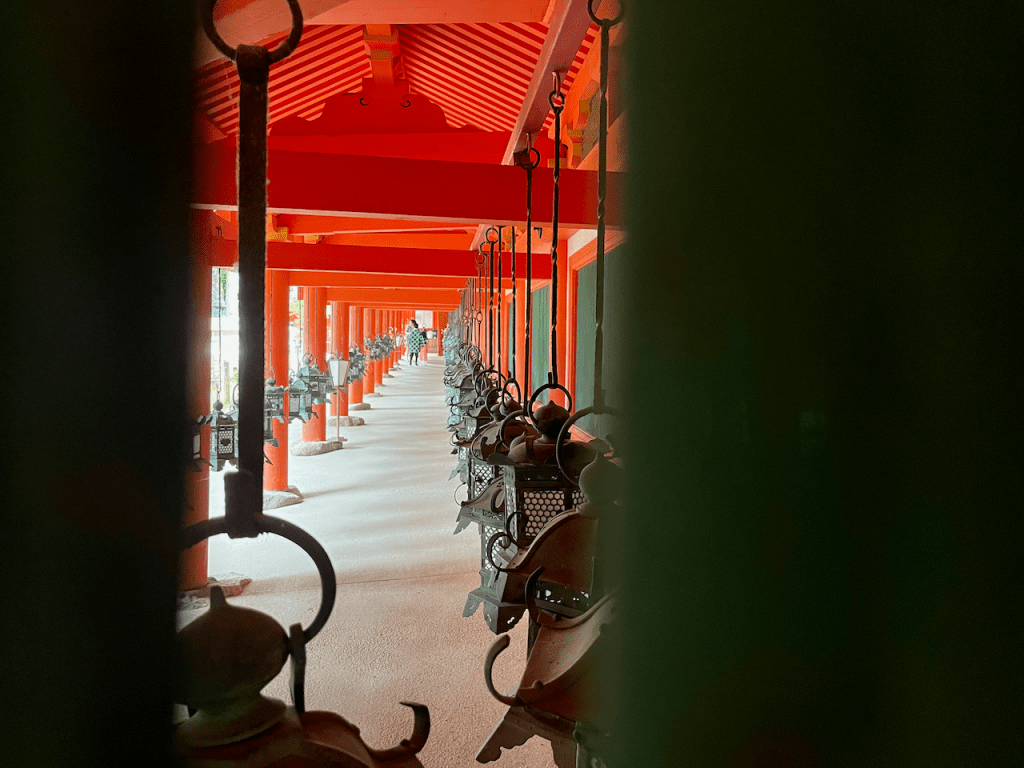

After walking this path, you come to an outdoor shrine altar that faces the primeval forest. I didn’t take a photo out of respect for the shrine, but it was neat to peer past the shrine into the forest, knowing that it’s been there for centuries.
Later, after leaving the altar, you enter a room that is very dark, where you find more lanterns:


After leaving the dark room, you see this tree. The rope tied around is a shimenawa, which implies that the tree is sacred too.
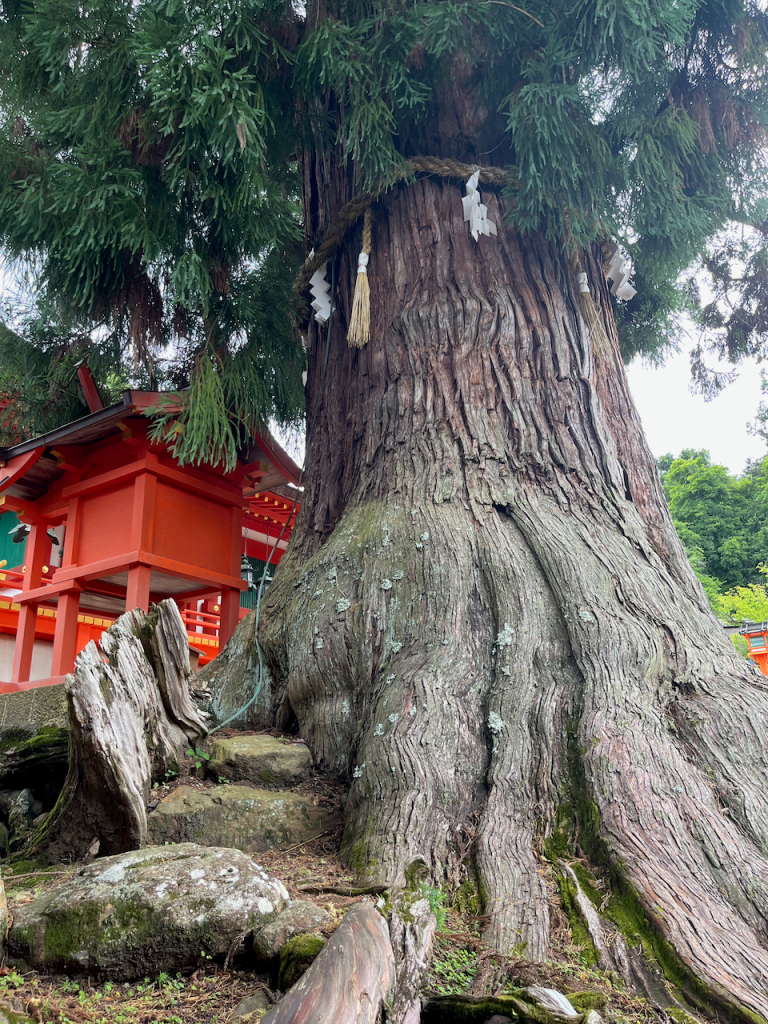
Part of the tree has over time branched out into this position, and the shrine has just built around it:

Kasuga Grand Shrine is a fascinating example of a Shinto shrine that’s deep with history, and sacred to the Shinto religion, while also carrying a mysterious air to visitors. It’s not necessarily the first place visitors to Japan would think to visit, since Shinto isn’t well understood, and Kasuga has many cultural aspects that aren’t readily obvious, but it’s well worth a visit and if you are visiting places like Todaiji it’s just a quick walk.
Discover more from Gleanings in Buddha-Fields
Subscribe to get the latest posts sent to your email.
 Gleanings in Buddha-Fields