
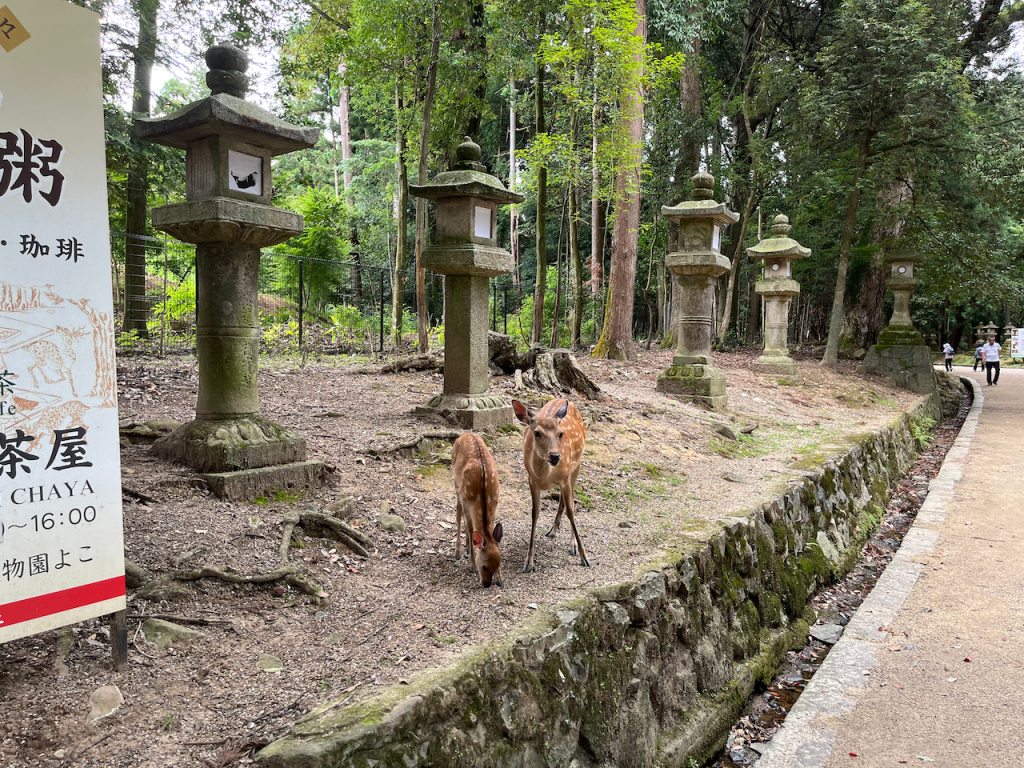
While visiting Kyoto and Nara recently, I started to pick up on some differences in Japanese language that took me a bit off-guard. I am not fluent in Japanese, but I consider myself functional (i.e. “good enough”), and since my wife is from the Kanto region around Tokyo, I’ve gotten used to Tokyo-style Japanese.
I know about Kansai-dialect since it’s often used on TV and comedy, but what I didn’t know is that places like Kyoto and Nara have their own sub-dialects, too within the Kansai dialect.
Kyoto Dialect
At Kyoto Station I often saw signs read おこしやす (okoshiyasu) which is the Kyoto way of saying welcome!
Other phrases often used include:
- Okini – a Kansai-dialect way of saying arigato! (Thanks!)
- Oideyasu – similar to the Tokyo-area phrase irasshaimasé this is how shops welcome customers when they first step in.
- Dosu – this is another famous Kyoto-ism that replaces the standard Japanese desu.
- Agaru / Sagaru – the verbs for “going up” (agaru) and “going down” (sagaru) can also mean going north and south respectively in Kyoto dialect.
- Verb + よし – similar to standard Japanese command -なさい, this is an informal way of telling someone to do something.
- Omaku – a colloquialism for a pillow (compare with standard makura).
- Ohana ni iku – a phrase used when someone is heading for a tea party, a banquet, or other similar social functions.
- Aisa ni – similar to standard Japanese phrase tokidoki (“sometimes”, “occasionally”).
- Yasukenai – something unrefined or in poor taste. Similar to standard Japanese shina ga nai.
- Yayako – a Kyoto word for “baby”.
- Hona – a phrase for “goodbye”.
- Kibaru – same as Japanese ganbaru, which is a key phrase to learn in Japanese.
Nara Dialect
I found, as a foreigner, Nara dialect a little hard to pick up in my experience. While Nara was once the capital of Japan a long, long time ago it is a pretty rural part of Japan now. Japanese spoken there differed somewhat from the “standard” Kansai dialect most people know. It is often described by other native Japanese speakers as a “cuter version” of Kansai-dialect.
One interesting aspect of Nara dialect is that “z” sounds are replaced with “d” sounds. For example the word for elephant, zōsan, becomes dōsan.
Another example is the colloquial ending yayo which replaces Tokyo-style dayo. Endings like yasu and mi are also used too, in place of standard ending ne.
Information in English about the Nara dialect is pretty slim, so I don’t have a good list of specific phrases, unlike Kyoto dialect.
Discover more from Gleanings in Buddha-Fields
Subscribe to get the latest posts sent to your email.
 Gleanings in Buddha-Fields