
A while back, I talked about a famous Rinzai-sect Zen temple named Ryoanji that my wife and I had visited in 2005, shortly after we got married. During our latest trip to Kyoto (mentioned here and here), we got to see Ryoanji again, and this time, armed with a better camera, better weather, and more background knowledge, I was able to better appreciate the visit.
The temple was founded shortly before the disastrous Onin War, a grinding, destructive urban war that ravaged the city of Kyoto over a succession dispute, and ironically the founder of the temple was one of the major combatants, Hosokawa Katsumoto. The temple of Ryoanji was an active monastery for a long time, a second-tier temple in the Five Mountains system in the 14th century, a hierarchy of Rinzai-Zen temples patronized by the Shogunate at the time, but tourism has pushed out the original monastic training to other temples, or other parts of the complex.
Historically, like many Zen temples of the Five Mountains System, Ryoanji got tangled in politics and urban life at the time, for better or for worse,1 but even so, it was clear that over the generations, the temple community there cared about Zen and tried their best to put things into practice and that love and care showed even now.
Today, Ryoanji is best-known for its “Zen garden” or karé-sansui (枯山水) in Japanese. You might have seen pictures of it before, but seeing the real thing is pretty interesting. On the one hand, it’s surprisingly small, but on the other, there’s an ineffable feeling when you are there. There are plenty of theories about who designed the famous “garden”, but there’s no clear evidence one way or another. So, it’s design and history remain a mystery.
The temple itself is fairly small, but is part of a large, secluded area north of Kyoto. You can see a map of the complex here:

It was hot and muggy that day, and my gout, which thankfully only flares up rarely,2 was in full swing, so walking was quite painful. Nevertheless, we had already booked the tour, so we soldiered on. Ryoanji, after the chaos and traffic of other places, was a welcome respite. This is the main gate, which is shown on the map above at the bottom-right.
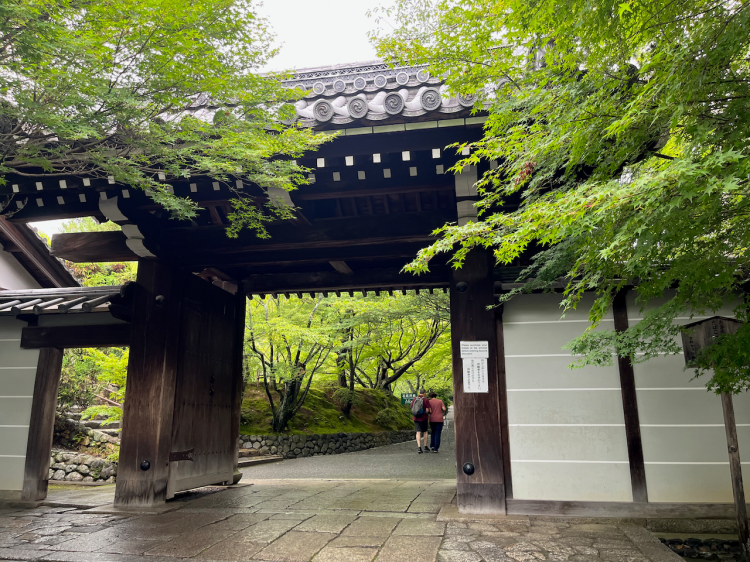
Ryoanji has a large garden area before you get to the temple itself:


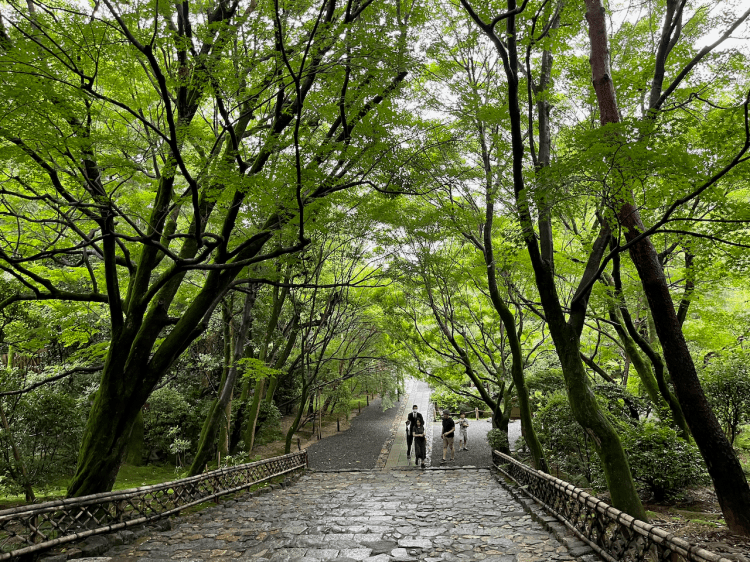
From here, you come to the temple complex itself:
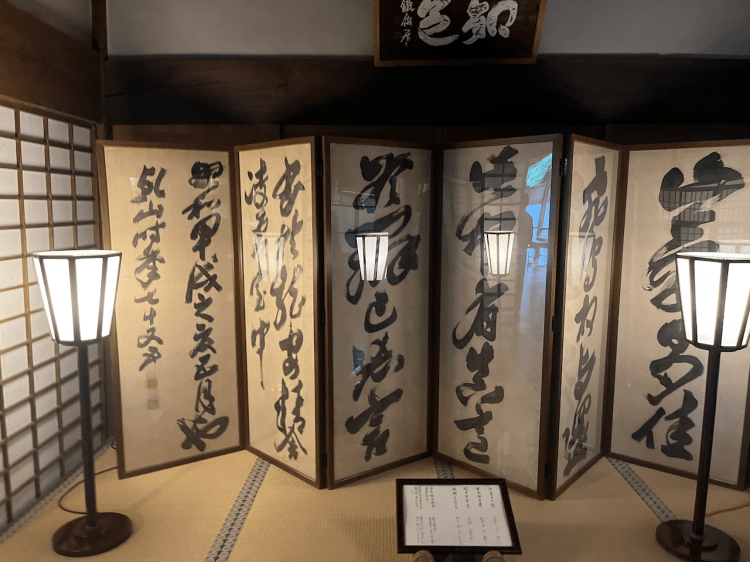

And finally, the temple opens up to the famous sand garden:

More pictures here:


It seemed to be a fairly quiet day at Ryoanji, so we had a chance to sit down on the veranda and admire the view for a bit. The last time I came in 2005, the garden was snow-covered, so I didn’t really get to see much (but still a great experience in its own way):

Much has been discussed about the garden, the symbolism of the particular rocks, the use of the Golden Ratio in its proportions, etc., but for me, it was just neat to see in person. As I said earlier, there’s an ineffable feeling when you’re there. Amidst the chatter and people shuffling around, you
Just behind the veranda are also some black-ink murals:

From there you see the famous tsukubai, though since I didn’t have a photo this trip, here is the same thing from 2005:

The tsukubai has a square opening in the middle, and Chinese characters (kanji) on each side. The square, combined with each Chinese character form different Chinese characters, forming the sentence: 吾唯足知 or waré tada taru (wo) shiru, meaning something like “I only know contentment”, or rather more loosely, “Just as I am, I am sufficient”.
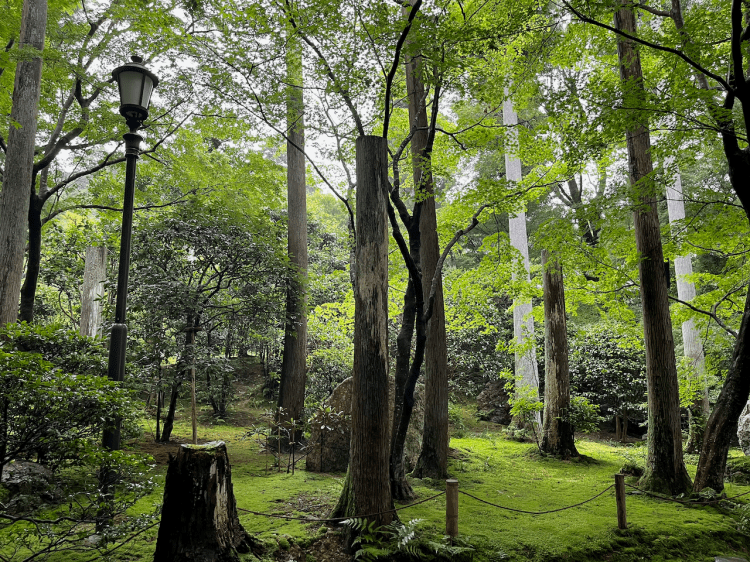
From there, visitors loop around through the garden again on the other side, which is very peaceful:

Here’s me and my teenage daughter being silly, imitating a funny Japanese comedy duo named EXIT (ポンポン!):

From here, we went to the gift shop near the exit, where I picked up a nice little incense holder,2 and of course some incense.
Ryoanji isn’t as big a tourist draw in Kyoto as some other temples, but to be honest it was a really nice experience. The quieter atmosphere, the slower pace, and the amazing art really made an impression on me more than the whirlwind experiences we had at other temples that day. Even as it hurt to walk constantly, I still felt a sense of calm and peace I hadn’t enjoyed in a while.
It reminded me of a similar experience I had back in Victoria BC, where I felt a sense of calm and clarity and a healthier perspective on things that stuck with me upon my return to the US. This might sound silly or New Age-y, but as a Buddhist for almost 20 years now, amidst the constant distractions of life and struggles with practice, the chance to stop and gain a different perspective for even a couple of hours, every so often is really valuable. Ryoanji was an unexpected highlight of the trip for me, and someday I hope to go there again.
P.S. I’ve been really heads down working on the other blog lately, plus also dealing with plenty of parental and work issues, so I am somewhat behind on blogging.
1 The famous monk, Ikkyu, grumbled about this quite a bit. Then again, Ikkyu wasn’t a saint himself. 😉 Like the Buddhist temples of the earlier Heian Period, the Zen temples of the Ashikaga Shogunate tended to be lax in monastic discipline, host parties with nobility, and get into all sorts of disreputable behavior. Besides Ikkyu, I am sure there were more serious-minded monks, but then again with any religion anywhere across history, given a sufficiently large community, you get a spectrum of saints and scallywags. Such is Humanity.
2 Rarely enough that I can avoid taking prescription medication, and focus on eating a healthier diet, plus lots of water daily. Weight loss has also helped.
3 I have some incense from Japan from previous trips, but my Western incense holders do not properly fit, so the incense tends to lean or fall over. Different holders for differently-sized incense.
Discover more from Gleanings in Buddha-Fields
Subscribe to get the latest posts sent to your email.
 Gleanings in Buddha-Fields