
Hello dear readers,
I am back from my trip to Japan, and while jet-lag is keeping me up at odd hours, I wanted to post some photos from certain places we visited. This year, we visited Kyoto and Nara for the first time since 2010. This was the first visit by my son, who was born after 2010, and his first chance to ride the Bullet Train (e.g. the Shinkansen in Japanese).
I’ve talked about the Golden Pavilion before, but this post uses more updated photos, and more detailed information.
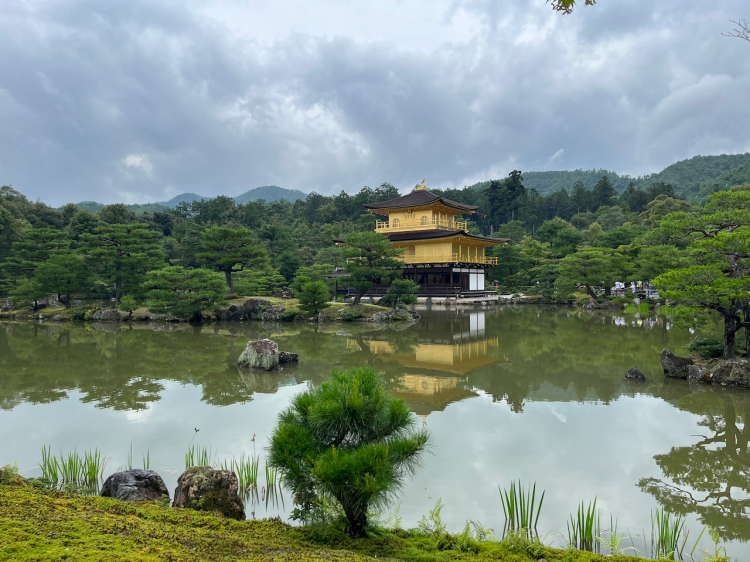
The Golden Pavilion, known as Kinkaku-ji (金閣寺) in Japanese, is technically speaking a Buddhist temple called Roku-on-ji (鹿苑寺). The property of the Golden Pavilion has a long history, first as a villa for the nobleman Fujiwara no Kintsune (who wrote poem 96 in the Hyakunin Isshu, by the way), then centuries later purchased by the Shogun (military dictator) of the time, Ashikaga Yoshimitsu as a personal villa. More on that later. In any case, Yoshimitsu eventually retired and took tonsure as a monk, living at the villa. When he died, the villa was converted to a Rinzai-sect1 Zen Buddhist temple in his honor.
1 Why Rinzai Zen? This is a topic that’s too long to go into here (I should probably make a post about it someday), but during the Ashikaga Shogunate, Rinzai Zen enjoyed a booming popularity in Kyoto the capitol, but also it was organized in a network of temples called the Five Mountains system (modeled after Song-Dynasty China).
Anyhow, let’s take a look. When you first enter the pavilion grounds you see a plaque like so:
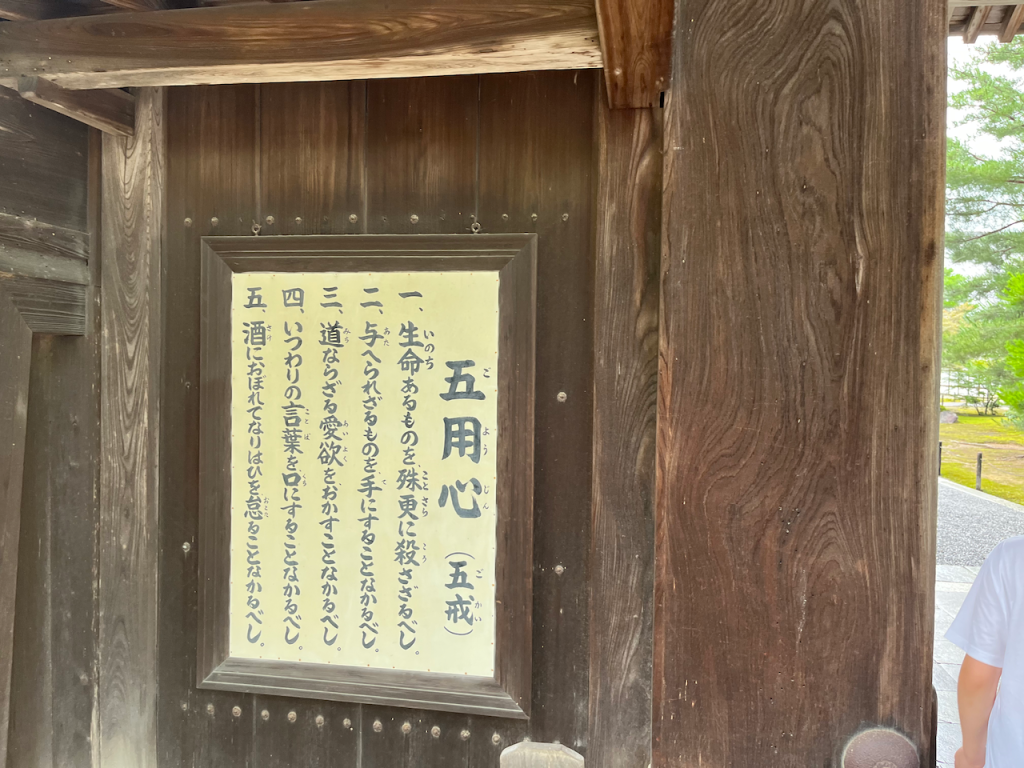
This plaque shows the Five Precepts of Buddhism, which is something you don’t normally see in Japanese-Buddhist temples.
After this, you see a moss garden like so:
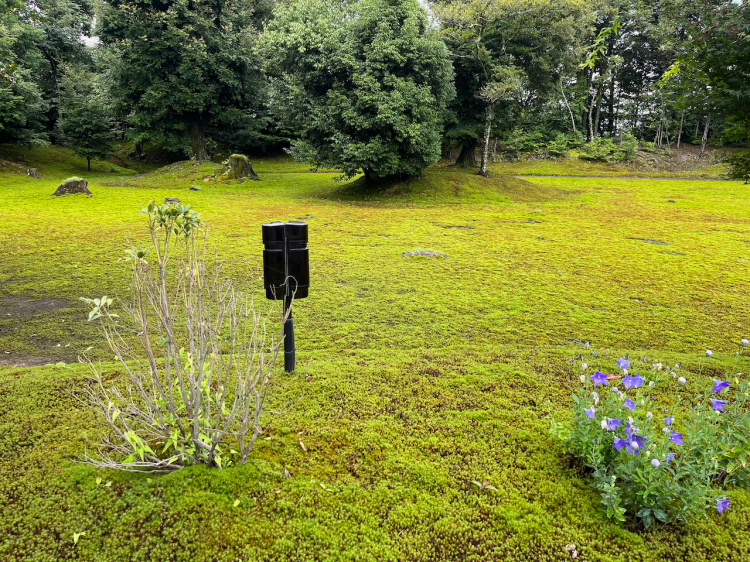
If you keep moving onward, you’ll see the pavilion itself to the right:
If you look up close…
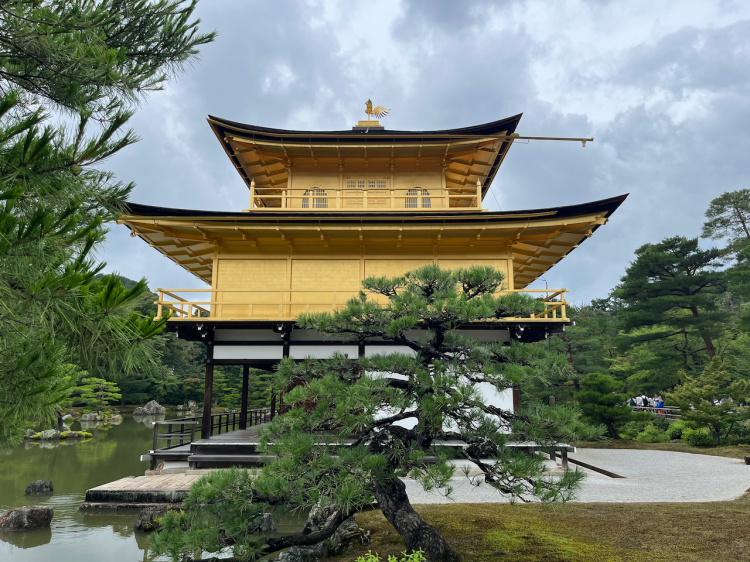
The gold leaf on the temple has been reapplied since the past, as the original sheen peeled off over the centuries, and the pavilion itself was also damaged by an act of arson in 1949.
Our tour guide pointed out that the three levels of the pavilion use different architecture intentionally: demonstrated the Shogunate’s triumph over his political rivals (notice how the first floor is not covered in gold leaf). The bird at the very top is a Chinese phoenix bird, not to be confused with the Western version. The Shogun wasn’t being subtle.
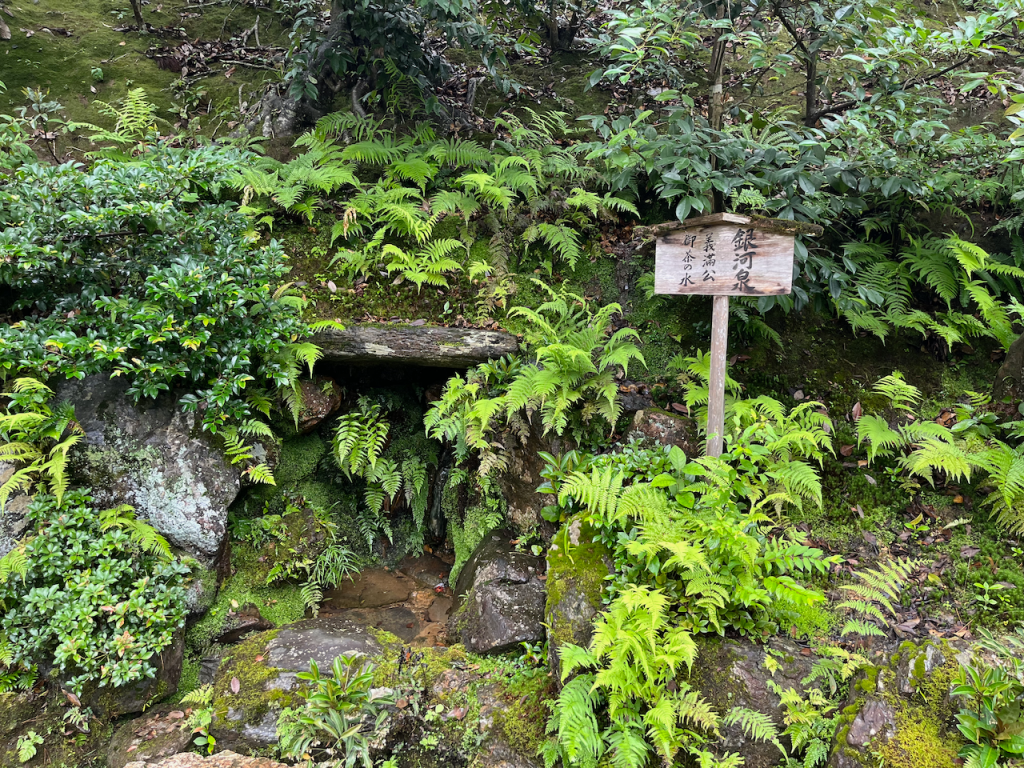
The back half of the pavilion grounds is a long garden walk with a waterfall among other things:
Culminating in the famous tea house:
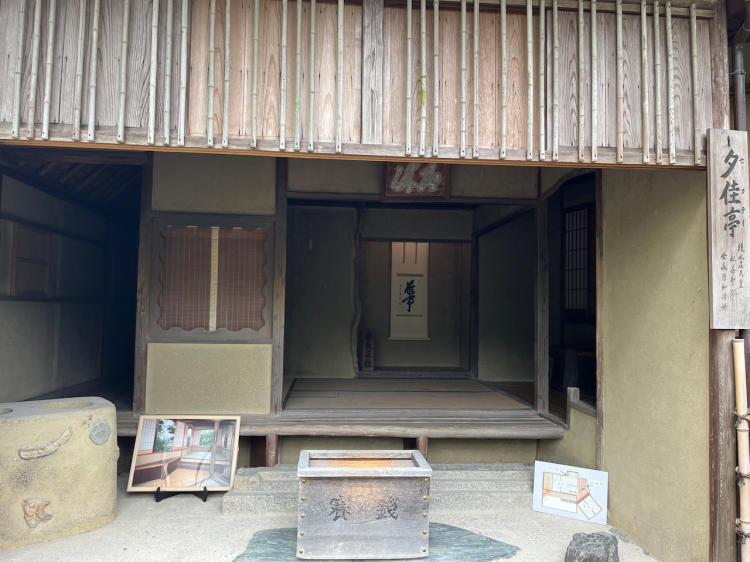
The tea room, called the sekka-tei (夕佳亭), was actually built centuries later when the temple was revived, and visited by the reigning emperor, Go-Mizu-no-o and indirectly inspired by the first tea house of the Silver Pavilion, ironically by Yoshimitsu’s grandson Yoshimasa.
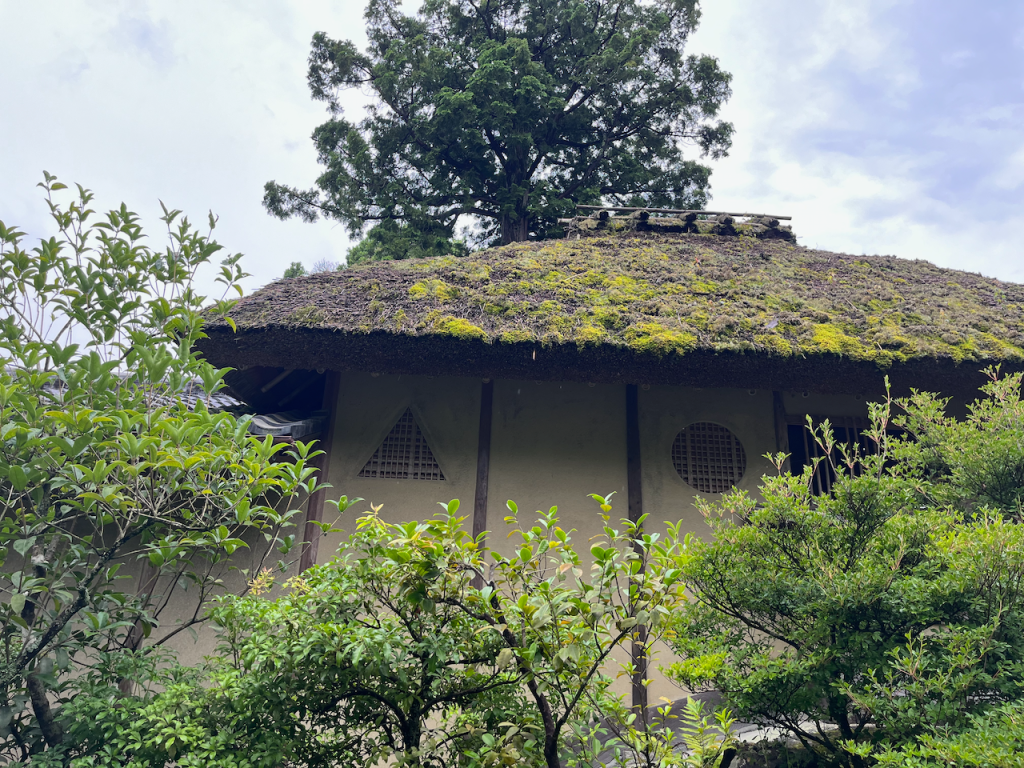
The Sekka-tei includes some interesting architectural design choices as well:
All in all, the Golden Pavilion is an interesting mix of noble aesthetics, history, and Zen influence, and of course a monument to the Shogun Ashikaga Yoshimitsu.
1 Why Rinzai Zen in particular? During the Ashikaga Shogunate, the Rinzai Zen sect had a boom in popularity due in part from influence by Song-Dynasty China. This led to the Five Mountains system for organizing temples into a state-sponsored system. More on that in a future post.
Discover more from Gleanings in Buddha-Fields
Subscribe to get the latest posts sent to your email.
 Gleanings in Buddha-Fields