
One of my favorite series to watch on Youtube is the Extra Credit series, which covers fascinating, but lesser–known aspects of world history. I’ve touched on the series in a few recent blog posts.
Anyhow, one mini-series covers the rise of militarism in Japan from the 1910’s to 1940’s. As the series points out, most people fixate on Germany and the rise of Hitler, but Japan’s case was notably different in that there was never a central figure, and still retained a multi-party system (albeit barely). And yet, the results speak for themselves.
Episode four in the series in particular shows how things spiraled out of control:
The Meiji-era constitution, adopted from the Prussians in 1890, gave the Emperor control of the military, not the civilian government. As things worsened in the early 1930’s, military factions polarized and started taking matters into their own hands, then claiming patriotism. Sympathetic elements of civilian society then attacked anyone in the government who tried to punish them. Further, racist international policies gave them fuel to justify going it alone.
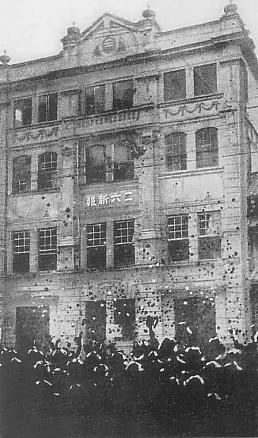
But the problem wasn’t just the political structure. As you can see starting at 4:08 or so, few people got a full education, and thus were vulnerable to conspiracy theories, leading to support for violent solutions.
So, now we have a toxic mix of rampant conspiracy theories, poor education, weak civilian government, rampant nationalism, and factional strife. A dangerous mix.
If you’re interested in Japanese history, definitely watch the whole mini-series. Even though I studied much of this in college for my major, I learned a lot anyway.
P.S. Heading overseas soon, wanted to clear the backlog of blog posts I had.
Discover more from Gleanings in Buddha-Fields
Subscribe to get the latest posts sent to your email.
 Gleanings in Buddha-Fields
