
In places like Japan and China, Buddhist statues and buildings often use a symbol, like so on the Buddha’s chest:
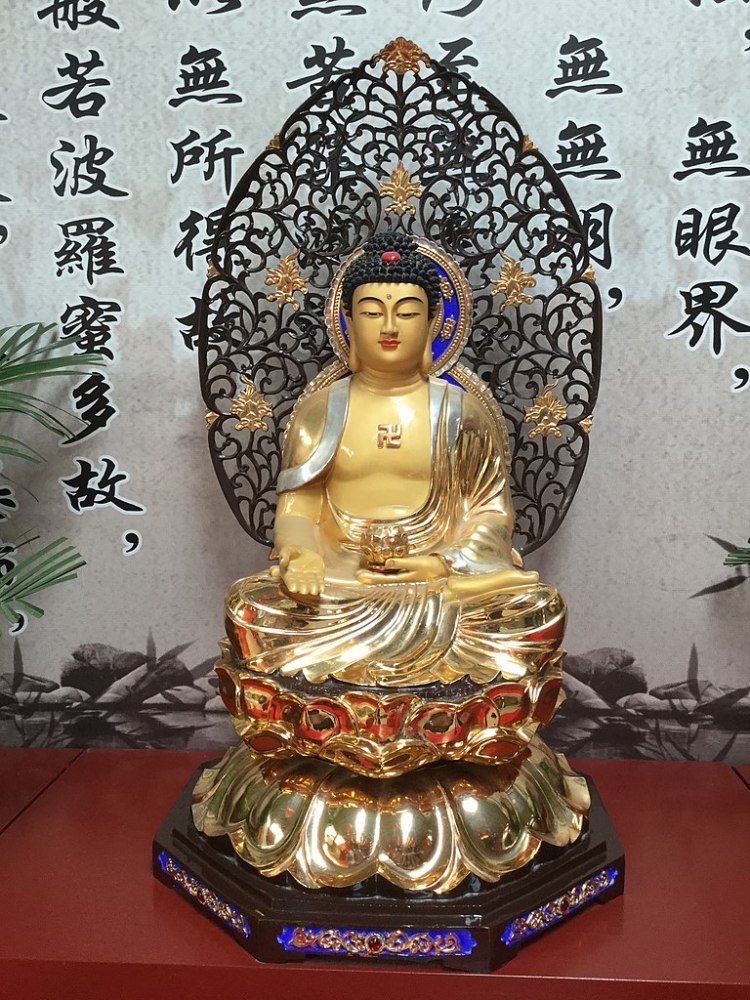
This symbol, a swastika, has NO RELATION to the Nazi Germany symbol in any way. However, at first glance this can be very confusing: why do Buddhist statues have swastika on them?
These symbols can be found across many pre-modern cultures both east and west and usually have a positive, auspicious connotation. Think four-leaf clovers in modern times. So, when you see a Buddhist statue with such a symbol it’s usually meant in a wholesome, auspicious connotation. In Japanese Buddhism these are often called manji (万字). Unlike the German swastikas, they are not tilted at 45-degrees.
However, it’s hard to avoid the association with the Holocaust and the Nazis, so these symbols are gradually falling out of use. Swastika symbols used in Japanese maps to depict temples are being replaced with other, less controversial symbols, for example.
However, older iconography will still use them. It’s too hard to change a cultural heritage building that was made in the 1700’s, for example
So, if you are in a Buddhist temple and you see something like this, don’t panic. These symbols predate those goose-stepping numbskulls and point to another, more auspicious heritage.
Discover more from Gleanings in Buddha-Fields
Subscribe to get the latest posts sent to your email.
 Gleanings in Buddha-Fields
